



New Entrants, Tech Democratization, and Global Expansion: The Shifting Landscape of the Smart Cleaning Appliance Market
For players in the smart cleaning industry, the market from 2024 to 2025 has been undergoing a quiet yet profound transformation. The entry of new heavyweight players, the rapid democratization of core technologies, and an increasingly competitive global landscape are painting a new picture full of both opportunities and challenges.

1. The Entry of Giants: Technological Barriers Are Being Redefined
Recent moves by two tech giants have captured the industry’s attention.
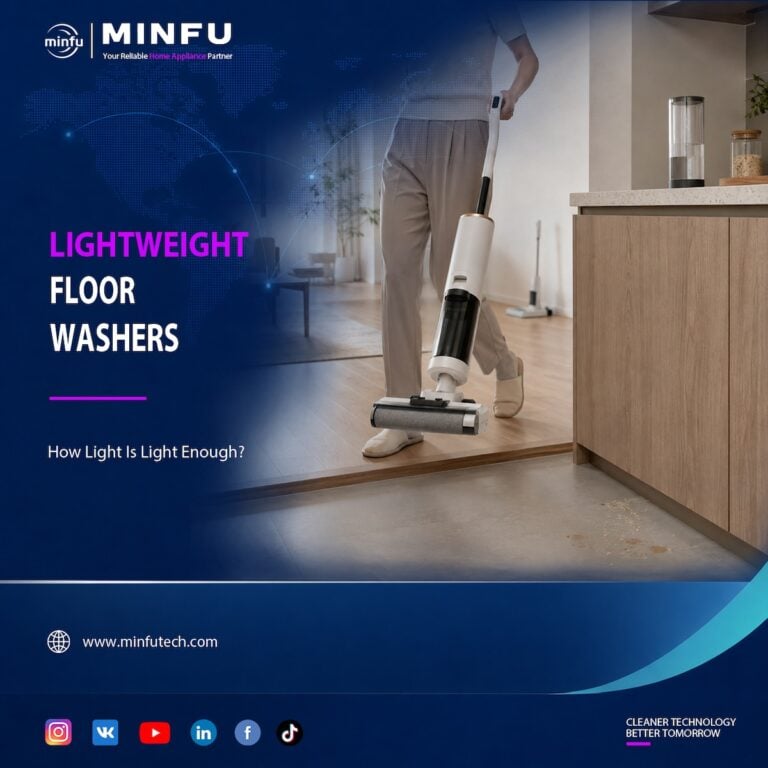
First, Lefant, renowned for its high-speed motor technology, has officially confirmed its entry into the floor washer market. More notably, its project lead comes from a DJI background. This suggests that the advanced algorithms and stabilization control technology honed in the drone field could be applied to the intelligent navigation and motion control of home cleaning appliances.
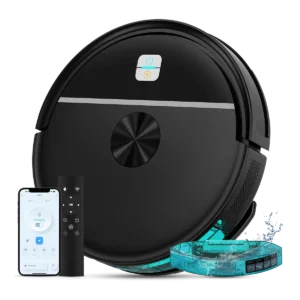
In a parallel development, DJI itself launched its first robot vacuum series, ROMO, in August, formally joining the competition. The consecutive entry of these giants not only validates the immense potential of the smart cleaning market but also signals that technological competition will rise beyond traditional metrics like suction power and battery life to higher dimensions like AI visual recognition and spatial intelligent decision-making.
Implication for Partners: When selecting brands or products for cooperation, look beyond standard specifications. Assess the extensibility of core technologies and sustainable R&D capability. A brand with strong technological DNA is more likely to maintain a leading position in the future.
2. Shifting Product Strategies: Democratization of Tech and Feature Integration
At the product level, two distinct trends are emerging:
-
Strategic Pivots by International Giants: Dyson, known for its unique approach, made significant changes with its new Spot+Scrub AI robot vacuum—it included a rotating rubber brush and a self-cleaning base station for the first time, adopting the industry-standard Lidar navigation. This indicates that even premium brands must actively respond to market-defined “standard” features. This provides a clear direction for the upstream and downstream supply chain.
-
Accelerating Democratization of High-End Features: Represented by brands like YEEDI, the first roller mop robot vacuum priced under $500 has been launched. This means features once exclusive to high-end models, such as “self-cleaning” and “roller mops,” are rapidly trickling down to the mid-range and mass markets. For manufacturers and solution providers, optimizing costs and modularizing/standardizing these features has become a new imperative.
3. The Global Acceleration: From “Going Out” to “Going In”
The wave of Chinese smart cleaning brands expanding overseas is unstoppable. The sustained growth of brands like Ecovacs and Roborock in European and American markets proves the global competitiveness of domestic products. However, as expansion deepens, “compliance” and “localization” have become key to success.
A recent forum on the internationalization of cleaning appliance brands, held by the renowned certification body TÜV Rheinland, highlighted that beyond traditional safety regulations, cybersecurity, data privacy, energy efficiency standards, and market-specific performance certifications (e.g., pet-friendly, anti-tangle certifications) are becoming new technical barriers.
Recommendations for Manufacturers:
-
Market Selection: Focus on premium markets like Europe and North America, while keeping an eye on the growth potential of emerging markets like Southeast Asia.
-
Compliance First: Integrate an understanding of target market access requirements (e.g., EU CE-RED, Cybersecurity Act) during the product development phase.
-
Value Certification: Actively obtain authoritative performance certifications and use them as powerful tools for product differentiation and premium pricing.
Conclusion
The smart cleaning market is far from saturated. A new round of restructuring and opportunity is unfolding at the intersection of technology, market forces, and regulation. For B2B partners, keeping pace with technological changes, gaining insights into product trends, and approaching global expansion professionally will be the key to capturing this wave of growth.