



A floor washer can feel light in a product showroom and surprisingly heavy ten minutes later.
There is a simple reason.
The specification sheet usually gives you the net weight of an empty machine. The customer, however, uses the machine with water in the tank, wastewater gradually accumulating, a wet roller touching the floor and a battery supplying enough energy to keep the whole system running.
That difference matters.
Imagine two samples arriving for a private-label project.
The first weighs 3.0 kg, has a moderate water capacity and is designed around easy movement in apartments. The second carries larger tanks and a bigger battery, giving the buyer an attractive runtime figure but adding more mass to the machine.
Which one is better?
There is no useful answer until you know who will use it.
A customer cleaning a 60 m² apartment may appreciate a lighter machine far more than another 20 minutes of theoretical battery life. A household with a large open-plan hard floor may prefer a larger tank and longer runtime even if the machine feels heavier.
This is why “lightweight floor washer” should not be treated as a single-number specification.
Weight, water capacity and runtime form one design decision.
Change one, and the user usually feels the effect somewhere else.
The Weight on the Specification Sheet Is Not the Weight in the User’s Hand
The current Minfu Y20 is listed at 3.0 kg net weight, with a 680 ml clean-water tank, 450 ml dirty-water tank and 2600–4000 mAh battery options. Minfu currently lists a 20–45 minute runtime range depending on the selected configuration and operating condition.
Three kilograms sounds very light for this product category.
But that is the dry machine.
Fill a 680 ml clean-water tank and roughly another 0.68 kg of water has entered the product. At the beginning of a cleaning session, the working mass is therefore closer to 3.7 kg before considering small differences caused by cleaning solution or accessories.
As the machine moves across the floor, clean water leaves one tank and much of it returns as wastewater to the other. The total amount of liquid being carried changes, but it does not suddenly disappear.
This is why I would never evaluate handling using an empty sample alone.
The buyer should fill the clean-water tank to its normal operating level, switch the machine on and use it for fifteen or twenty minutes before deciding whether the product actually feels lightweight.
There is also an important distinction between carrying weight and cleaning effort.
A motorized wheel can make a heavier floor washer feel surprisingly easy while moving forward across a flat floor. The Y20, for example, includes power-assisted wheels as part of its current product design.
But powered wheels do not help when the customer picks the machine up to cross a threshold, carries it upstairs, removes it from a storage cupboard or lifts it onto another floor.
A good lightweight design therefore has to work in both situations.
It should feel manageable while cleaning and manageable when it is not cleaning.
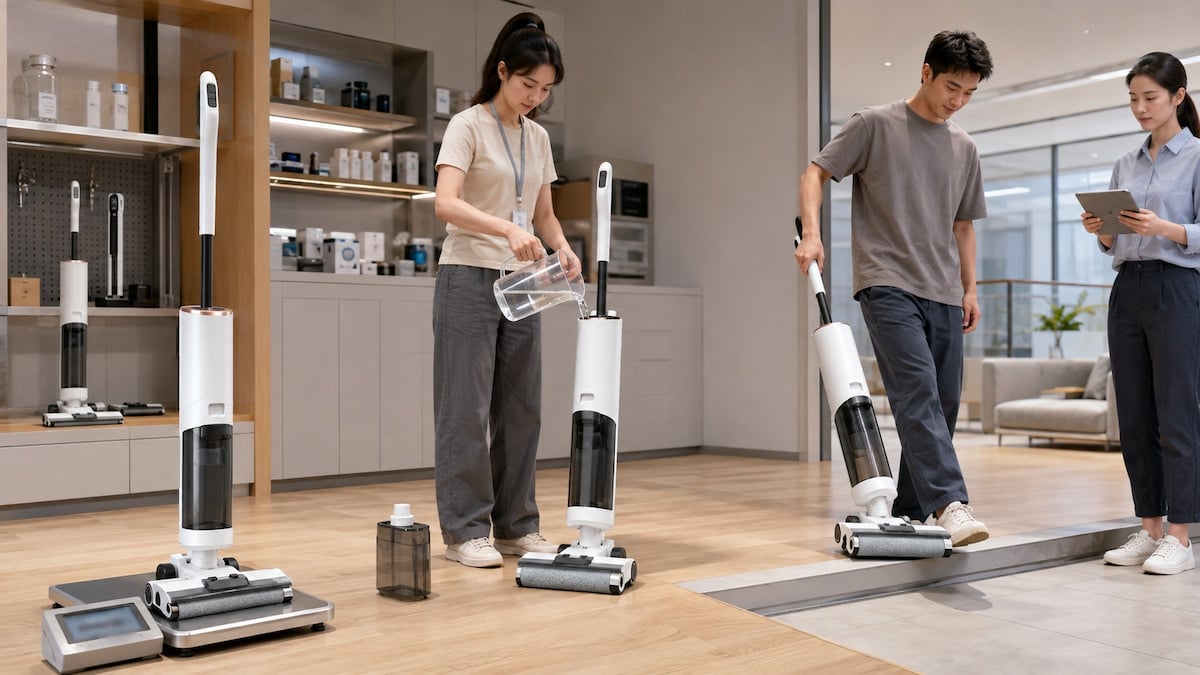
Bigger Water Tanks Solve One Problem and Create Another
Large tanks are easy to sell.
A buyer sees 800 ml instead of 600 ml and immediately understands the benefit: fewer refills.
That benefit is real.
What is less visible is the weight of the water itself.
An additional 200 ml of clean-water capacity adds roughly 200 grams when the tank is full. Add a larger dirty-water tank, a larger housing to accommodate it and the structural support required around the tanks, and the product can begin moving away from its original lightweight positioning.
This does not mean large tanks are bad.
It means tank capacity should be designed around the cleaning session rather than maximized for the catalogue.
Current products already show very different approaches.
Tineco’s FLOOR ONE Stretch S6 is listed with a 0.8 L clean-water tank, 0.72 L dirty-water tank, 4000 mAh battery, 40-minute runtime and a published weight of 9.92 lb.
Roborock’s current F25 RT is listed at 4.0 kg with an 870 ml clean-water tank, 720 ml dirty-water tank and 40 minutes of Eco-mode battery life. The standard F25 uses the same published tank capacities but weighs 4.2 kg and is rated for up to 60 minutes in Eco mode. Higher-spec F25 variants reach 4.7 kg while adding other functions.
Minfu takes a different position with Y20: 3.0 kg dry weight, 680 ml clean water, 450 ml dirty water and configurable battery capacity rather than simply maximizing every specification.
These figures should not be treated as a laboratory ranking because manufacturers may define or measure product weight differently. They are more useful as examples of how differently brands balance the same three constraints.
| Product | Published weight | Clean / dirty water | Published runtime |
|---|---|---|---|
| Minfu Y20 | 3.0 kg | 680 / 450 ml | 20–45 min depending on configuration |
| Tineco FLOOR ONE Stretch S6 | 9.92 lb | 800 / 720 ml | 40 min |
| Roborock F25 RT | 4.0 kg | 870 / 720 ml | 40 min Eco |
| Roborock F25 | 4.2 kg | 870 / 720 ml | 60 min Eco |
The point is not that the lightest machine wins.
The point is that every product has chosen a different answer to the same question:
How much machine does the target customer actually need to carry around the house?
Runtime Is Only Useful While the Machine Can Keep Cleaning
Battery runtime is another specification that becomes less useful when viewed on its own.
Suppose a floor washer can operate for sixty minutes.
That sounds better than forty minutes.
But what happens if the clean-water tank is empty after thirty minutes under the intended water-flow setting?
The user has to stop anyway.
The battery still contains energy, but the uninterrupted cleaning session has ended.
The reverse can also happen. A very large tank may still contain plenty of water when a smaller battery reaches its limit.
That is why the more meaningful engineering target is not simply maximum runtime.
It is the relationship between battery duration, water consumption and the amount of floor that can realistically be cleaned before the user needs to stop.
This also changes according to operating mode.
Higher suction, stronger powered-wheel assistance, increased roller speed or heavier water delivery can all increase energy demand. Actual runtime therefore needs to be tested using the mode consumers are likely to use, not only the most economical laboratory condition.
The Y20’s public specification currently gives buyers flexibility through 2600–4000 mAh battery options and an overall listed runtime range of 20–45 minutes.
For an OEM project, I would not choose the battery from the mAh number first.
I would begin with a target cleaning session.
For example, take a realistic apartment route containing a kitchen, dining area, hallway and living room. Fill the tank normally and ask a tester to clean the route at a natural pace.
Record when the user needs more water.
Record when the dirty-water tank needs attention.
Record how much battery remains.
Then repeat it using another battery configuration.
That tells the buyer whether the larger battery actually creates a better product—or simply adds cost and weight that the typical user rarely needs.
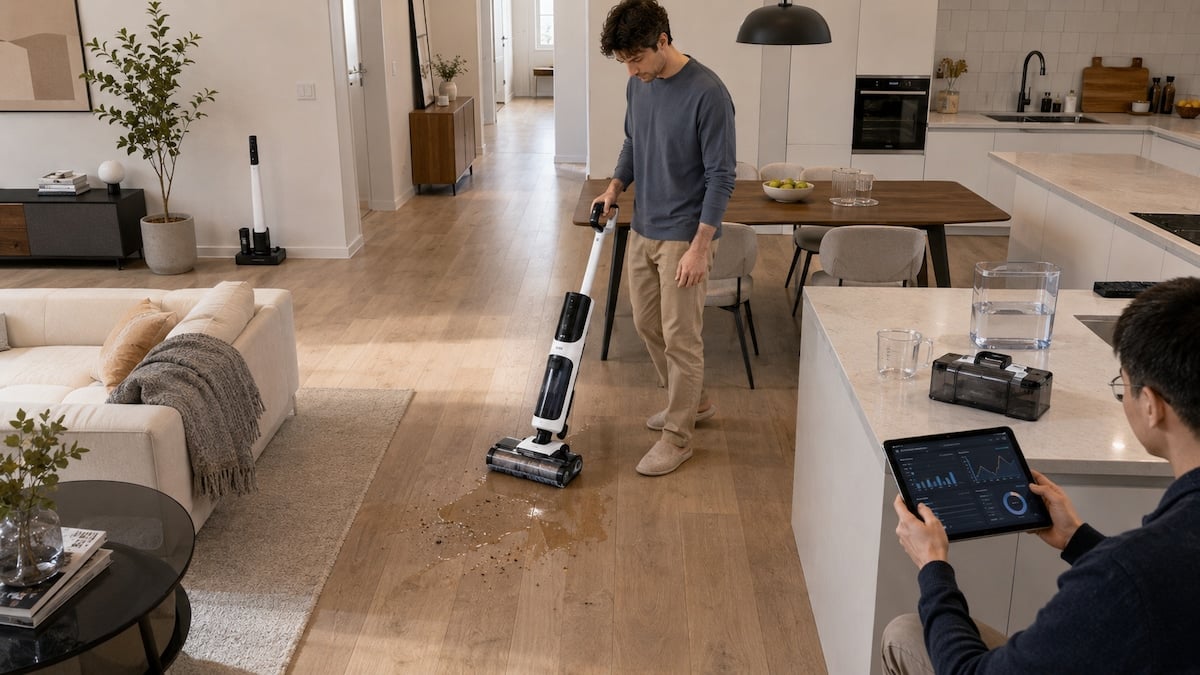
A 60-Minute Runtime Does Not Automatically Mean a Better Consumer Experience
Long runtime is particularly attractive in comparison charts because it creates a simple number that is easy to rank.
But consumers do not use floor washers as stopwatch tests.
They turn around dining chairs.
They stop to move a toy.
They clean around a kitchen island.
They return to a sticky area for a second pass.
They may pause to empty the dirty-water tank.
Sometimes they carry the machine from one room to another.
The battery therefore needs to support the real cleaning routine rather than win an isolated endurance contest.
This is also where product positioning becomes important.
A lightweight apartment-focused model does not necessarily need to match the longest runtime available in the premium market. If it comfortably finishes the intended floor area without a recharge, another ten or fifteen minutes may contribute relatively little to the actual user experience.
A larger-house model is different.
If a customer repeatedly reaches the end of the battery before finishing the ground floor, runtime becomes a genuine frustration.
The correct target is therefore not “the longest possible battery life.”
It is enough battery life that most target users stop thinking about the battery during normal cleaning.
That is a much better product-development objective.
Tank Capacity Should Also Be Judged by Interruption, Not by Litres
The same logic applies to water tanks.
Nobody buys a floor washer because they enjoy owning 800 ml of clean-water capacity.
They buy the capacity because they do not want to walk back to the sink halfway through the kitchen.
That means the relevant metric is interruption.
During sample testing, record the point at which the user has to refill the clean-water tank or empty the dirty-water tank.
Then ask whether that interruption feels reasonable for the target home.
The clean-water and dirty-water capacities do not necessarily need to match exactly. Some water remains on the roller and floor, and the flow through the system is not a perfect one-to-one transfer. What matters is that the two tanks work sensibly together during the intended cleaning session.
Tank usability matters as well.
A large clean-water tank is less attractive if its opening is awkward beneath a shallow sink.
A dirty-water tank is frustrating if the user must touch wet debris to empty it.
A tank that looks generous in the specification can also make the machine bulky enough to interfere with furniture access or steering.
These are small details when evaluating CAD drawings.
They become very noticeable after several weeks in a customer’s home.
That is why a product manager should spend less time asking whether 700 ml sounds better than 600 ml and more time watching someone actually refill and empty the machine.
Why a 3 kg Machine Can Still Feel Heavy — and a 4 kg Machine Can Feel Light
The number on the scale is only part of perceived handling.
Where the mass sits matters.
Imagine holding a three-kilogram object close to your body.
Now hold the same object at the end of an extended arm.
The weight has not changed, but the effort has.
A floor washer behaves in a similar way.
Tank placement, battery location, handle geometry, floor-head resistance, wheel diameter and centre of gravity all influence how the machine feels while moving.
This explains why powered movement has become such a visible feature in the category. Roborock, for example, uses individually controlled powered wheels on certain F25 variants to assist forward and backward movement. Minfu also lists power-assisted wheels on the Y20.
Wheel assistance can reduce pushing effort.
It does not remove the importance of basic balance.
A sample may feel excellent moving straight forward but resist when the user makes a tight turn. Another may steer beautifully with an empty clean-water tank and become noticeably different once fully loaded.
This becomes even more important in the 180° flat-reach position.
The previous article in this series examined why a floor washer should be tested while fully reclined rather than simply accepting an angle specification. The same principle applies here: handling should be evaluated at realistic working weight, including water in the machine.
The buyer should therefore move the sample through the kinds of actions that never appear in a specification table.
Push it forward.
Pull it backward.
Turn around a chair leg.
Move from tile to wood.
Cross a small threshold.
Lower it beneath furniture.
Bring it back upright.
Carry it twenty metres.
Then ask the tester one simple question:
When did the machine start feeling heavy?
The answer is often more useful than another decimal place on the net-weight specification.
How I Would Test the Y20 as a Lightweight Floor Washer
For Y20, the 3.0 kg net weight gives the platform a clear positioning opportunity. Compared with several current premium floor washers whose published weights are around 4 kg or more, Y20 can credibly be developed around easier handling rather than trying to compete by making every tank and battery as large as possible.
But I would still validate that positioning with people rather than specifications.
Begin with the empty machine.
Ask several testers to lift it from its dock, carry it through a doorway and place it back.
Then fill the 680 ml clean-water tank.
Repeat exactly the same actions.
After that, clean enough wet and dry debris to put real wastewater into the 450 ml recovery tank and repeat the test again.
The difference between those three stages tells the buyer much more about the real handling experience than the 3.0 kg number alone.
Then test a complete cleaning session.
The Y20 platform offers different battery configurations and currently publishes a 20–45 minute runtime range, so an OEM buyer can use this stage to decide whether the target project really benefits from the higher-capacity option.
For a lightweight apartment product, the ideal configuration may be the one that finishes the intended area comfortably without carrying unused battery capacity.
For another market, longer runtime may justify the additional cost or mass.
That decision belongs in the product brief.
It should not be made automatically because one battery has the larger mAh number.
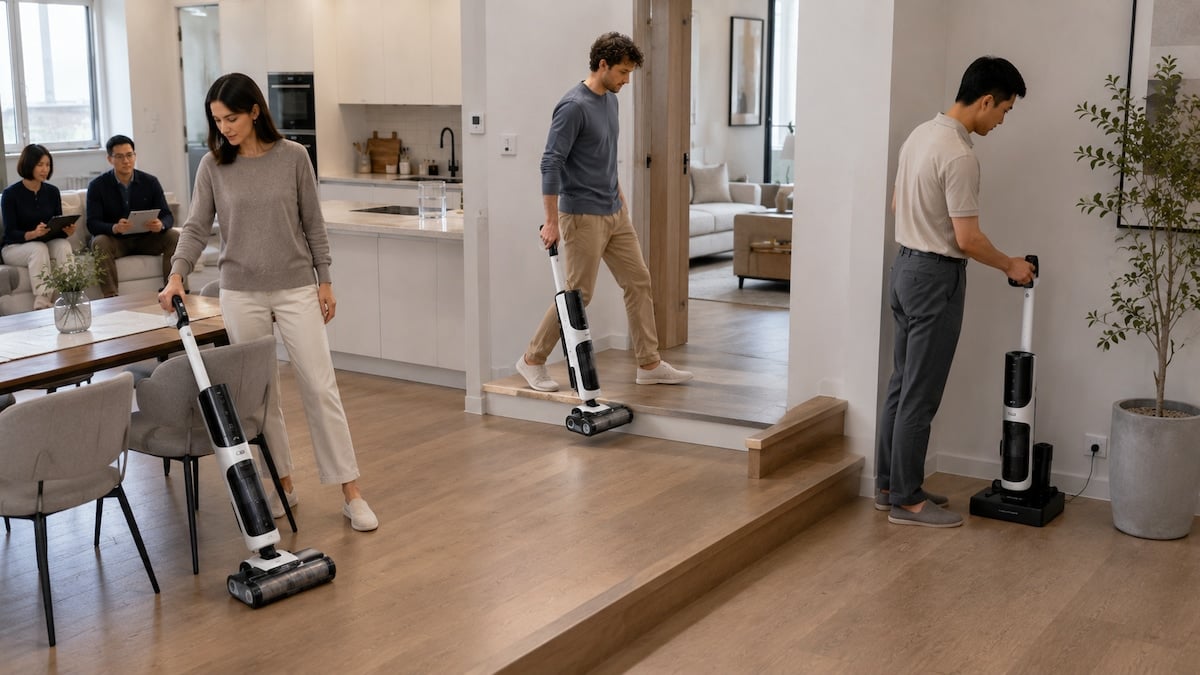
Lightweight Positioning Can Be a Commercial Decision
There is also a B2B reason to think carefully about this balance.
A product specification influences who can sell the machine convincingly.
A large premium floor washer with a long runtime, large tanks, multiple sensors and an advanced docking system may suit a retailer competing at the top of the category.
A lighter product can tell a different story.
It can target apartments.
Older consumers may appreciate easier handling.
People who regularly carry the machine between floors may care about weight more than maximum tank capacity.
Smaller households may prefer a machine that is easier to store.
E-commerce sellers may also benefit from a product whose visual proposition is simple to demonstrate: pick it up, steer it easily and reach places that heavier machines make inconvenient.
None of these positioning choices makes the product universally better.
They make it more specific.
That is what a good private-label project should do.
The mistake is trying to combine every premium competitor specification into one machine simply because each number looks attractive by itself.
A 3 kg body.
A one-litre tank.
A 60-minute battery.
Maximum suction.
The largest motor.
Full automation.
The smallest physical size.
The lowest cost.
At some point those objectives begin fighting each other.
Product development is deciding which ones deserve to win.
Do Not Forget Gross Weight and Packaging
For B2B buyers, there is one more weight that consumers rarely see.
Gross weight.
The current Y20 page lists a 3.0 kg net machine weight and 6.5 kg gross packaged weight. It also publishes container-loading figures for 20GP, 40GP and 40HC shipments.
This is a useful reminder that making the appliance lighter does not automatically make the finished shipment proportionally lighter.
The carton also contains the dock, adapter, packaging protection, accessories, manuals and other components.
Freight can also be influenced by carton dimensions and volumetric weight, not only the kilograms shown on a scale.
For a private-label project, the product team should therefore review net weight and packed logistics separately.
A lightweight machine can create a strong consumer benefit even if it does not radically change freight cost.
Packaging optimization is a different engineering problem.
Keeping those two objectives separate prevents the sourcing team from making unrealistic assumptions about the commercial value of removing another 200 grams from the appliance.
The Right Balance Starts with the Customer
There is no ideal floor-washer specification that works for every market.
That is probably the most important conclusion.
A buyer targeting smaller urban homes may decide that 3 kg, moderate tanks and adequate runtime create the right combination.
Another buyer may deliberately accept another kilogram because their customers value a longer uninterrupted session.
A third may prioritize power-assisted movement, making the machine feel easier on the floor even though the scale weight is higher.
All three decisions can be correct.
What matters is that weight, water and battery are designed together.
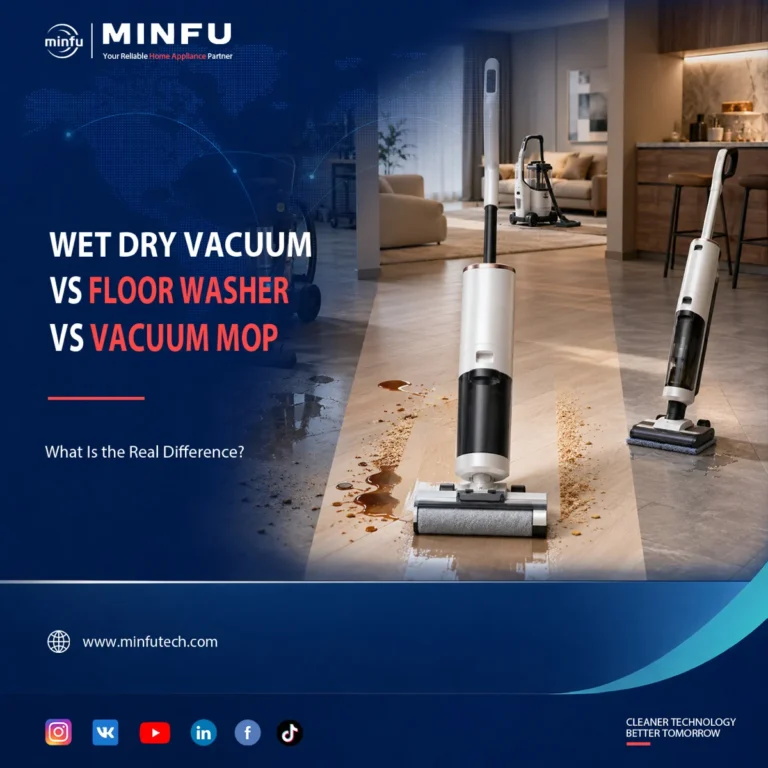
The earlier article Wet Dry Vacuum vs Floor Washer vs Vacuum Mop: What Is the Difference? explains why the product architecture should be defined before sourcing begins.
180° Flat-Reach Floor Washers: What Buyers Should Verify looks at how geometry and wastewater control change once the machine lies flat.
Does Higher Suction Mean Better Cleaning in a Wet Dry Vacuum? explains why cleaning performance should not be reduced to one Pa figure.
And Floor Washer Self-Cleaning and Hot-Air Drying: What Buyers Should Test looks at what happens after the cleaning session ends.
Weight, tank capacity and runtime connect all of those systems.
They determine how long the machine works, how much water it carries and how much effort the user feels while doing it.
Final Thoughts
A lightweight floor washer is not simply a normal floor washer with fewer kilograms.
It is a product built around different priorities.
Reducing weight can improve carrying, steering and everyday convenience. Larger tanks can reduce interruptions. A larger battery can extend runtime.
But none of those advantages is free.
More water adds working mass.
More battery capacity can add weight and cost.
Smaller tanks can preserve agility but increase refill frequency.
Power-assisted wheels can reduce cleaning effort but do nothing when the machine has to be carried.
This is why B2B buyers should stop asking three separate questions:
“How light is it?”
“How big are the tanks?”
“How long does it run?”
Ask one question instead:
Do the weight, water capacity and runtime make sense together for the customer we are trying to sell to?
For a platform such as the Minfu Y20, that is where the 3.0 kg positioning becomes more meaningful.
The number is not the product.
The advantage comes from what that number allows the customer to do comfortably from the moment the machine leaves the dock until the cleaning is finished.