
2025 Cleaning Appliance Trends: Canton Fair & CES Reveal Industry’s New Direction | Minfu Insights

2025 Cleaning Appliance Trends: Canton Fair & CES Reveal Industry’s New Direction | Minfu Insights

Minfu
November 10, 2025
1,027 Views


Trade shows are useful for spotting new technology.

They are less useful if every new feature is automatically treated as the next big product opportunity.

That was one of the clearest lessons from the cleaning appliance market in 2025.

Across CES, IFA and the Canton Fair, manufacturers showed robot vacuums with more advanced obstacle handling, floor washers with increasingly automated maintenance, and cleaning robots moving into windows, pools and commercial spaces.

For distributors and private-label brands, however, the important question was not:

“What was the most impressive product at the show?”

It was:

“Which of these ideas is mature enough to become a commercially workable product?”

At Minfu, this is how we prefer to look at exhibition trends.

A feature may attract attention at a booth, but an OEM buyer also has to think about product cost, reliability, maintenance, certification, packaging, software, spare parts and whether customers will actually use the function after purchase.

Looking back at the major cleaning appliance trends of 2025, five changes stand out.

1. Robot Vacuums Started Solving Problems Beyond Navigation

For several years, robot vacuum development was easy to summarize.

Navigation became more precise.

Suction increased.

Mopping systems improved.

Docking stations added more automatic functions.

By 2025, however, the development direction had become more complicated.

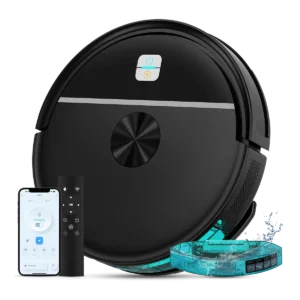
At Roborock’s CES 2025 showcase, for example, the company presented products focused not only on suction and mapping, but also on low-profile navigation, anti-tangle systems and more advanced obstacle interaction.

The Saros Z70 pushed the idea further with a mechanical arm designed to interact with certain objects instead of simply navigating around them.

Whether mechanical arms become mainstream across every price segment is another question.

What matters for B2B buyers is the direction behind the feature.

Robot vacuum development is increasingly focused on the parts of the home that earlier generations still handled poorly:

objects left on the floor,

hair wrapping around rollers,

low furniture,

thresholds,

edges and corners,

and areas temporarily blocked by household items.

This changes how buyers should evaluate a robot vacuum cleaner manufacturer.

A high suction figure and a LiDAR tower are no longer enough to define a premium machine.

Buyers increasingly need to ask what the robot does when the environment becomes difficult.

2. Anti-Tangle Has Moved From a Pet Feature to a Core Design Issue

Hair management used to appear mainly in products marketed toward pet owners.

That has changed.

Long hair, pet hair and fibers can affect the main roller, side brushes and wheel shafts in almost any household.

As a result, anti-tangle structures increasingly appear as part of the basic mechanical design rather than as a niche accessory.

This matters because anti-tangle performance cannot be judged from a product rendering.

Two rollers that look similar may behave very differently after several cleaning cycles.

For B2B buyers, repeated testing is more important than the supplier simply stating “zero tangle.”

Run the machine on both short and long fibers.

Inspect the main roller.

Check the side-brush shaft.

Look around the caster and drive wheels.

Repeat the test.

The important question is not whether one strand of hair remains.

It is how quickly accumulation begins to affect cleaning or maintenance.

This is an example of a broader 2025 trend: product development is shifting from adding specifications toward removing everyday friction.

3. Floor Washers Entered the Self-Maintenance Stage

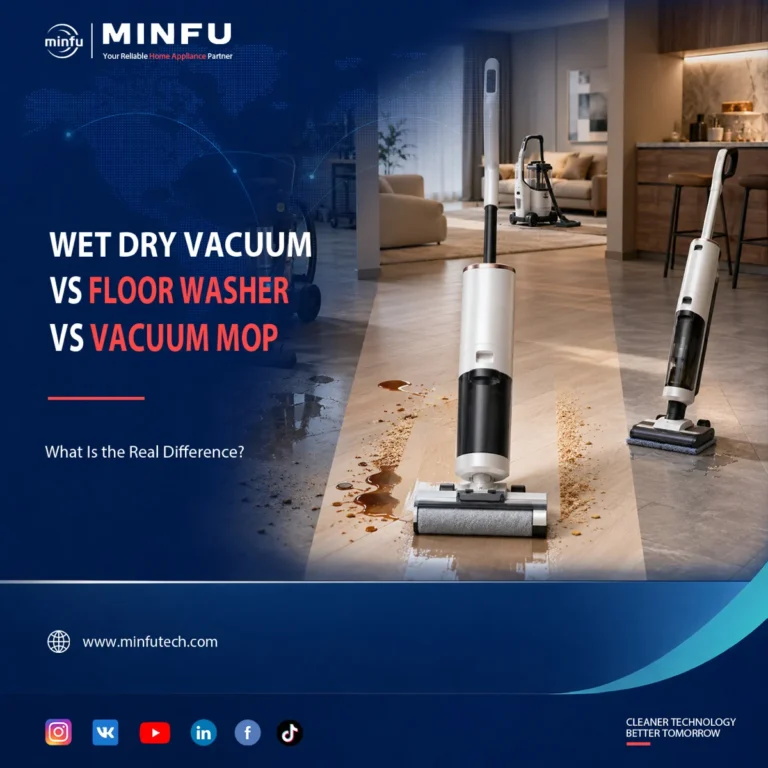
Wet-dry floor washers also changed noticeably.

Early products were often sold around a simple promise:

vacuum dry debris and wash the floor in one pass.

That is no longer enough to differentiate many products.

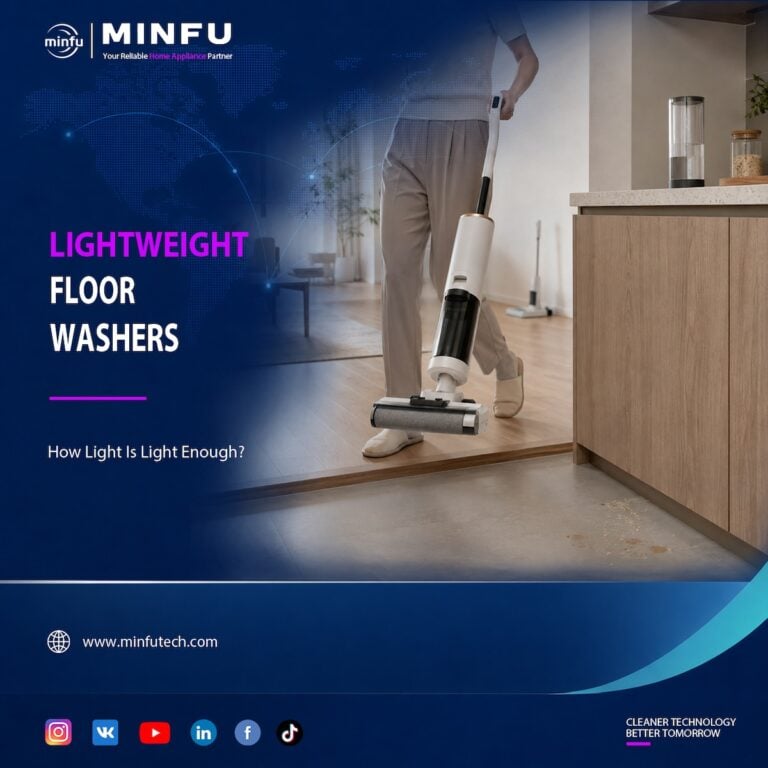
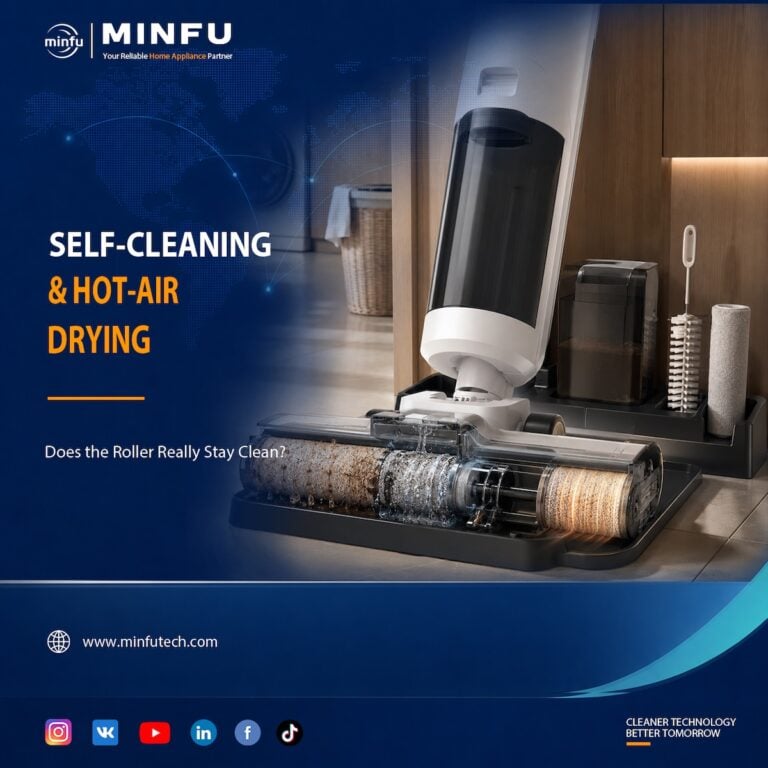
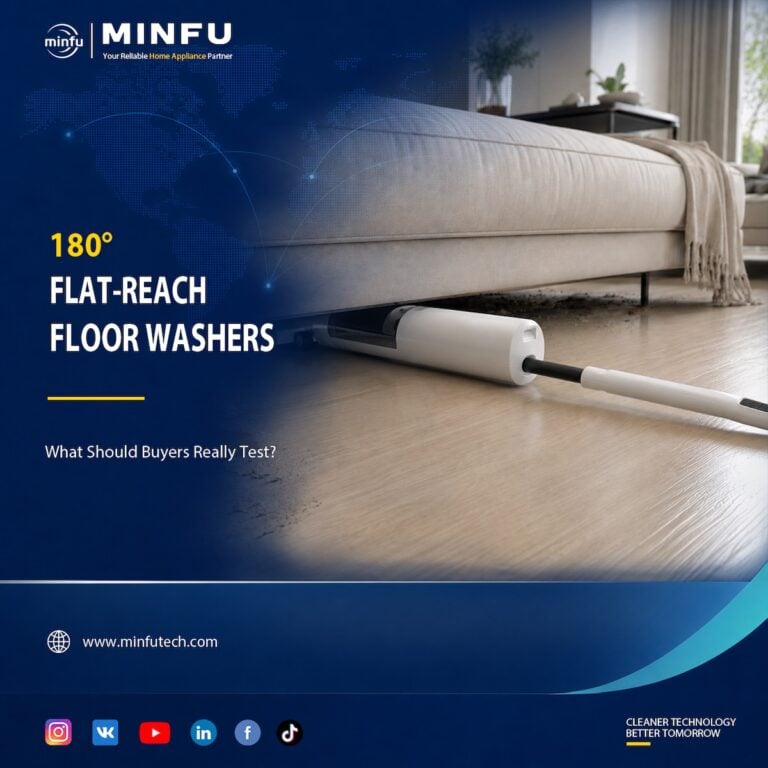
At Midea’s IFA 2025 showcase, its AT6 Ultra wet-dry cleaner highlighted a combination of edge cleaning, lay-flat access, hot-water roller washing and hot-air drying.

Other manufacturers have been moving in the same general direction.

The real trend is not simply “hotter water” or “more functions.”

It is that maintenance after cleaning has become part of the product experience.

A roller that remains wet can develop odor.

Hair trapped around the brush creates additional cleaning work.

A machine that cannot reach under furniture leaves obvious areas unfinished.

Water tanks that are difficult to rinse create another unpleasant task after use.

That is why a wet and dry vacuum manufacturer now has to think about what happens after the floor is already clean.

For OEM buyers, we would evaluate at least:

roller self-cleaning,

roller drying,

hair accumulation,

clean and dirty water separation,

tank removal,

edge reach,

lay-flat performance,

and how easily the user can access the parts that still require manual cleaning.

The best feature is often the one that removes a task the customer dislikes doing.

4. “Hands-Free” Is Becoming a System, Not One Feature

Robot vacuum docking stations show the same development.

Auto-emptying once looked like a major premium function by itself.

Then stations added mop washing.

After that came drying, water refilling, detergent dispensing and more automated maintenance.

This creates an important distinction for sourcing.

A robot with an all-in-one station should not be evaluated as one product.

It is really two connected systems:

the robot,

and the station.

That means there are more pumps, seals, sensors, water paths, electrical contacts and software interactions that can affect reliability.

The more automatic the product becomes, the more buyers should pay attention to failure points that do not appear in a feature comparison.

Can the robot dock consistently?

Does dirty water drain correctly?

Does hair interfere with auto-emptying?

How does the station behave after repeated wet-cleaning cycles?

Can the customer clean the station itself?

Which parts are replaceable?

This is why feature count and product maturity are not the same thing.

A simpler platform that works reliably can be a better commercial product than an impressive system that creates excessive after-sales pressure.

5. Cleaning Robots Are Moving Beyond the Living-Room Floor

Another important signal came from the expansion of cleaning robots into more specific environments.

The 137th Canton Fair introduced a dedicated Service Robots Zone for the first time. Exhibits included autonomous sweepers alongside other service and industrial robots.

By the 138th Canton Fair later in 2025, the service robot area continued and included commercial cleaning, façade cleaning and other scenario-specific robotic systems.

This is important because “cleaning robot” is becoming a much broader category.

Residential floors are only one application.

The same general trend can now be seen in:

window cleaning robots,

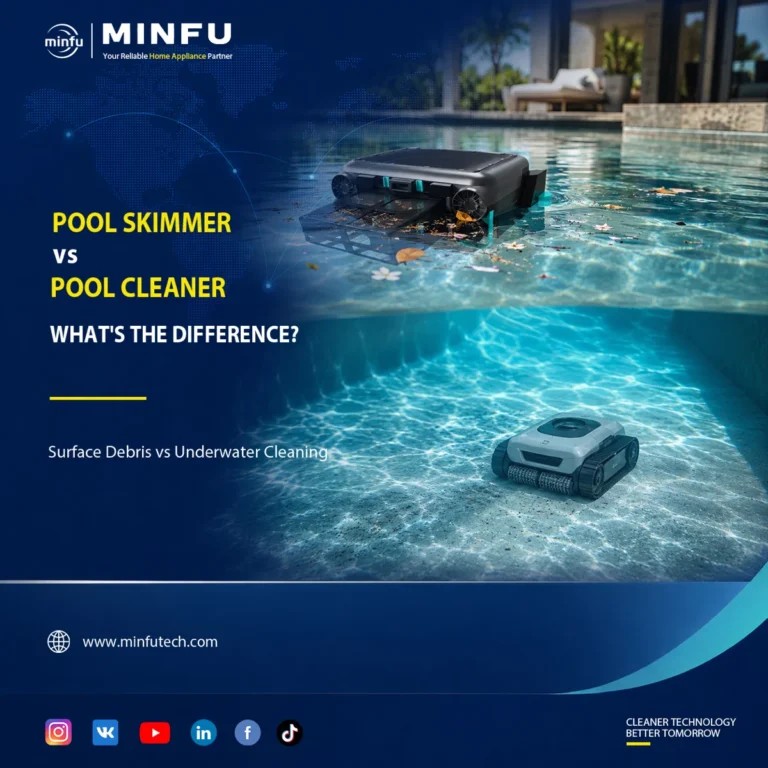
robotic pool cleaners,

commercial floor-cleaning robots,

outdoor cleaning equipment,

and other semi-autonomous cleaning systems.

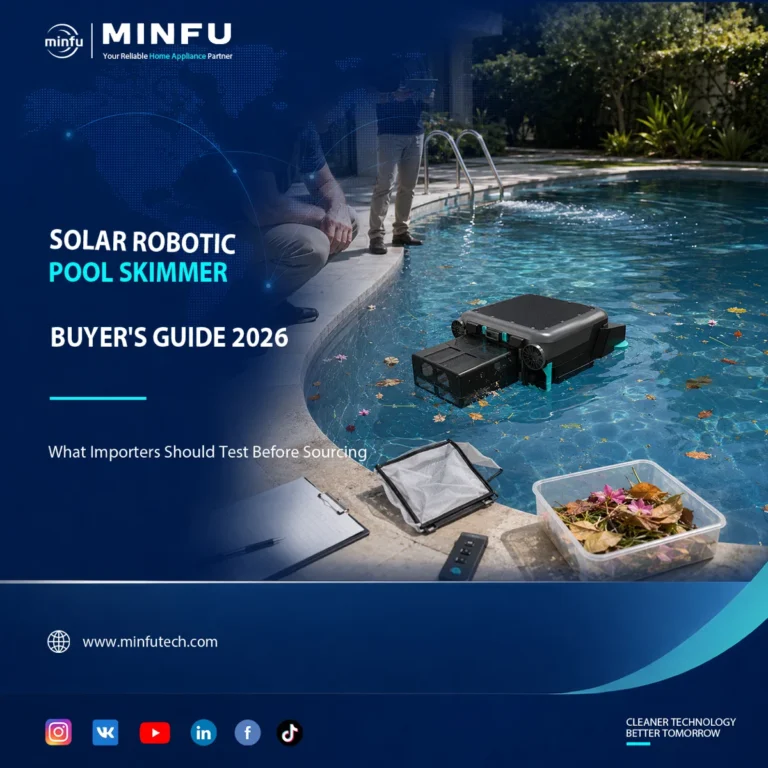
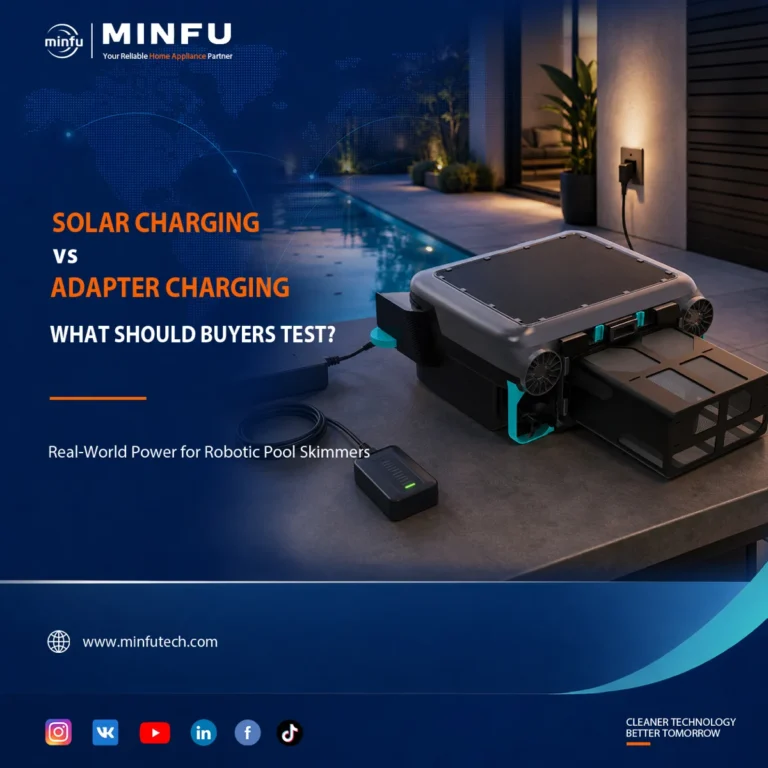
For a buyer working with a pool cleaning robot manufacturer, for example, navigation inside water, battery endurance, debris handling and recovery behavior matter much more than features borrowed from an indoor robot vacuum.

A window robot creates another set of priorities involving suction stability, edge detection, backup power and retrieval.

Commercial robots bring fleet operation, larger environments, obstacle interaction and maintenance into the discussion.

The takeaway is simple:

there is no single “robotics specification” that determines whether a cleaning robot is good.

The application defines the engineering priorities.

6. Scenario-Based Products Are Replacing Specification Stacking

This may be the most useful trend for product managers.

Cleaning appliances used to be relatively easy to compare on a shelf.

More watts.

More Pa.

Longer runtime.

Larger tank.

More modes.

Those numbers still matter, but mature categories increasingly compete through the quality of the complete use case.

Consider a floor washer.

Increasing tank capacity may allow longer cleaning, but it also makes the machine heavier.

Increasing battery capacity extends runtime, but adds cost and weight.

Higher suction may improve recovery, but airflow design and cleaning-head contact still affect the final result.

Adding more automatic functions can reduce maintenance, but increases system complexity.

There is no configuration that maximizes everything at the same time.

This is why we recommend starting OEM/ODM development with the target user and sales channel rather than a list of maximum specifications.

A compact urban-apartment product may prioritize weight and maneuverability.

A premium retail product may justify more automatic maintenance.

A pet-focused robot may prioritize hair management.

A wholesale project targeting price-sensitive channels may be better with a simpler, proven platform.

Good product planning is increasingly about choosing the right compromises.

7. Easy Maintenance Is Becoming a Competitive Feature

One feature repeatedly connects robot vacuums, floor washers and upholstery cleaners:

the customer eventually has to clean the cleaning machine.

This part is easy to overlook during product development because it does not make dramatic advertising footage.

But it can strongly influence product reviews.

Can the brush be removed without tools?

Can hair be reached easily?

Can the dirty-water tank be rinsed completely?

Does the roller dry properly?

Can the filter be purchased later?

Are replacement brushes, bags and accessories available?

Can the customer reach the areas where residue actually accumulates?

The difference between an easy-to-maintain product and a frustrating one may not appear during a five-minute showroom demonstration.

It usually appears several weeks later.

For OEM buyers, maintenance should therefore be tested during the sample stage rather than left to the instruction manual.

Use the machine.

Make it dirty.

Then clean the machine itself.

That exercise often reveals more than another page of specifications.

8. More Intelligence Also Means More Software Responsibility

As cleaning products become smarter, sourcing is no longer purely a hardware decision.

Robot vacuums may depend on mapping software, mobile applications, firmware updates and cloud services.

Obstacle recognition may depend on algorithms.

Voice prompts may need localization.

App functions may differ between markets.

For a private-label buyer, these questions deserve attention before launch.

Who maintains the application?

How are firmware updates handled?

What happens if the hardware configuration changes?

Can the app branding be customized?

What languages are supported?

Which functions depend on cloud connectivity?

How are privacy and cybersecurity requirements handled in the destination market?

A buyer does not need to become a software engineer.

But once software becomes part of the customer’s daily interaction with the appliance, it also becomes part of product quality.

9. Exhibition Features Still Need Factory Validation

Trade fairs are excellent places to discover ideas.

They are not substitutes for sample testing.

A machine displayed under controlled booth conditions may have been carefully prepared.

The floor is known.

Obstacles are positioned in advance.

The test cycle is short.

The machine is clean.

A buyer needs to find out what happens outside that environment.

At Minfu, we would rather turn an exhibition feature into a test question.

If the product claims anti-tangle performance:

run repeated hair tests.

If it has automatic mop washing:

inspect the roller and station after repeated cycles.

If it has obstacle avoidance:

change the objects and positions.

If it has hot-air drying:

check the roller at different points during the drying process.

If it has a large battery:

run the complete machine rather than evaluating battery capacity by itself.

If it has edge detection:

test several different edge structures.

This approach is less exciting than a trade-show demonstration.

It is much more useful before a bulk order.

10. What These Trends Mean for OEM Buyers

The biggest mistake would be to look at 2025 exhibition products and conclude that every new project now needs the maximum number of features.

That is not what the market was showing.

The stronger signal was that cleaning appliances are becoming more specialized.

Buyers therefore need to define the product position more clearly.

Before requesting quotations, we recommend confirming:

the target market,

sales channel,

expected retail price,

main cleaning scenario,

required functions,

acceptable maintenance level,

software requirements,

expected order quantity,

and target launch schedule.

Then compare product platforms.

This usually produces a better sourcing conversation than sending ten competitor screenshots and asking the factory to combine every visible feature into one machine.

A Practical Trend-to-Sourcing Checklist

2025 Trend What Buyers Should Ask
Advanced robot navigation Does it improve real coverage or only add hardware?
Anti-tangle systems What happens after repeated long-hair tests?
All-in-one robot stations Which station functions create additional failure points?
Floor washer self-cleaning How much manual roller cleaning is still required?
Hot-air drying How consistently does the roller dry during actual use?
Lay-flat cleaning Can the complete machine operate normally under furniture?
Edge cleaning What gap remains along walls and corners?
More cleaning robot categories Is the engineering designed for the actual scenario?
AI and app functions Who supports firmware, cloud and localization?
More automation What happens when one automatic subsystem fails?
Larger specifications What cost, weight or logistics trade-off does the increase create?
Premium feature sets Does the target retail price justify the added complexity?

FAQ

What were the biggest cleaning appliance trends in 2025?

The most important changes included more sophisticated robot interaction with real household environments, stronger anti-tangle systems, automated maintenance, floor washer self-cleaning and drying, and expansion of cleaning robots into windows, pools and commercial environments.

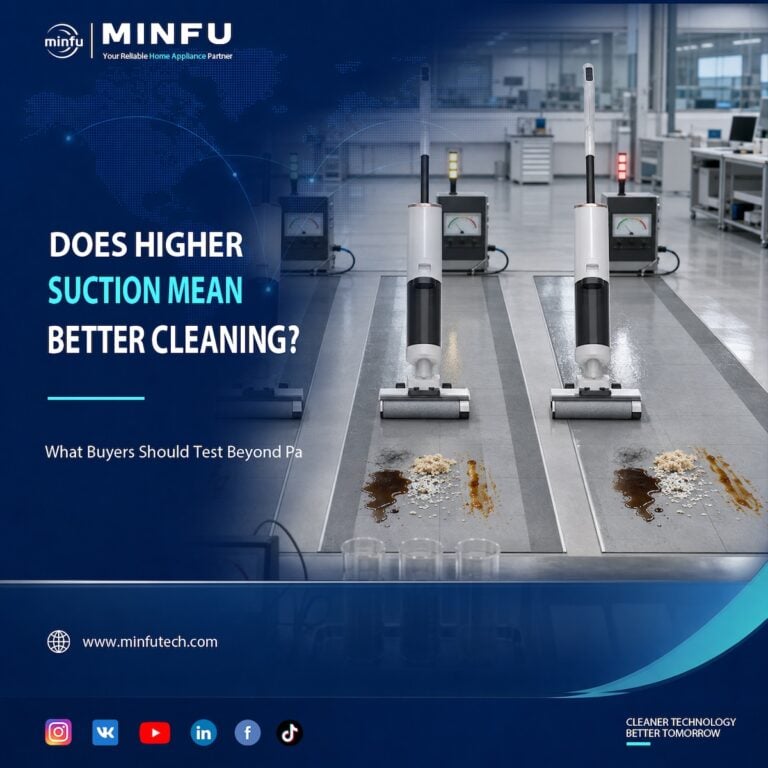
Is higher suction still important for cleaning appliances?

Yes, but it should not be evaluated alone. Airflow design, brush contact, sealing, floor type and the complete cleaning system determine how useful the suction specification is in practice.

Are all-in-one robot vacuum stations better for OEM projects?

Not automatically. They can create a stronger premium product, but they also introduce more pumps, sensors, water paths and maintenance requirements. The complete system should be validated before bulk production.

What should B2B buyers focus on at trade shows?

Use exhibitions to identify product directions and potential suppliers, but convert every important feature into a sample test before making a sourcing decision.

Should an OEM brand copy the latest flagship features?

Usually not. The better approach is to select features that fit the target customer, price point and channel. Mature and reliable functions often create more commercial value than simply maximizing the feature count.

What We Would Carry Forward From 2025

Looking back, 2025 was not simply a year when cleaning appliances became “smarter.”

The more meaningful change was that products became more specific about which problems they were trying to remove.

Robot vacuums started addressing obstacles, tangles and previously unreachable areas.

Floor washers increasingly addressed what happens to the roller after cleaning.

Docking stations tried to remove more manual maintenance.

Cleaning robots expanded into pools, windows and commercial environments.

For B2B buyers, that makes product selection more demanding.

The right question is no longer:

“Which product has the most advanced specifications?”

It is:

“Which configuration solves a real customer problem without creating unnecessary cost, complexity or after-sales risk?”

That is the question worth carrying into the next sourcing cycle.

Work With Minfu on Your Next Cleaning Appliance Project

Shenzhen Minfutech Industrial Co., Ltd. works with overseas brands, importers, wholesalers and distributors on OEM and ODM cleaning appliance projects.

Our product range covers multiple smart cleaning categories, while our OEM/ODM process supports projects from initial product selection and sample evaluation through customization, mass production and shipment.

If you are evaluating a new cleaning appliance project, send us your target product, market, expected quantity and customization requirements. Our team can help you evaluate the available options before moving into sampling and production.

Website: minfutech.com
OEM/ODM Solutions: minfutech.com/oem-odm-solutions/
Email: info@minfutech.com
WhatsApp / Phone: +86 137 6025 5781
Contact: minfutech.com/contact-minfu/

Inquire Now

Partner With Us
Get a customized wholesale quote from our specialists within 24 hours.