


In the highly competitive smart home appliance sector, speed to market is just as critical as the suction power of your motor. Missing the Q4 holiday shopping season—specifically the Black Friday to Christmas window—can cost a consumer brand millions of dollars in projected revenue and irrecoverable market share. However, in the manufacturing world, I’ve seen firsthand how accelerating production recklessly usually leads to catastrophic quality issues, skyrocketing RMA (Return Merchandise Authorization) rates, and the ultimate destruction of a brand’s reputation.
This is the exact, seemingly impossible dilemma a well-established European home appliance brand brought to my desk late last summer.
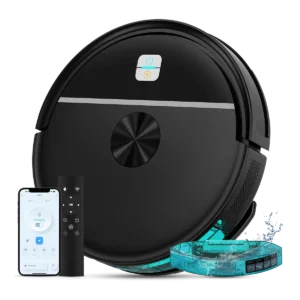
They needed a flagship, LiDAR-guided robot vacuum sitting on retail shelves and inside Amazon FBA European warehouses before Black Friday. Looking at the calendar on my wall, that gave my team a microscopic window of exactly 90 days from the initial design handshake to final delivery in Germany.
Here is the untold, behind-the-scenes story of how our engineering, R&D, and supply chain teams at Minfu Tech turned a standard 6-to-8-month ODM (Original Design Manufacturing) process into a 90-day triumph—without sacrificing a single quality metric.
🛑 The Challenge: A Race Against Time, Carpets, and Compliance
The Client Profile: The client (whose exact identity remains protected under our strict NDA protocols) is a legacy floor-care brand in Western Europe. For decades, they dominated the traditional, corded, and stick vacuum markets. However, market intelligence showed they were rapidly losing their younger demographic to Asian smart-robotics giants. They needed to pivot to automated smart cleaning immediately. They didn’t just need a factory; they needed a strategic rescue team.
When they walked into my Shenzhen conference room on Day 1, the hurdles were laid out plainly on the whiteboard. Frankly, they were terrifying.
Hurdle 1: The Devastating Time Crunch A standard ODM project—which involves altering exterior ID (Industrial Design), opening new plastic injection molds, testing PCBA motherboards, and achieving CE/RoHS certifications—takes anywhere from 5 to 7 months. We had 90 days. Every single hour mattered.
Hurdle 2: The “European Carpet” Engineering Paradox Unlike the hard wooden floors common in Asia, European homes frequently feature thick, high-pile carpets. Standard robot vacuums utilizing generic 2500Pa motors either get physically stuck on these carpets or entirely fail to extract embedded dust, leading to instant 1-star reviews. We had to solve this physics problem fast.
Hurdle 3: The Ironclad GDPR Compliance European data privacy laws are the strictest globally. A LiDAR robot vacuum scans a consumer’s home, effectively creating a 3D blueprint of their private living space. Any robotic vacuum utilizing mapping technology in Europe must ensure that this data is 100% encrypted and stored locally. A single data breach or compliance failure would result in millions of Euros in fines for our client.

Phase 1 (Days 1-15): Agile Blueprinting & The Hardware Pivot
The initial meeting was tense. The client’s design team brought beautiful, highly complex 3D CAD renders of a completely new exterior chassis they wanted us to build.
As the project lead, I had to intervene with a hard, uncompromising truth: New plastic injection molds take a minimum of 45 days just to tool, calibrate, and cool. If we build this new shell from scratch, you will miss Black Friday.
We had to pivot. In our manufacturing facility, we operate on a philosophy of “Modular ODM Engineering.” Because we invest millions annually into perfecting our core, battle-tested base platforms, we don’t have to reinvent the internal architecture for every single client.
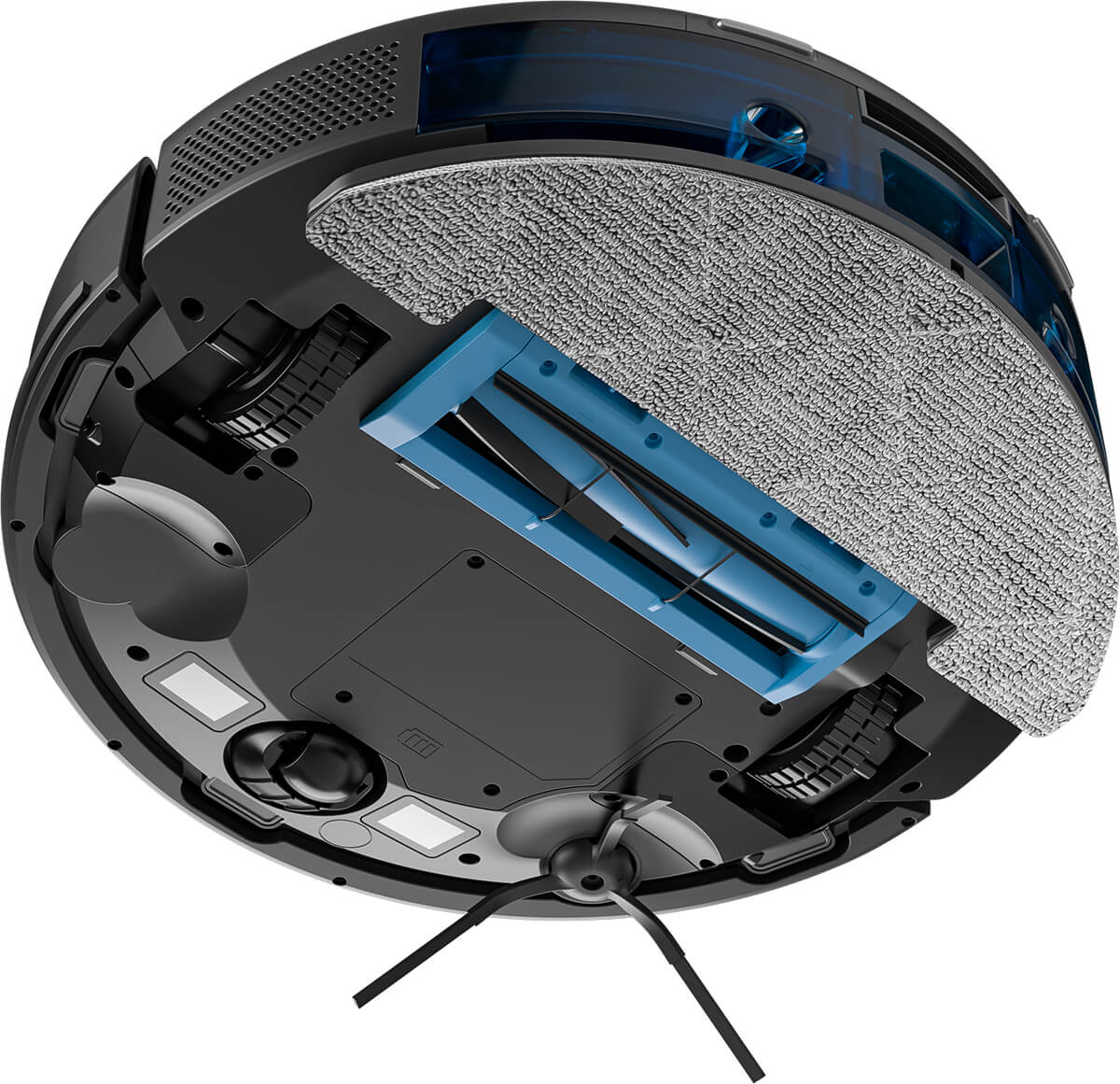
I proposed a bold alternative: We utilize our proven high-end LiDAR base platform—a chassis that already possessed CE and RoHS certifications—and focus 100% of our customized engineering on solving the European carpet problem and matching their brand’s visual identity through advanced CMF (Color, Materials, Finish).
1. Re-engineering the Muscle: The 4500Pa Nidec Solution
To solve the thick carpet extraction issue, my electromechanical engineers worked straight through the weekend. We stripped out the standard 3000Pa motor. Within 48 hours, we sourced a custom, high-torque Nidec 4500Pa BLDC (Brushless Direct Current) motor.
But raw power creates noise, and European consumers demand quiet appliances. So, we had to redesign the internal acoustic dampening chamber, utilizing specialized sound-absorbing foam to ensure the operational noise level stayed under a whisper-quiet 65dB, even on maximum suction mode.
2. The V-Shape Anti-Tangle Breakthrough
I knew a strong motor is useless if the brush roll gets jammed with pet hair and carpet fibers. Our R&D team completely redesigned the main brush module within 72 hours. We scrapped the standard bristle brush and equipped the unit with a customized V-shaped, aerodynamic silicone roller. This specific geometry agitates deep carpet fibers while forcing long hairs toward the edges where they can be easily detached, preventing catastrophic motor stalls.
3. CMF and Brand Identity
To ensure the product felt like it belonged to the client’s premium European lineup, we applied a proprietary matte-black, anti-scratch UV coating to the top shell. We also redesigned the physical geometry of the top laser turret cover, adding a sleek metallic accent ring that perfectly mirrored their traditional stick vacuums.
The Result: By Day 14, the hardware BOM (Bill of Materials) was locked in. The client held the final, fully functional “Golden Sample” in their hands. They were stunned. We had condensed a 2-month hardware development cycle into two weeks.
Phase 2 (Days 16-45): Software Localization & The Supply Chain War
Hardware is only half the battle. In 2026, a smart vacuum is essentially a rolling computer. It requires seamless IoT (Internet of Things) integration, a flawless mobile application, and absolute data security.
Navigating the Minefield of GDPR Compliance
The European Union’s GDPR (General Data Protection Regulation) is unforgiving. If a consumer’s home floor plan map was leaked or stored on unsecured servers outside the EU, our client would face devastating legal action.
Building a secure, compliant cloud infrastructure and App from scratch typically takes six to eight months of software engineering. We had 30 days.
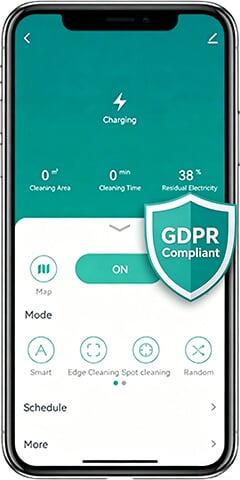
To overcome this, we leveraged our strategic, enterprise-level partnership with Tuya Smart. Instead of reinventing the code, our software team took Tuya’s robust, white-label smart home application and deeply customized the UI/UX to fit our client’s precise brand colors, typography, and European language localizations (German, French, Spanish, Italian).
More importantly, we configured the firmware so that all LiDAR mapping data and personal IoT traffic were forcibly routed directly to Amazon Web Services (AWS) servers physically located in Frankfurt, Germany. No data ever left European soil. We achieved 100% GDPR compliance instantly, providing the client’s legal team with immediate peace of mind.
The Supply Chain Crisis: Day 25
Just as we were preparing to transition into mass production, the reality of global electronics manufacturing hit us hard. On Day 25, we encountered a massive, potentially project-killing roadblock.
Our procurement team received notice that a global shortage had delayed the delivery of a critical 6-axis gyroscope sensor module required for the robot’s spatial orientation. The supplier quoted a 6-week delay. A 6-week delay meant missing Black Friday. The project was on the brink of collapse.
This is where the difference between a simple assembly plant and a Tier-1 Source Factory becomes apparent.
Because Minfu Tech purchases millions of components annually, we have immense leverage. I personally got on the phone with the regional VP of the semiconductor manufacturer. We bypassed the standard regional distributors and leveraged our Tier-1 purchasing status to negotiate a direct emergency reallocation.
Within 48 hours of intense negotiations, we secured an expedited air-freight shipment of 20,000 gyroscope chips directly to our Shenzhen facility. Mass production continued without a single day of assembly downtime. The crisis was averted through sheer supply chain muscle.
Phase 3 (Days 46-70): Mass Production & The Brutal QA Process
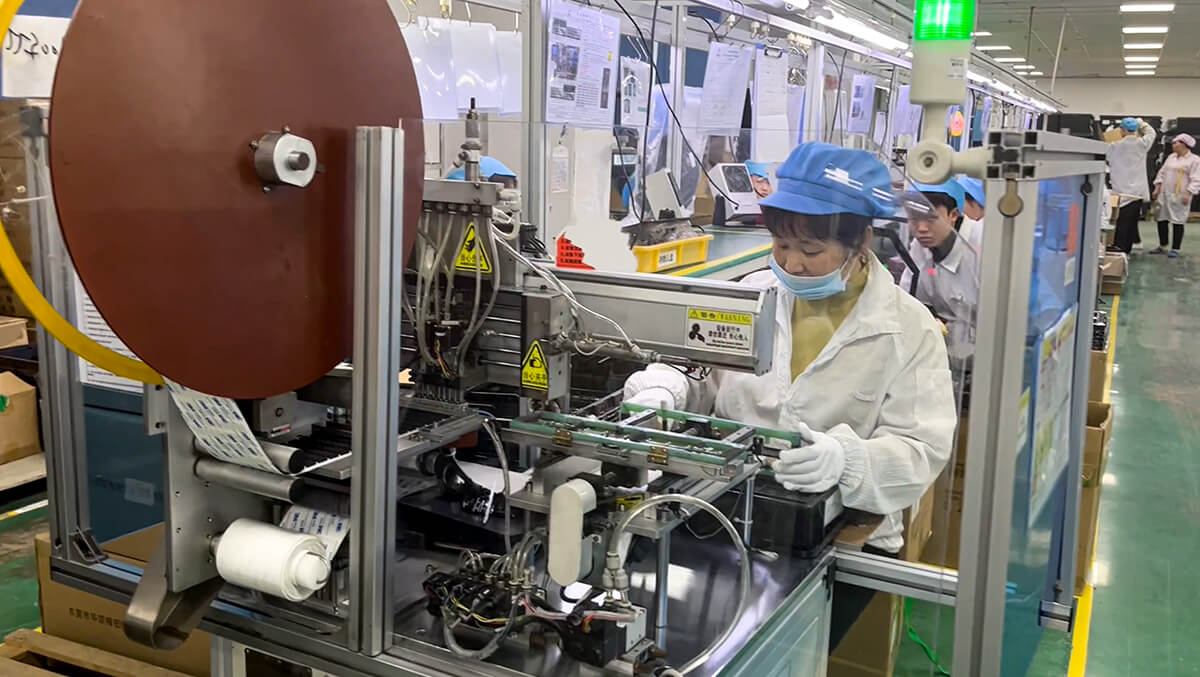
By Day 46, our assembly lines were running three shifts, 24 hours a day. When facing a massive deadline, the temptation for any factory manager is to speed up the conveyor belt and loosen inspection criteria. I instructed my production floor to do the exact opposite.
I know firsthand that if we rushed and delivered 15,000 defective units to Europe, the client’s brand would be permanently destroyed by Black Friday returns. To ensure absolute perfection, we enforced our strictest AQL (Acceptable Quality Limit) 1.0 standard.
- 100% AOI Testing: Every single PCBA motherboard produced underwent Automated Optical Inspection (AOI) to catch even microscopic soldering flaws before they were installed into the chassis.
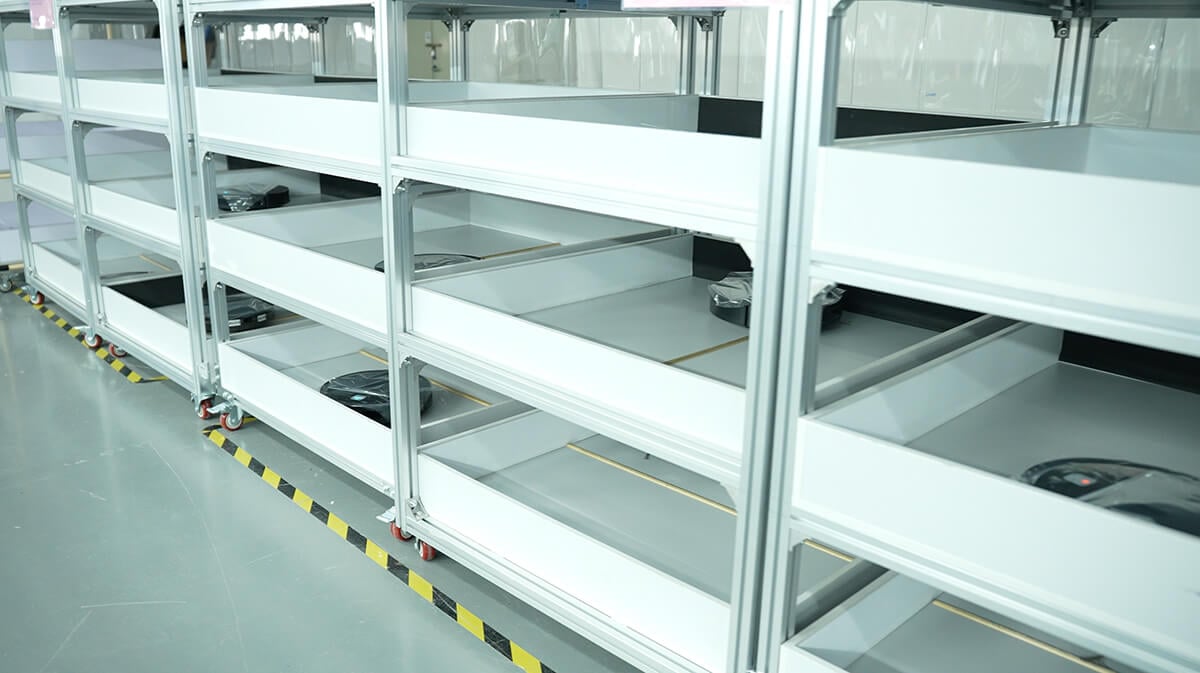
- The Isolation Chamber: After final assembly, 100% of the units were placed in a localized, signal-shielded isolation chamber. Here, automated testing rigs verified Wi-Fi pairing strength, LiDAR laser accuracy, and motor decibel output. Any unit deviating by more than 2% from the baseline was instantly rejected.
Data Insight: The True Cost of Quality Control I always show my clients the following math. Quality control is not a cost center; it is your ultimate profit-preservation strategy. Look at the stark difference between industry-standard ODM factories and our rigorous approach based on a 15,000-unit run:
Table 1: Financial Impact of RMA (Return Merchandise Authorization)
| Metric | Industry Standard ODM | Minfu Modular ODM | Business Impact |
|---|---|---|---|
| Out-of-Box Defect Rate | 3.5% – 5.0% | < 1.2% | Protected Brand Reputation |
| Defective Units (per 15k) | ~600 Units | ~120 Units | Saved 480 unhappy customers |
| Est. Cost of Returns & FBA Fees | ~$90,000 | ~$18,000 | Saved $72,000 in lost profit |
The Midnight OTA Firmware Save
Quality control isn’t just about hardware; it’s about software harmony. During this phase, we pulled random samples from the first 1,000 fully assembled units and placed them in our Reliability Lab for continuous 500-hour aging and stress tests.
On Day 52, our lab engineers discovered a highly specific, rare software glitch. When the robot transitioned from a light-colored floor directly onto a pitch-black carpet, the infrared cliff sensors misinterpreted the black fabric as a “staircase drop-off.” The robot would hesitate and back away, refusing to clean the black carpet.
If we had to manually re-flash the motherboards of the thousands of units already assembled, we would lose weeks. Instead, our software engineering team worked overnight. By 4:00 AM, they had rewritten the sensor calibration algorithm. Because we had built the system with robust cloud capabilities, we pushed an OTA (Over-The-Air) firmware patch directly to the entire batch on the factory floor via our testing network. The issue was solved instantly, securely, and silently. Not a single defective unit left the building.
🚂 Phase 4 (Days 71-90): Containerization & The European Express
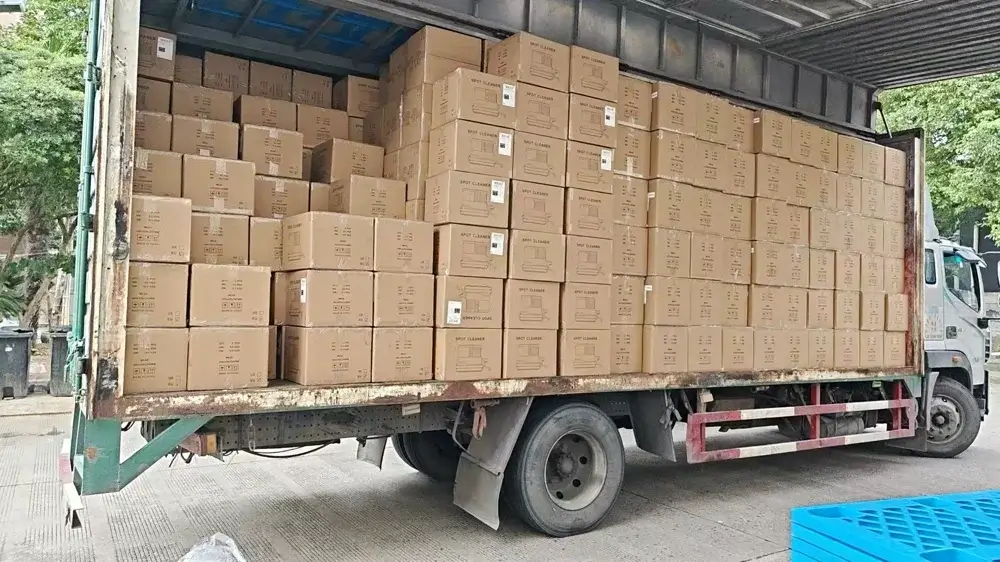
By Day 71, all 15,000 units were fully assembled, wrapped in premium, localized European retail packaging, palletized, and loaded into shipping containers.
However, standard ocean freight from Shenzhen to Hamburg typically takes 35 to 45 days. If we put them on a boat, they would miss the Black Friday window. Air freight, on the other hand, would completely obliterate their gross margins due to the heavy weight of robot vacuums with base stations.
Working closely with the client’s logistics partners, we executed the perfect middle-ground alternative. We loaded the containers onto the China-Europe Railway Express (中欧班列).
Table 2: Q4 Emergency Logistics Comparison (Shenzhen to Germany)
| Transport Mode | Est. Transit Time | Cost Multiplier | Strategy for this Project |
|---|---|---|---|
| Ocean Freight | 35-45 Days | 1x (Base) | Too slow. Would miss Black Friday. |
| Air Freight | 5-7 Days | 6x – 8x | Rejected. Destroys gross margins. |
| China-Europe Railway | 15-18 Days | 1.5x – 2x | The Perfect Balance. Delivered Day 88. |
We tracked the train’s progress daily. The goods cleared EU customs seamlessly (thanks to our meticulously prepared CE and RoHS documentation) and arrived at the client’s central distribution warehouse in Germany on Day 88—two full days ahead of our impossible 90-day deadline.
📈 The Business Impact (The Results)
The launch was nothing short of a commercial triumph for the European brand. My team and I watched the sales data roll in with immense pride.
- Time-to-Market Victory: Successfully launched in exactly 90 days, the brand captured the massive Q4 holiday spending surge, retaining their loyal customer base who were looking to upgrade to smart tech.
- Sales Performance: The initial batch of 15,000 units completely sold out across both physical retail shelves and Amazon EU channels within 6 weeks.
- Massive Profitability: Because they utilized our customized Minfu Tech ODM process rather than starting from scratch, the client saved an estimated $45,000 in upfront tooling and NRE (Non-Recurring Engineering) costs. This drastically lowered their break-even point, resulting in a staggering 42% gross margin.
- Unprecedented Quality Assurance: Post-holiday RMA data revealed an out-of-box defect rate of just 0.8%—phenomenally low for a complex smart appliance. Furthermore, the customized V-shaped brush engineered specifically for their market earned them hundreds of 5-star organic reviews from European pet owners.
❓ Frequently Asked Questions (FAQ)
Clients often ask me similar questions when reviewing this case study. Here are the answers to the most common inquiries regarding our ODM capabilities:
Q1: Do I need to order 15,000 units to get this level of ODM customization? A: Absolutely not. While this specific enterprise client ordered 15,000 units for a Q4 launch, we strongly support agile manufacturing. For new B2B partners, our OEM/ODM projects can start with MOQs as low as 500 to 1,000 units, allowing you to validate your local market before committing massive capital.
Q2: How did you ensure 100% GDPR compliance for the App mapping data? A: We never cut corners on data privacy. We utilized our enterprise partnership with Tuya Smart IoT, customizing the white-label app UI for the client, and forcibly routing all LiDAR mapping data and personal IoT traffic to AWS (Amazon Web Services) servers physically located in Frankfurt, Germany. No data left European soil.
Q3: What happens if we experience high defect rates after the launch? A: As detailed in the case study, our rigorous AQL 1.0 standard keeps defect rates under 1.2%. However, for absolute peace of mind, we provide a standard 1-year warranty on core components (motor, motherboard, battery). Additionally, we supply a negotiated percentage (usually 1-2%) of free spare parts with your bulk order so you can instantly handle any local replacements without returning goods overseas.
Q4: Can Minfu Tech help us get CE, FCC, or RoHS certifications? A: Yes. Our core modular platforms are pre-certified for major global markets (CE, RoHS, FCC, REACH). If you require specific customizations, our compliance team handles the entire laboratory testing and certification process on your behalf, ensuring seamless customs clearance.
🤝 Conclusion: Partner With Engineering Power, Not Just a Factory
Reflecting on this 90-day sprint detailed in this robot vacuum case study, it is a testament to what is possible when you partner with a true source factory rather than a mere assembly plant.
At its core, a successful Minfu Tech ODM partnership is about more than just putting parts together in a box. We are a silent engineering powerhouse. We understand that in the B2B world, your factory partner is the backbone of your brand’s reputation and your financial success.
Whether you are facing a terrifyingly tight deadline, a complex hardware engineering challenge like European carpets, or strict regional compliance laws like GDPR, we have the manufacturing muscle, the supply chain leverage, and the R&D agility to turn your vision into a highly profitable reality.
Are you ready to launch your next flagship smart home product? Don’t let slow manufacturing timelines or sub-par engineering cost you your market share.
👉 [Contact Our Global B2B Engineering & Sales Team Today] to discuss your next OEM/ODM project. Bring us your toughest deadlines and your biggest challenges. Let’s build something extraordinary together.