


Executive Summary: The Industry Inflection Point
The global smart home cleaning ecosystem has exited its experimental novelty phase and entered a period of hyper-accelerated mass adoption. While independent industry projections indicate that the robotic vacuum cleaner market is on track to surpass $15.3 Billion by 2028, what I see every day on the factory floor here at Minfu tells an even more urgent story.
For entrepreneurs, regional distributors, Amazon FBA aggregators, and established home appliance brands seeking to expand their portfolios, I always emphasize that the strategic question is no longer if you should enter the automated floor care market. The critical question is how to capture market share efficiently without suffering the multimillion-dollar burn rate associated with independent research and development (R&D).
Based on years of manufacturing experience, I can confidently say that white labeling (OEM) and custom manufacturing (ODM) offer the most efficient, data-backed paths to market leadership. As someone who oversees production and strategy at Minfu, I wrote this whitepaper to walk you through the macroeconomic market realities, hardware engineering deep-dives, competitive brand strategies, and the exact financial modeling you need to launch a highly profitable smart cleaning brand this year.
1. The Macro-Economics of Floor Care in 2026
Before engineering a physical product, I always advise our partners to engineer a viable business case. The 2026 smart cleaning market is a complex ecosystem driven by distinct macroeconomic shifts and evolving consumer behavioral patterns. Trust me, I’ve seen too many brands rely on outdated market assumptions from 2022, only to end up with warehouses full of stagnant inventory.
1.1 The “Value” Shift & The Eradication of the Brand Tax
While the overall Total Addressable Market (TAM) is expanding rapidly, the distribution of wealth within that market is shifting. Post-pandemic inflation, rising global living costs, and economic recalibrations have tightened consumer discretionary budgets. However, the desire for smart home automation hasn’t decreased; rather, consumers have become hyper-rational.
We see this clearly from our B2B order trends: consumers are no longer willing to pay a 40% “brand tax” simply to have a globally recognized logo stamped on their robot’s chassis. This cognitive shift has created a massive, highly lucrative “sweet spot” in the $300 to $500 retail range. The modern consumer demands 85% of flagship features (LiDAR mapping, self-emptying base stations, 4000Pa+ suction) at 50% of the premium market price. In my view, this is the exact intersection where agile white-label brands thrive.
1.2 The Pet Economy Boom: Hyper-Targeted Cleaning Demands
Market research indicates that over 65% of households in North America and Western Europe now own at least one pet. From a manufacturer’s perspective, this demographic is critically important because it drives the highest Average Order Value (AOV) and the highest machine replacement frequency in the industry.
We frequently tear down traditional, entry-level vacuums in our labs, and they fail spectacularly in pet-heavy households due to hair tangles burning out main motors and inadequate suction sealing for deep-pile carpets. Consumers are actively searching for high-suction, anti-tangle silicone brush rollers, and portable spot cleaners to handle bio-accidents.

- The Data Reality: Products that fail to explicitly address the “pet pain point” are losing market share at a rate of 12% year-over-year. A brand that positions its product line as “Pet-First” can comfortably command a 20-30% retail premium.
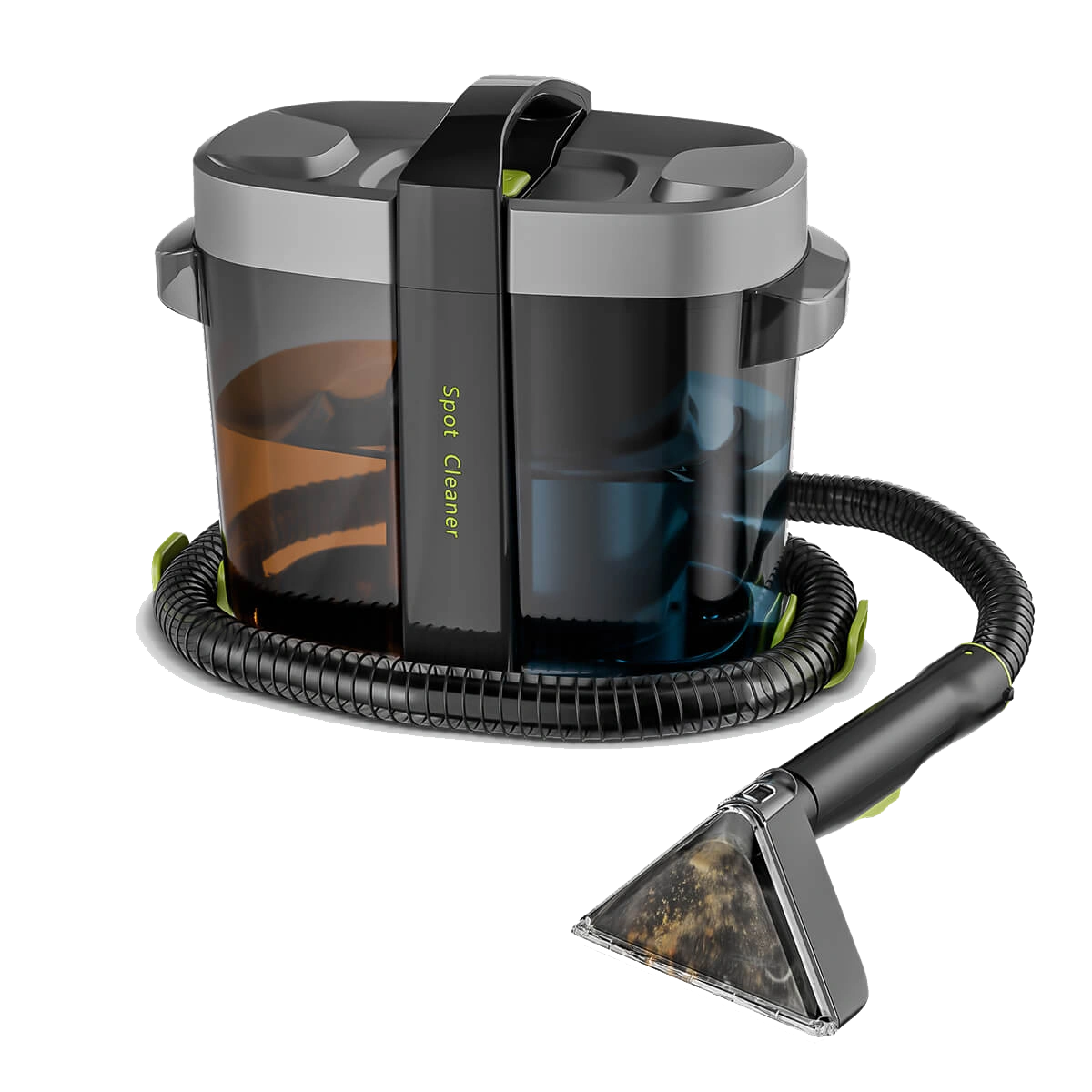
- The Engineering Response: When our team designed the Minfu C888 Spot Cleaner, I insisted we engineer it specifically for this booming sector. Featuring high-pressure extraction technology and dual-tank bio-waste separation, it allows our B2B partners to instantly tap into the lucrative, high-margin pet-care demographic without developing a machine from scratch.
1.3 The Irreversible Shift to “Hands-Free” All-in-One Stations
The consumer definition of “automation” has permanently evolved. Gone are the days of manually emptying tiny onboard dustbins, hand-washing dirty mop pads in the sink, or constantly refilling water tanks.
Consumer purchase data from Q1 2026 shows that over 72% of new robot vacuum purchases in the mid-to-high-end segment feature an Auto-Empty or an All-in-One Wash & Dry base station. Consumers are buying back their time, not just acquiring hardware. They demand a complete, set-and-forget ecosystem. I strongly believe that launching a premium standalone robot without a station in 2026 is a recipe for commercial failure.
1.4 Demographic Shifts: The Compact Living Trend
Millennials and Gen-Z consumers make up the fastest-growing segment of smart home buyers. However, a significant portion of this demographic lives in urban apartments or compact living spaces where massive, bulky base stations are impractical and visually intrusive.

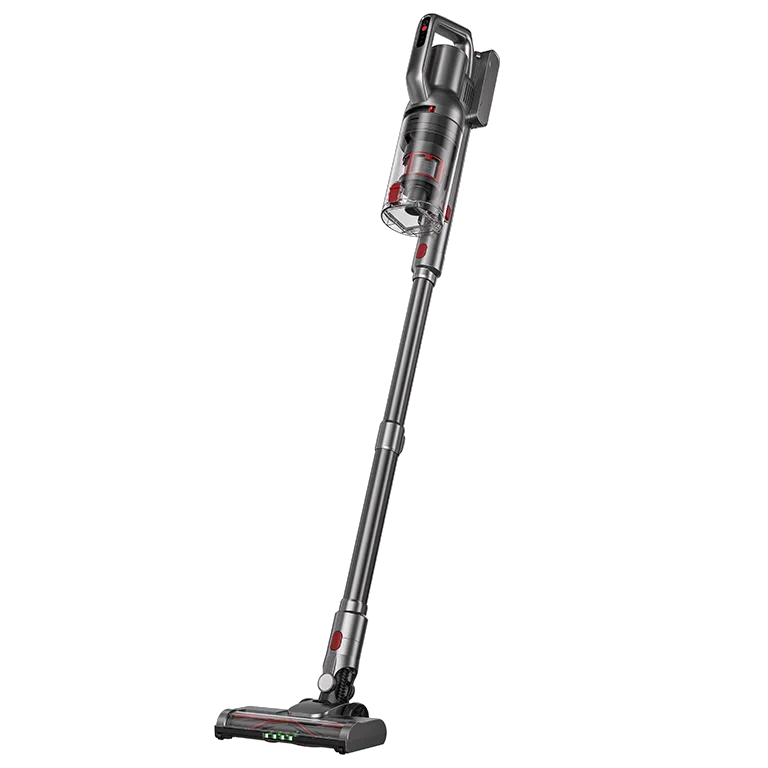
I noticed a surging, unfulfilled demand for ultra-compact, highly versatile cleaning gadgets that don’t dominate floor space. This demographic trend is exactly why we birthed the Minfu S17 Vacuum—a 1.2kg featherlight powerhouse featuring an innovative 2-in-1 suction and blowing function, designed specifically for tight corners, car interiors, and modern apartment living.
2. The Challenger Brand Strategy: Beating the Giants
I personally harbor immense respect for industry pioneers like iRobot, Roborock, and Ecovacs. These giants have spent billions of dollars over the last decade educating the global market, pushing the boundaries of spatial navigation, and establishing the baseline consumer demand for automated cleaning. However, their immense corporate size has become their strategic vulnerability.
2.1 The Mega-Brand Trap for Independent Distributors
I’ve spoken with countless regional wholesalers who are exhausted by the current market dynamic. Partnering with or distributing for mega-brands presents a massive, often fatal, challenge for independent businesses:
- Rigid Brand Controls: You have absolutely zero say in marketing, pricing strategies, or product feature sets. You are merely a logistical conduit for their brand equity.
- Astronomical MOQs & Capital Tie-Up: Mega-brands demand massive quarterly volume commitments. This forces distributors to tie up millions of dollars in inventory, destroying cash flow agility and leaving them vulnerable to market fluctuations.
- Razor-Thin Margins: Because the mega-brand holds all the leverage, regional distributors are often left fighting for single-digit gross profit margins (frequently as low as 5% to 8%). When you factor in advertising and operational overhead, the net profit is nearly non-existent.
2.2 The Minfu Advantage: The Agile “Fast Follower”
I always tell our clients: At Minfu, we do not aim to be the next consumer-facing mega-brand. Our corporate mission is singular: to be the silent, heavily armed manufacturing powerhouse behind YOUR brand.
By utilizing Minfu’s white-label OEM solutions, you execute a textbook “Challenger Brand” strategy:
- Zero R&D Burn: You completely bypass the devastating R&D burn rate. We amortize the cost of engineering across global volume; you simply reap the benefits.
- Massive Margin Disparity: You leverage our mature supply chains to launch high-spec machines with healthy 30% to 50% gross margins.
My goal is to give you the financial breathing room the giants refuse to give their distributors. With a 40% gross margin, you can afford to invest heavily in aggressive local marketing, dominate Amazon PPC (Pay-Per-Click) campaigns, and offer lucrative incentives to local retail channels to push your brand over the established names.
3. Decoding the Hardware & Software Ecosystem
To sell effectively and build a brand that garners 5-star reviews on highly competitive platforms like Amazon, you must understand what is under the hood. A sleek plastic shell cannot mask poor underlying engineering. When sourcing a manufacturing partner, scrutinize these technical pillars.

3.1 Navigation & Mapping Algorithms (The Spatial Brain)
Random bounce navigation is commercially obsolete. The 2026 baseline requires true spatial intelligence.
- Entry-Level (The Volume Drivers): Gyroscope navigation combined with dual optical flow sensors. This provides logical, bow-shaped (Z-shape) path planning for budget-conscious consumers. It is highly reliable and cheap to produce.
- Mid-to-High-End (The Profit Engines): LDS LiDAR (Laser Distance Sensor) combined with SLAM (Simultaneous Localization and Mapping).
- The Minfu Engineering Edge: Our proprietary SLAM algorithms are processed locally on Quad-Core ARM chipsets, ensuring millimeter-level obstacle avoidance, real-time dynamic mapping, and multi-floor memory capabilities. Furthermore, our PCBA (Printed Circuit Board Assembly) architecture supports OTA (Over-The-Air) firmware updates, ensuring your customers’ robots optimize their pathing efficiency and bug fixes remotely over time.
3.2 Motor Technology & Aerodynamics (The Muscle)
A high suction number on a marketing brochure (e.g., “5000Pa”) is meaningless if the airway is poorly designed.
- BLDC Supremacy: We exclusively utilize premium Nidec-style BLDC (Brushless Direct Current) motors for our mid and high-tier models. Unlike traditional brushed motors that suffer from friction wear, carbon dust buildup, and rapid heat generation, BLDC motors offer higher torque, lower decibel output, and a lifecycle that is up to 3x longer.
- Aerodynamic Sealing: Our engineers focus heavily on aerodynamic duct sealing. A common flaw in cheap, low-tier OEM robots is air leakage within the chassis. Our sealed air-duct engineering ensures almost zero suction loss from the motor impeller down to the floor-contact brush roll, delivering true deep-carpet extraction capability.
3.3 Battery Chemistry & Degradation Management
A robot vacuum is fundamentally an EV (Electric Vehicle) for your living room. We utilize high-density Lithium-Ion cell packs equipped with intelligent BMS (Battery Management Systems). Our BMS actively monitors cell voltage, temperature, and current discharge to prevent overcharging and thermal runaway. More importantly, our charge-cycle algorithms ensure that the battery retains over 80% of its original capacity even after 500 complete discharge cycles—drastically reducing warranty claims in year two.
3.4 Base Station Engineering: The Hidden Complexity
Building a reliable robot is difficult; building a reliable All-in-One base station is an engineering marvel. The base station must act as a miniature water treatment plant, a high-heat drying oven, and a high-velocity vacuum simultaneously. Minfu’s advanced stations feature:
- Dual-Pump Water Separation: Guaranteeing that clean water and dirty bio-waste never cross-contaminate within the internal plumbing.
- PTC High-Temperature Drying: Emitting 45°C-60°C heated air to rapidly dry mop pads within 2 hours. This completely eliminates damp mildew odors and bacterial growth—a major complaint in early-generation stations.
- Auto-Dust Collection Dynamics: Utilizing a 27,000Pa secondary high-bypass motor in the base to evacuate the robot’s onboard dustbin in under 12 seconds, utilizing a straight-duct design to prevent clogs.
4. Manufacturing Pathways: OEM vs. ODM
Understanding the nuances of contract manufacturing dictates your cash flow, Intellectual Property (IP) protection, and launch timeline. Choosing the wrong path can paralyze a new brand with unnecessary debt.

4.1 OEM (Original Equipment Manufacturer / White Labeling)
Think of OEM as “High-Speed Customization of Proven Tech.”
- The Process: You select from Minfu’s existing, heavily R&D-backed models (e.g., the S17 Lightweight or the C888 Washer). We apply your brand’s logo via durable silkscreen or laser engraving. We customize the packaging box to your brand guidelines, and we localize the App UI, voice prompt packs, and user manuals to your target market’s language.
- Time to Market: Extremely fast. Typically 4 to 6 weeks from final sample approval to mass production.
- Upfront Tooling/R&D Cost: $0. You do not pay for the millions we spent developing the hardware platform.
- Strategic Fit: Best for Startups, Amazon FBA sellers, regional distributors, and established brands testing a new product category with minimal financial risk.
4.2 ODM (Original Design Manufacturer)
Think of ODM as “Co-Creation for Absolute Exclusivity.”
- The Process: You collaborate with our senior engineers to alter the physical plastic injection molds, modify the Industrial Design (ID), or integrate exclusive functional hardware (such as adding a specialized UV sterilization light or a proprietary pet-grooming attachment) to create a 100% unique SKU.
- Time to Market: 4 to 6 months, depending on mold complexity, PCB redesigns, and testing phases.
- Upfront Tooling/NRE Cost: Ranging from $15,000 to $50,000+ for Non-Recurring Engineering (NRE) and new injection mold creation.
- Strategic Fit: Best for established, well-capitalized brands seeking complete market exclusivity, patent protection, and a distinct brand design language that matches their existing product ecosystem.
5. Quality Assurance & The True Cost of RMA
Choosing the cheapest factory quoting you $10 less per unit will likely cost you your entire business. In the smart home appliance sector, High RMA (Return Merchandise Authorization) rates destroy profitability faster than any competitor.
5.1 The Devastating Math of Defect Rates
The RMA Trap: Imagine your gross margin on a robot vacuum is a healthy 30%, but your defect return rate from a sub-par factory is 5%. You do not just lose 5% of your profit. When you factor in two-way return shipping costs (often exceeding $40 for bulky base stations), Amazon FBA penalty fees, the cost of un-sellable refurbished inventory, and the catastrophic, irreversible damage of 1-star customer reviews—a 5% RMA rate can easily wipe out 30% to 40% of your total net profit. Quality control is not a cost center; it is a profit-preservation strategy.
Table 1: The Hidden Financial Impact of RMA (Based on a 1,000 Unit Order at $300 Cost)
| Metric | Sub-Par Factory (5% RMA) | Minfu Tech (1.2% RMA) | Impact |
|---|---|---|---|
| Defective Units | 50 Units | 12 Units | – |
| Lost Inventory Value | -$15,000 | -$3,600 | Saves $11,400 |
| Return Shipping & FBA Fees | -$3,500 | -$840 | Saves $2,660 |
| Brand Reputation | High Risk of 1-Star Reviews | Highly Protected | Priceless |
| Actual Net Profit Impact | Severely Reduced (-$18,500) | Preserved (-$4,440) | Minfu Protects Your Margin |
5.2 The Minfu Multi-Stage QA Protocol
We employ a relentless, uncompromising quality protocol based on rigorous international standards:
- IQC (Incoming Quality Control): Every batch of raw materials is rigorously tested against specifications before ever touching the assembly line.
- IPQC (In-Process Quality Control): Continuous monitoring during assembly. All PCBA boards undergo Automated Optical Inspection (AOI) to detect microscopic soldering flaws.
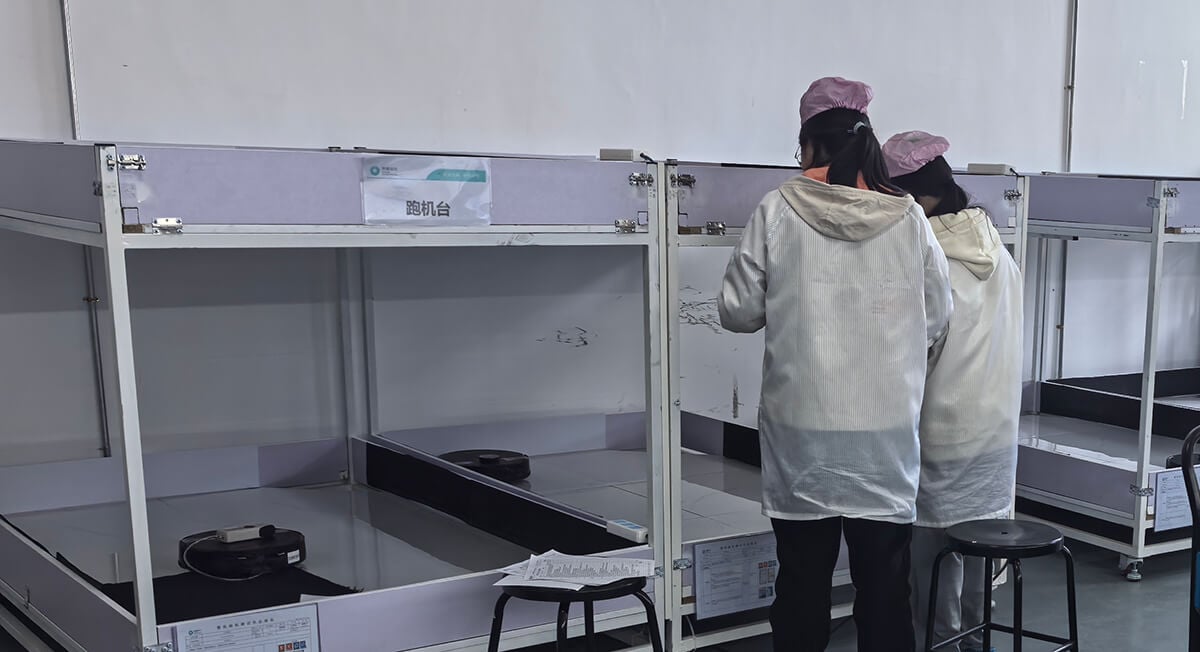
- FQC (Final Quality Control): 100% of finished units undergo functionality testing in isolation chambers. This includes suction power verification, LiDAR mapping accuracy tests, and Wi-Fi pairing validation.
- OQA (Outgoing Quality Assurance) & Reliability Lab: Random samples from every finished batch are subjected to extreme stress tests in our reliability lab. They undergo 500+ hours of continuous aging tests, drop tests from 1.5 meters, and 10,000-cycle bumper collision durability tests.
Thanks to our strict AQL (Acceptable Quality Limit) standards, Minfu’s out-of-box defect rate is maintained strictly under 1.2%, significantly lower than the industry average of 3.5%.
6. Stop Guessing Your Launch Costs (The ROI Simulator)
One of the most significant barriers for new brands is the lack of transparency in manufacturing costs. How much does a custom App cost? What happens to the unit price if you increase your MOQ from 500 to 2,000 units? How much should you budget for spare parts?
We believe in 100% data transparency. That’s why our engineering and financial teams have developed the Interactive B2B Launch Simulator.
Instead of waiting days for an initial quote, you can now model your entire project’s financial structure in seconds.
- Want a fast launch? Select the lightweight model to see your minimal upfront investment.
- Building a premium brand? Choose the All-in-One Station to understand the R&D breakdown and revenue potential.
👇 Play with the parameters below to discover your estimated gross profit margins, lead times, and exact capital requirements.
7. Supply Chain, Logistics, & Consumables
A robot vacuum is a moving machine that interacts with physical dirt daily. A one-time hardware sale is merely the beginning of the customer journey.
7.1 The Spare Parts Profit Center (Recurring Revenue)
Consumables represent a highly lucrative, recurring revenue stream. The Lifetime Value (LTV) of a customer over 3 years includes regular replacements of HEPA filters, brushes, and mop pads.
Minfu provides a comprehensive spare parts supply chain at deep wholesale factory discounts. We advise our partners to forecast 3% to 5% of your total hardware BOM (Bill of Materials) budget for spare parts inventory. This ensures instant after-sales support (drastically reducing negative reviews) while creating a secondary profit center.
Table 2: Estimated Spare Parts LTV & Gross Margin Breakdown
| Consumable Part | Replacement Cycle | Est. Factory Cost | Est. Retail Price | Gross Margin |
|---|---|---|---|---|
| HEPA Filter (2-Pack) | Every 2-3 Months | $2.50 | $12.99 | ~80% |
| Side Brushes (4-Pack) | Every 3-6 Months | $1.20 | $9.99 | ~88% |
| Main Roller Brush | Every 6-12 Months | $3.50 | $15.99 | ~78% |
| Dust Bags (6-Pack) | Monthly | $4.00 | $18.99 | ~79% |
(Note: Prices are estimates based on 2026 market averages. Realized margins offer a massive recurring revenue stream beyond the initial hardware sale.)
7.2 Inventory Strategy: Ocean Freight vs. Local Ready-Stock
Tying up millions of dollars in inventory adrift on the ocean is dangerous for growing brands.
- Agile MOQs: We support flexible MOQs starting from as low as 500 units to help you validate market demand and safeguard cash flow.
- Local Ready-Stock Advantage: For specific best-selling platforms, Minfu maintains local ready-stock in strategically located warehouses across the US, EU, and UK. This capability slashes transit times from 45 days (Ocean Freight) to just 3-5 days. You can implement “Just-In-Time” inventory models, completely eliminating ocean freight risks, port congestion delays, and heavy warehousing costs.
8. Your 90-Day Brand Launch Roadmap
Execution is everything. The hardware is ready; the logistics are in place. Here is the standard, battle-tested timeline when launching an OEM white-label project with Minfu:
Table 3: The 90-Day OEM Launch Milestone Tracker
| Phase | Timeline | Core Deliverables & Actions |
|---|---|---|
| 1. Discovery | Days 1-15 | Hardware sampling (S17, C888), market validation, and stress testing. |
| 2. Customization | Days 16-30 | BOM confirmation, logo placement, packaging artwork, App UI localization, and Golden Sample sign-off. |
| 3. Mass Production | Days 31-60 | Component procurement, PCB assembly, FQC testing, and aging protocols. |
| 4. Dispatch | Days 61-70 | Remote/Third-party video inspections, container loading (FOB Shenzhen). |
| 5. Go-Live | Days 71-90+ | Ocean transit, customs clearance, and official launch on Amazon FBA or Shopify! |
9. Conclusion & Next Steps
As the macroeconomic data, the engineering deep-dives, and our financial models clearly demonstrate, building a highly profitable smart cleaning brand is more accessible than ever—but only if you partner with the right source factory.
You don’t need a massive R&D facility to compete in today’s multi-billion-dollar smart home market. You don’t need an army of software engineers or a dedicated testing laboratory. You just need Minfu.
We bring the cutting-edge engineering prowess, the scaled agile manufacturing capabilities, and the uncompromising quality assurance. You bring the market vision, the local distribution network, and the brand identity.
Armed with your estimated numbers from our ROI simulator and the strategies outlined in this ultimate guide, it’s time to turn data into action.
👉 [Contact Our Global B2B Sales Team Today to Request a Sample & Your Full 2026 Wholesale Catalog!]
(Follow Minfu Tech on LinkedIn and Facebook for weekly manufacturing insights and new product drops.)