


Let’s sit down and have a real talk about the state of the home appliance industry. If you’ve walked the aisles of any major home appliance expo recently—whether in Frankfurt, Chicago, or Guangzhou—you know exactly what I’m talking about. The industry has completely lost its mind.
Every manufacturer out there is trapped in a bizarre arms race to build the ultimate “electronic pet.” They are slapping 6-inch 4K color touchscreens onto the bodies of floor cleaners. They are integrating complex conversational voice AI so the robot can tell you the weather forecast in London. They are adding dual RGB cameras that double as roaming home security systems.
But let me ask you a very practical question: When a customer’s Golden Retriever just knocked over a potted plant and tracked mud across a white living room rug, do they care about the weather forecast? Do they want to have a conversation with their vacuum? No. They want that mess gone, right now, without getting their hands dirty.
The Hidden Cost of Feature Bloat
Here is the brutal truth that those shiny factory brochures won’t tell you: Every time a manufacturer adds a pointless “smart” feature, they are adding a fatal failure point that you, the distributor, will have to pay for.
Let’s look at the ledger. You source a highly complex, screen-equipped robot. You sell it with a decent margin. Three months later, a wet mop pad accidentally drips water onto the edge of that unsealed touchscreen. The screen shorts out. The brushless motor is perfectly fine, the 5200mAh battery is at 100%, and the water pump works perfectly. But because the motherboard is tied to that dead screen, the entire machine bricks.
Suddenly, you are processing an RMA for a $600 machine over a $10 cosmetic component. You pay for the return shipping. Your local technician spends two hours diagnosing a software lockup. Your profit margin isn’t just gone; it has turned into a massive liability. This isn’t innovation. This is digging a grave for your business.
The Awakening: Cutting the Gimmicks, Doubling the Muscle
Consumers are waking up. They are tired of downloading three different apps and troubleshooting Wi-Fi connection errors just to clean their kitchen floor. They want a “dumb but strong” survival tool. They want a cleaning beast.
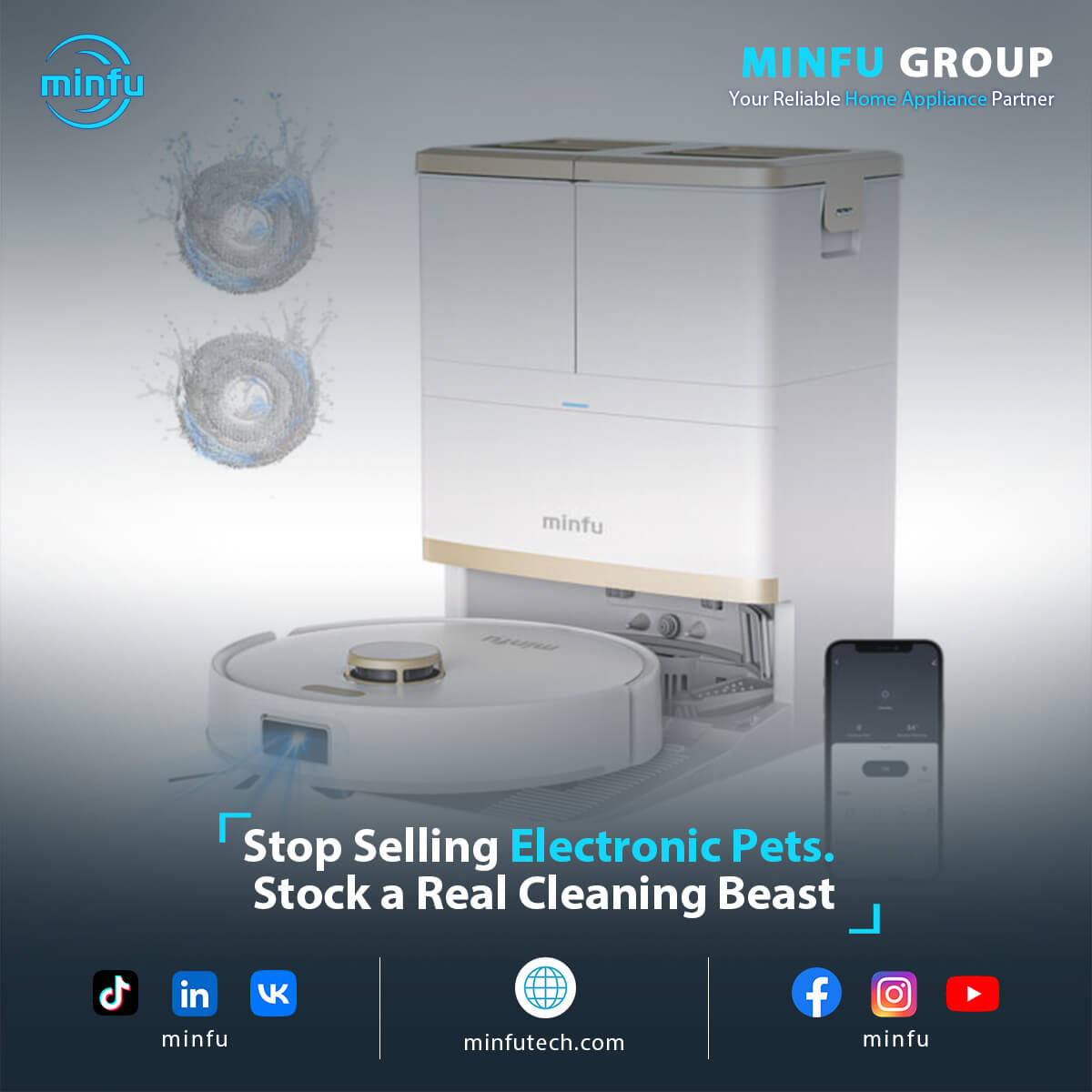
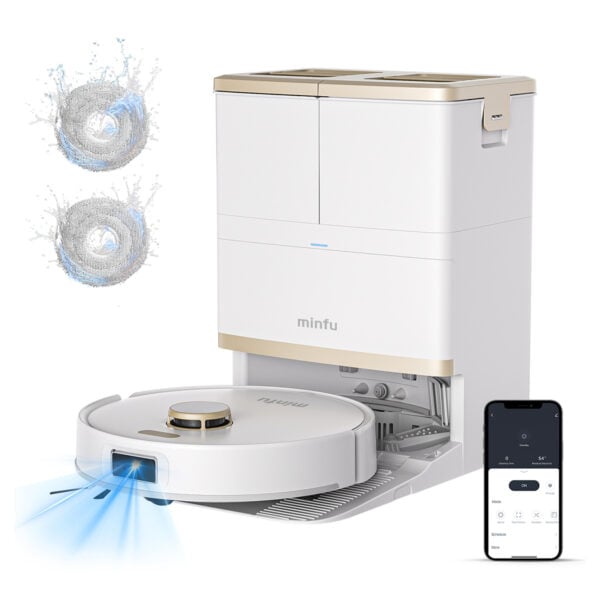
This is exactly why I am transitioning my clients toward machines like the Minfu HW1 Robot Vacuum Cleaner. We looked at the feature bloat infecting the market and did a massive, ruthless subtraction. No fragile screens. No useless conversational AI. No privacy-invading cameras.
We took all the BOM (Bill of Materials) cost saved from cutting those gimmicks and dumped it straight into raw mechanical power and heavy-duty durability.
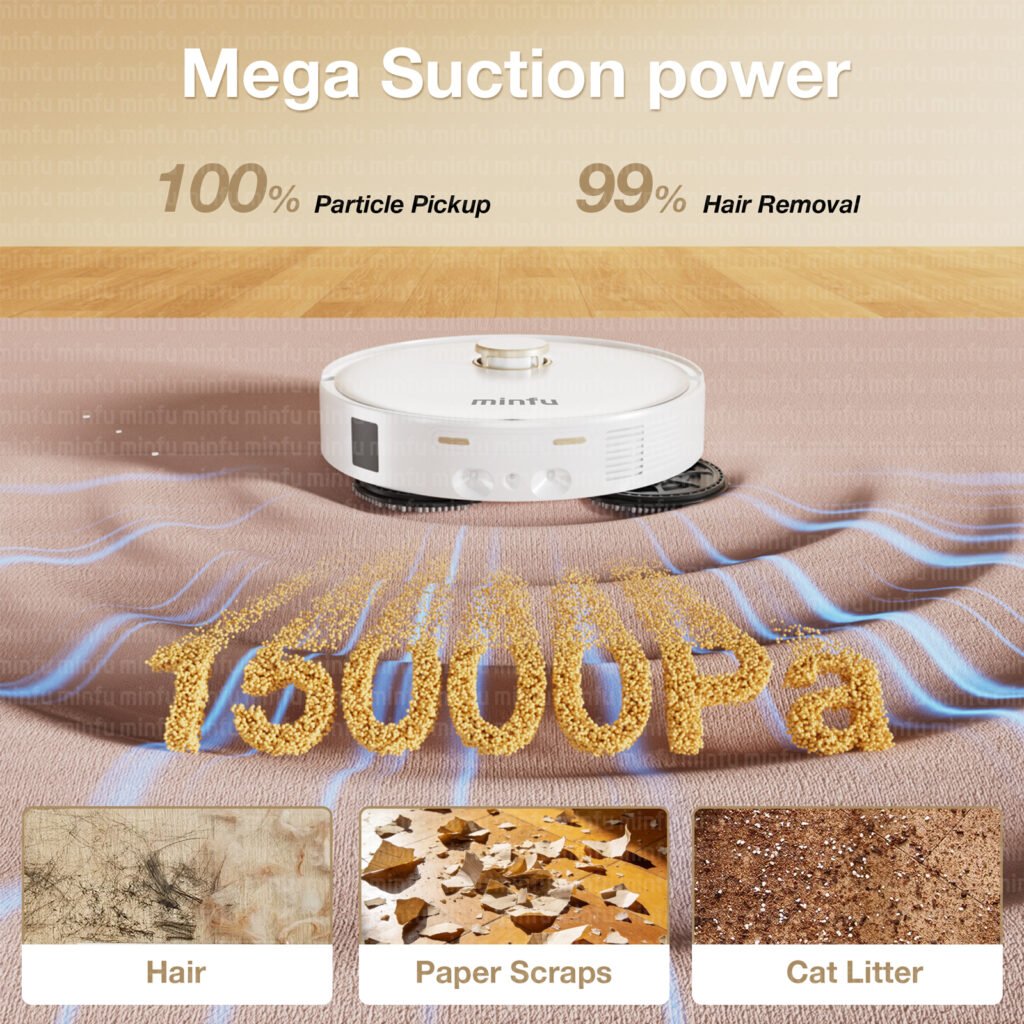
1. Brute Force Over Software Gimmicks (15,000Pa)
Instead of a silicon chip that talks to you, we packed the HW1 with a ridiculous 15,000Pa of mega suction power, driven by a heavy-duty brushless motor. Let me put that into perspective. Most “high-end” competitors peak at 6,000Pa to 8,000Pa. At 15,000Pa, the HW1 isn’t just vacuuming surface dust; it is actively ripping heavy debris, embedded pet hair, and even dropped screws out of deep carpet fibers. It operates with a sheer brute force that software simply cannot fake.
2. Physical Solutions for Physical Problems (The Flexible Arm)
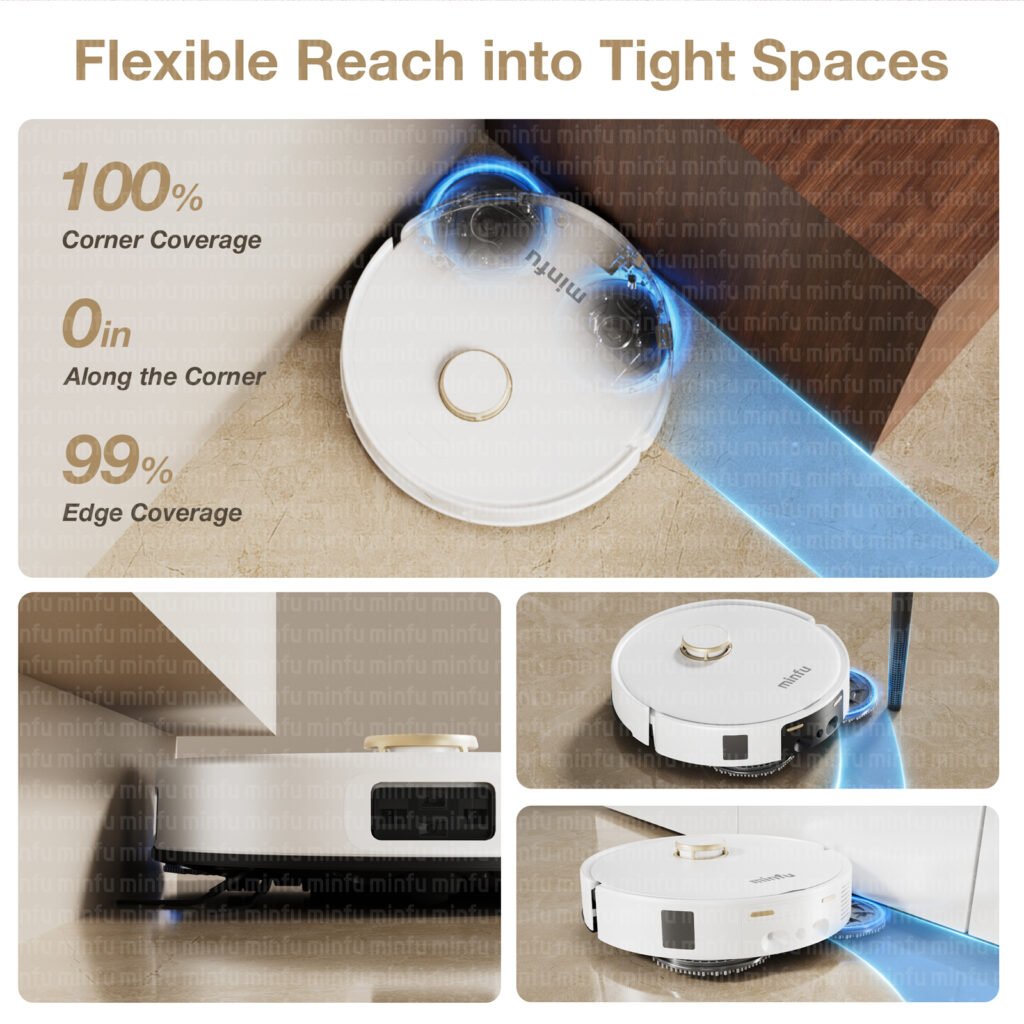
A lot of brands brag about complex “edge-cleaning algorithms” where the robot wiggles its body back and forth near a wall to reach the dust. It wastes battery and takes forever. We didn’t bother with fake software fixes. The HW1 uses a physical Flexible Arm. When it detects an edge or a tight 90-degree corner, the arm extends the brush assembly outward, guaranteeing 100% Corner Coverage. Real mechanics deliver real results.
3. Bulletproof Navigation
We skipped the glitchy optical cameras. Visual AI fails in the dark and gets confused by shadows or reflections. The HW1 uses a highly dependable Front line laser. It creates an instant, millimeter-perfect map. It can navigate a pitch-black room flawlessly, smoothly crossing 20mm obstacles and climbing 15° thresholds without getting stuck.
The “Idiot-Proof” Base Station Ecosystem
The true test of a cleaning machine is what happens after the floor is clean. The HW1 comes paired with a massive 7-in-1 Multifunctional PowerDock. We engineered this dock to handle extreme user negligence.
-
Massive Capacity: We bypassed the standard 2L tanks and equipped the dock with a 4000mL water tank and a 4000mL waste water tank. This means the user can go weeks without intervening.
-
DuoScrub™ Technology: The robot utilizes the DuoScrub™ Advanced Mopping System, applying active downward pressure to scrub away dried stains, not just wipe them.
-
Total Automation: When the robot returns, the dock initiates a 99% Efficient Mop Self-Cleaning process. The user never touches a dirty rag.
The Margin Protector (Our Unbeatable Warranty Policy)
Because we stripped out the fragile “smart toys,” the Minfu HW1 is built like a tank. With its compact 350350100mm body and a massive 5200mAh battery delivering over 100 minutes of continuous work, it survives in real, chaotic households.
But as seasoned buyers, we need to talk about the worst-case scenario. Here is our straightforward warranty plan:
In this industry, a defect rate lower than 3% is considered normal for heavy-duty electrical devices. If you hit that standard, we supply you with the spare parts at cost so you can conduct cheap, fast maintenance locally. But here is the ultimate safety net: If the defect rate ever exceeds 3%, Minfu will provide the repair parts for that exceeding portion completely free of charge. You handle the local labor; we eat the parts cost.
We can offer that aggressive policy because we know the HW1 won’t break over a stupid touchscreen error. Stop selling fragile electronic pets. Stock the Minfu HW1, and let your customers experience the power of a true cleaning beast.