



In the competitive markets of serviced apartments, co-living spaces, and boutique offices, building a differentiated advantage has shifted from grand narratives to the meticulous refinement of operational details. Cleaning and maintenance, often seen as a cost center, actually holds immense potential for boosting efficiency, reducing costs, and enhancing client stickiness. Upgrading cleaning management from a simple labor-intensive task to a strategic, data-informed, and efficiency-driven function is a mandatory course for modern property managers.

1. Redefining Cleaning: From Cost Center to Value Investment
The traditional view sees cleaning as a necessary, recurring cost consuming labor and supplies. The strategic perspective, however, views it as a value investment that directly impacts key business metrics:
-
Impacts Tenant Satisfaction & Retention: Cleanliness is a core experience that tenants can intuitively feel every day. An impeccable hygiene environment significantly enhances tenant comfort and satisfaction, strongly supporting lease renewal rates.
-
Shapes Brand Image & Market Positioning: When potential clients see cleaning staff using professional, modern equipment, it subconsciously increases their trust in the property’s management and service standards. This helps establish the property’s position in the premium market.
-
Affects Staff Efficiency & Morale: Inefficient, outdated tools slow down work progress, increase physical strain on employees, and lead to low morale and high turnover. Providing good tools is a respect for employees’ value and also boosts work efficiency.
2. The Four Pillars of a Strategic Cleaning System
To systematically unlock the value of cleaning management, a robust system needs to be built, centered on four pillars:
1. Process Standardization & Labor Hour Optimization
Efficiency stems from standardization. The first step is to establish clear Standard Operating Procedures for different scenarios (e.g., daily upkeep, check-out deep cleaning, common area maintenance). In this system, the attributes of the tools directly determine the smoothness of the process.
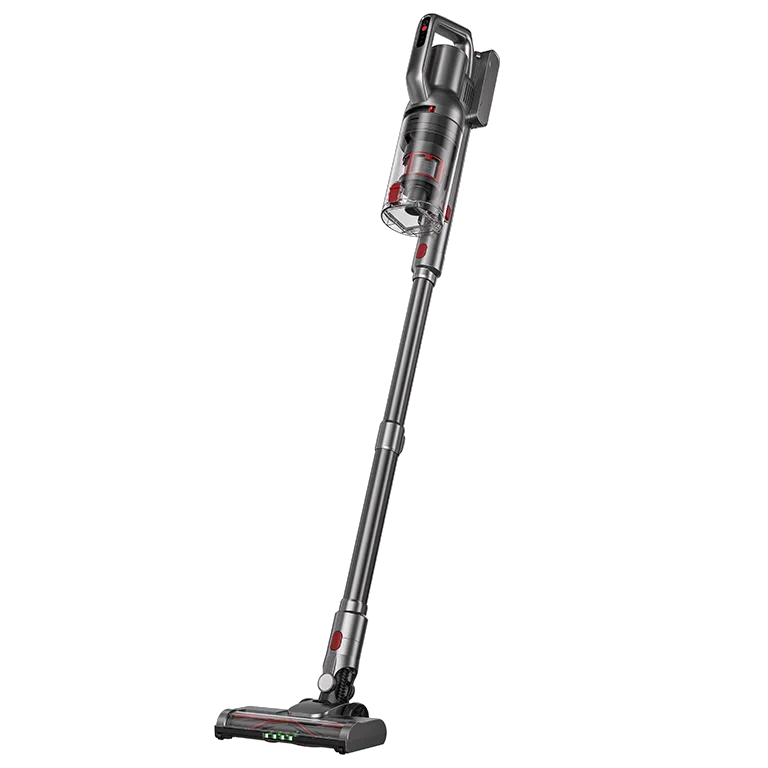
For instance, the cordless and 3-in-1 design of the V10 is, in itself, an optimization of the process. Cleaning staff don’t need to walk back and forth to switch tools between different tasks; one device can coherently handle floors, vertical surfaces, upholstery, and crevices. Every saved step is valuable labor time saved.
2. Equipment Performance & Total Cost of Ownership
Commercial procurement should not just look at the initial price but focus on the Total Cost of Ownership (TCO), which includes:
-
Initial Purchase Cost
-
Maintenance & Consumable Cost
-
Downtime Cost due to failure
-
Energy (Electricity) Consumption Cost
A maturely designed product like the V10, whose brushless motor not only delivers reliable 30KPa suction but also boasts a longer lifespan and higher reliability, reduces failure rates and repair costs. Its washable HEPA filter avoids the expense of frequent consumable replacement. The adjustable suction levels allow using Eco mode in low-soilage areas, directly saving electricity and extending the cleaning area covered per charge.
3. Elevating Health & Safety Standards
In the post-pandemic era, “health” has become a significant factor in leasing decisions. A property that can proactively provide health assurance possesses strong market appeal.
The 5-Stage HEPA Filtration System in the V10 plays a key role here. It ensures that during cleaning, germs and allergens from Unit A are not spread to Unit B via the air, achieving “cross-contamination-free” cleaning. For serviced apartments and shared offices, this is a substantive health promise that can be marketed to clients and can even serve as a supporting action for applying for certain “Well Building” certifications.
4. Asset Digitization & Management Visibility
The trend in modern property management is the digitization of all assets. For cleaning equipment, this means:
-
Asset Tracking: Creating a file for each device, recording purchase date, warranty information, and using department.
-
Maintenance Alerts: The system automatically prompts for filter cleaning or equipment inspection based on usage hours or cycles.
-
Efficiency Analysis: Indirectly analyzing the cleaning load of different areas through the frequency and location of device use, providing data support for staff scheduling.
While the V10 itself is not a smart IoT device, its standardized model and clear maintenance cycle (e.g., filter washing) make it very easy to incorporate into such a digital management system for refined control.
3. Case Simulation: V10 Value Realization in a Serviced Apartment
Assume a serviced apartment with 50 units upgrades from traditional corded vacuums and handheld devices to 10 units of the V10.
-
Efficiency Gain: Estimated time wasted daily per person due to tool switching and cumbersome movement is about 15 minutes. After upgrading, 10 cleaners save 150 minutes daily, equivalent to over 2.5 hours of productive labor time, which can be used for more detailed services or reducing overtime costs.
-
Cost Savings:
-
Consumable Savings: Washable HEPA filters compared to disposable ones could save approximately XXX yuan per device annually in consumable costs.
-
Energy Savings: Intelligent power adjustment is expected to save about XX% in charging electricity costs.
-
Maintenance Costs: The high-quality brushless motor reduces the probability of failure, saving on repair costs and the need for backup machines.
-
-
Satisfaction Improvement: More thorough cleaning results and faster response times directly improve tenant satisfaction scores. In check-out cleaning, higher standards help re-lease units faster, reducing vacancy periods.
4. Conclusion: Towards Lean Property Management
Investing in efficient cleaning solutions like the V10 is far more than procuring new equipment. It is a significant step for property management towards “Lean Operations.” By enhancing frontline staff productivity, reducing long-term comprehensive operating costs, and delivering health value that exceeds client expectations, it ultimately strengthens the property’s market competitiveness and financial performance. In an era where details determine success, smart managers understand that the best cost control comes from strategic investment in efficiency.