



Introduction
For most of the history of commercial floor care, the machine was only as productive as the person standing behind it.
The operator decided where to clean, which route to take, when to slow down, when to make another pass and when the job was finished. Even after powered scrubbers replaced mops and buckets for large areas, the operating model remained largely the same: one person, one machine, one cleaning task at a time.
Commercial cleaning robots are changing that model.
The most important change is not simply that a floor scrubber can now drive itself. It is that cleaning is gradually becoming something that can be mapped, scheduled, monitored, repeated and managed as a digital operation.
From our perspective as a commercial cleaning robot manufacturer, this is a much bigger shift than adding LiDAR to a scrubber.
The machine is moving from being a tool the cleaner operates to becoming one part of a broader facility-cleaning system.
And that changes what facility managers, Building Service Contractors and equipment buyers need to evaluate.
Commercial Floor Cleaning Is Moving Through Three Generations
The change becomes easier to understand if we look at how commercial floor cleaning has evolved.
| Cleaning Model | Main Control | What the Machine Does | What Management Sees |
|---|---|---|---|
| Manual Cleaning | Cleaner | Mop, sweep or manually clean | Mainly labor activity |
| Powered Floor Equipment | Operator | Scrubs, vacuums or sweeps mechanically | Machine usage |
| Autonomous Cleaning | Mission + operator oversight | Navigates and executes assigned floor-care tasks | Routes, tasks, status and operational data |
The jump from the first generation to the second was mainly about mechanical productivity.
The jump from the second to the third is different.
It is about operational automation.
That distinction explains why autonomous cleaning is beginning to affect much more than the equipment department.
Shift 1: Cleaning Is Moving From “Driving a Machine” to “Assigning a Mission”
With a conventional floor scrubber, the work starts when somebody gets on the machine.
With an autonomous commercial cleaning robot, the work can start much earlier.
A facility can define:
- the cleaning zone;
- the route;
- the time window;
- the cleaning task;
- the operating restrictions.
The machine then executes that mission.
That sounds like a small difference until you look at what it does to the cleaning workflow.
Instead of asking:
“Who is available to drive the scrubber tonight?”
the facility can increasingly ask:
“Which cleaning mission needs to run tonight?”
That is a different management model.
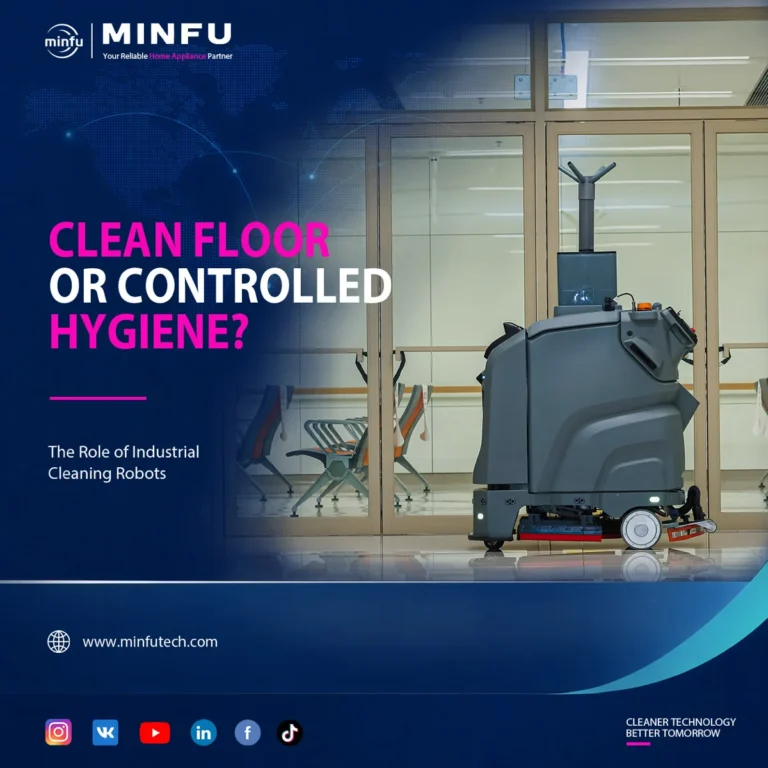
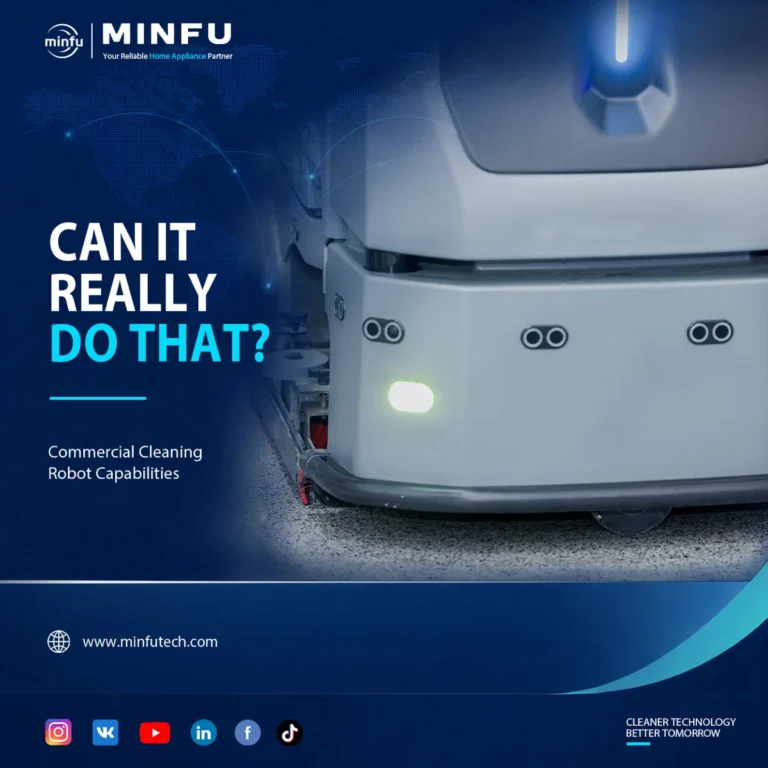
Our LT10 commercial cleaning robot, for example, supports area-coverage cleaning, route cleaning and mission management rather than relying on continuous manual steering. Its sensor and navigation systems allow it to execute those tasks within mapped commercial environments.
The employee’s role does not disappear.
It moves upward—from continuous machine operation toward setup, exception handling, inspection and maintenance.
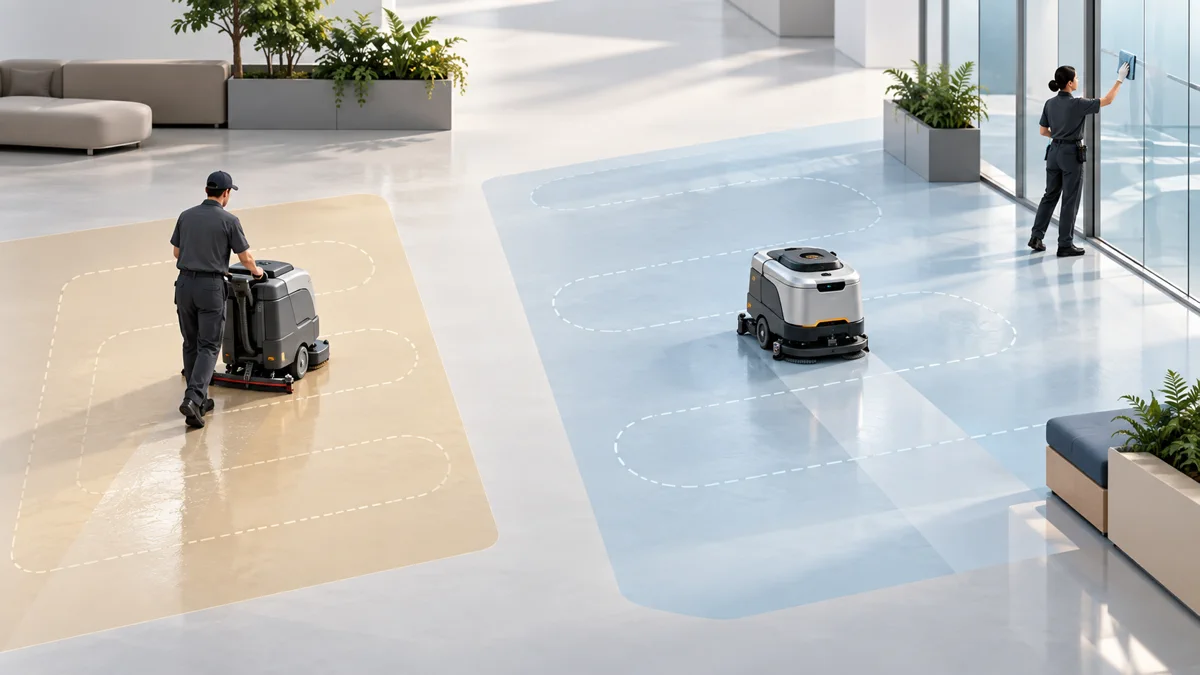
Shift 2: One Cleaner No Longer Has to Equal One Active Floor Machine
This may be one of the most important changes robotics brings to commercial cleaning.
Traditionally, if one employee is scrubbing the main corridor, that employee usually cannot simultaneously clean glass, check restrooms or handle another floor zone.
The machine consumes the person’s attention.
Autonomous cleaning breaks that relationship.
A robotic scrubber can work on a defined floor mission while the employee handles another task.
This does not mean one person suddenly controls ten robots with no effort.
Machines still need preparation, maintenance and intervention.
But it creates something traditional floor care rarely had:
Parallel work.
The robot can clean square metres while the employee performs work that requires human judgment.
A recent CleanLink case study illustrates this clearly. Before automation, a food-distribution facility used a manual scrubber that required roughly two to four hours of operator time per day. After autonomous deployment, technicians were able to redirect more of that time toward equipment maintenance while the machine handled routine floor work.
That is why the productivity conversation around robotics is increasingly less about replacing employees and more about decoupling repetitive machine operation from human attention.
Shift 3: “We Clean This Every Night” Is Becoming Measurable
Traditional cleaning programs often rely heavily on schedules and supervision.
The schedule says Zone A should be cleaned tonight.
The cleaner is assigned to Zone A.
The supervisor assumes or verifies that the task was completed.
Autonomous platforms introduce another layer:
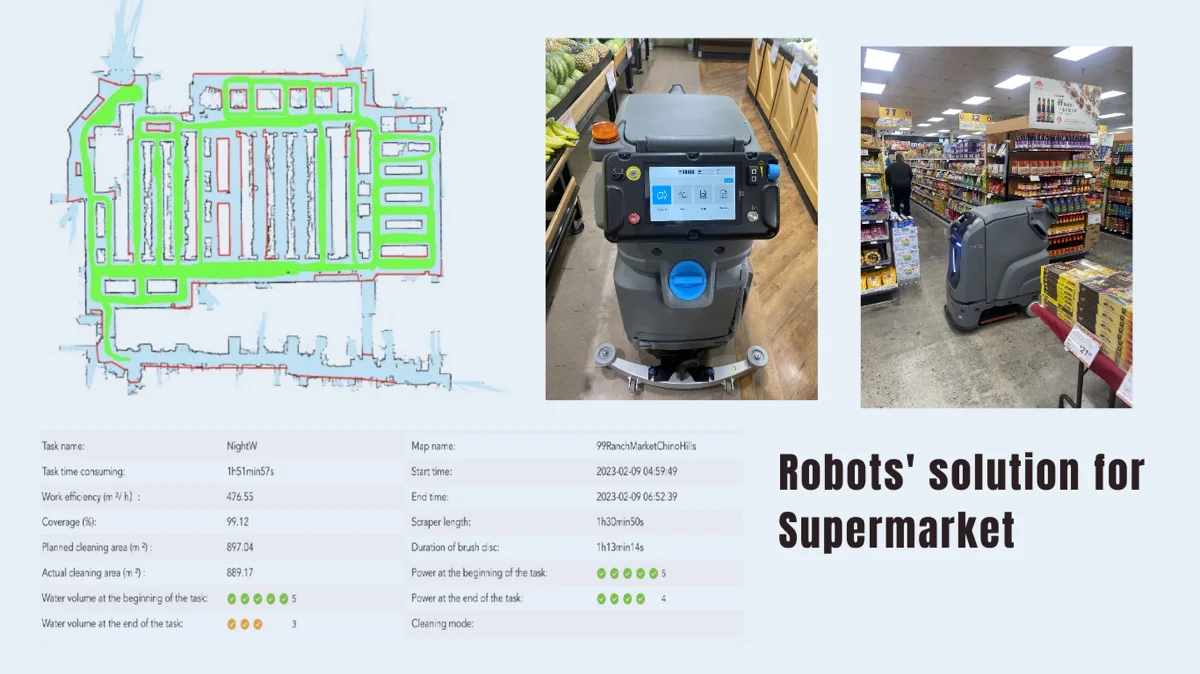
machine-generated task data.
Depending on the system, managers may be able to see information such as:
- which mission ran;
- when it started;
- how long it operated;
- whether the task was completed;
- which mapped zone was covered;
- machine status.
This changes the conversation.
Instead of only saying:
“This area is scheduled for daily cleaning.”
an operation can increasingly ask:
“What actually happened during today’s cleaning mission?”
ISSA describes robotic floor cleaning as evolving into an operating system that combines mapping, repeatable routes and performance visibility rather than simply functioning as a standalone piece of cleaning equipment.
That is important for one building.
It becomes much more important for a contractor responsible for dozens of buildings.
Shift 4: Floor-Care Equipment Is Becoming Connected Infrastructure
A traditional scrubber can spend most of its life as an isolated machine.
It comes out of the equipment room.
It cleans.
It goes back.
Autonomous machines increasingly exist inside a larger digital environment.
The robot may connect to:
- maps;
- task schedules;
- cloud platforms;
- charging infrastructure;
- workstation systems;
- fleet-management tools.
That means buyers are no longer evaluating only hardware.
They are also evaluating the ecosystem around the hardware.
This is a major change for the cleaning industry.
A larger autonomous platform such as our LT70 Pro heavy-duty commercial cleaning robot, for example, supports charging-dock, workstation and manual-charging configurations alongside a high-capacity 70 L clean-water and 80 L recovery-water system.
That physical infrastructure matters because true automation is not only about what happens during the cleaning pass.
The harder question is:
What happens before and after the robot cleans?
Does somebody need to manually prepare it every time?
How often does it require charging?
How much water handling is required?
What happens between two missions?
These questions determine how autonomous the operation really becomes.
Shift 5: Cleaning Management Is Starting to Look More Like Fleet Management
One robot can still be treated like a machine.
Ten robots across several locations cannot.
Once autonomous equipment expands across a facility portfolio, management needs change.
The organization begins to care about:
- which robots are active;
- where they are deployed;
- which missions are scheduled;
- utilization;
- machine availability;
- intervention requirements;
- service status.
This is why fleet-management platforms are becoming increasingly important in commercial robotics.
ISSA has highlighted the same trend: as robotic cleaning scales, the industry is beginning to focus not only on who operates the machines, but who manages the robotic workforce itself.
This has important implications for BSCs and facility management companies.
In the past, scaling a cleaning contract often meant adding more labor and more equipment.
In the future, part of the question may become:
How efficiently can we deploy and manage autonomous cleaning capacity across our sites?
That is a very different business problem.
Shift 6: Buyers Are Beginning to Evaluate Deployment, Not Just Specifications
This is one area where we think the commercial cleaning robot market is becoming more mature.
A few years ago, the conversation often started with impressive specifications:
LiDAR.
AI.
3D cameras.
Autonomous navigation.
Cloud control.
Today, serious buyers increasingly ask harder questions.
How often does the robot need help?
How much of our floor area is actually suitable for autonomous cleaning?
What happens when a route is blocked?
Who maps the facility?
Who trains our team?
Who maintains the robot?
How many useful autonomous hours can it deliver every week?
These are much better questions.
ISSA reported in 2026 that autonomous cleaning technology has advanced faster than many organizations’ ability to deploy it properly. Robots can end up underused when companies buy the machine before identifying the right workload and operating process.
That is why the next phase of the market will probably not be won by whichever supplier has the most impressive demo.
It will be won by systems that work reliably after the demo is over.
Shift 7: “One Robot for Everything” Is Giving Way to Task-Specific Automation
Commercial facilities are not uniform environments.
An airport terminal is different from a warehouse.
A hospital corridor is different from a loading bay.
A retail aisle is different from a manufacturing floor.
Even inside the same building, different zones may require different cleaning equipment.
This is one reason we do not believe the future of commercial cleaning will be one universal robot.
At Minfu, our current commercial platform illustrates the difference.
The LT10 is a more compact platform designed around maneuverability and integrated sweeping, vacuuming and scrubbing for more constrained commercial environments.
The LT70 Pro is a much larger heavy-duty platform designed around higher-capacity floor care, with a 51 cm brush-cleaning width, 70 L solution tank and 80 L recovery tank.
Both are autonomous cleaning robots.
But they solve different operational problems.
That is where the market is heading:
not simply toward more robots,
but toward better matching between robot, task and facility.
What Is Not Changing?
With all this discussion about AI, cloud systems and autonomous operations, it is worth remembering something basic:
The floor still has to be cleaned.
Autonomy does not change the physics of floor care.
You still need the right:
- brush or pad;
- ground pressure;
- water control;
- dirty-water recovery;
- cleaning width;
- floor compatibility;
- maintenance.
A robot can have excellent navigation and still produce poor floor-care results if the cleaning system is badly designed.
This is one reason we resist treating autonomous cleaning as purely a software industry.
It is still a cleaning-equipment industry.
The difference is that hardware and software now have to work together.
The Cleaner Is Not Disappearing — the Job Is Changing
Another common mistake is to describe the future of commercial cleaning as:
Robots replace cleaners.
The real change looks more complicated.
Employees are still needed for:
- edge cleaning;
- restrooms;
- touchpoints;
- irregular spills;
- inspection;
- machine preparation;
- consumables;
- maintenance;
- unusual situations.
What automation changes is how much time they need to spend physically driving equipment through predictable floor routes.
That shift is already appearing in real deployments. CleanLink and ISSA both report commercial cleaning organizations using robots alongside existing teams rather than simply removing those teams.
So the future cleaning employee may spend less time being a machine operator and more time being a cleaning technician or operations specialist.
For many cleaning companies, that will be as important a change as the robot itself.
What Comes Next?
This is where the Sparkoz article you sent has a useful direction.
It points toward deeper integration between autonomous cleaning, AI, cloud systems and smart-building infrastructure.
We think that direction is plausible, but it is important not to turn future possibilities into present-day promises.
The next stage is likely to involve several developments.
More responsive cleaning
Instead of every task running only because a calendar says “8:00 p.m.,” systems may increasingly react to actual facility conditions.
Some next-generation platforms are already moving toward patrol and real-time detection functions rather than only fixed-route cleaning.
Better fleet coordination
As more autonomous machines operate inside the same building, scheduling and traffic coordination will become more important.
Smarter building integration
Cleaning systems may eventually use information from occupancy, access-control or building-management systems to decide when and where work should happen.
Less human touch time between missions
Docking, charging, water handling and machine diagnostics will continue to influence how close commercial robots get to true unattended operation.
But the direction of travel is more important than any single feature.
Commercial floor cleaning is gradually moving from:
machine automation
toward:
workflow automation.
That is the bigger transformation.
What This Means for Commercial Cleaning Buyers
If you are buying floor-care equipment today, this shift changes the evaluation process.
Do not only ask:
How fast does it clean?
Also ask:
How much operator attention does it require?
Do not only ask:
What sensors does it have?
Ask:
What happens when the environment changes?
Do not only ask:
Does it have cloud management?
Ask:
Which operating decisions can the data actually improve?
And do not only ask:
Can the robot clean autonomously?
Ask:
Can we build a reliable cleaning operation around it?
That last question will probably become one of the most important buying criteria in commercial robotics.
How We See the Transition at Minfu
At Minfu, we see autonomous commercial cleaning as the convergence of three systems:
robotics,
professional floor-care hardware,
and facility operations.
Our LT10 and LT70 Pro represent different sides of that problem: one focuses on compact, flexible commercial cleaning, while the other brings autonomy into higher-capacity industrial floor care.
For OEM/ODM customers, this means a commercial cleaning robot project should not begin with:
“Which robot looks best in the catalog?”
It should begin with:
What cleaning operation are we trying to automate?
That question affects everything from chassis size and cleaning hardware to navigation, charging infrastructure and software configuration.
The future of autonomous cleaning will be built around those operating requirements—not around adding “AI” to a specification sheet.
Conclusion
Commercial cleaning robots are changing the industry in a deeper way than simply removing the driver from a floor scrubber.
They are moving cleaning from an operator-controlled activity toward a system of mapped missions, connected machines, measurable tasks and increasingly scalable fleet operations.
The floor-care fundamentals remain the same.
The management model does not.
That is why we believe the most important evolution in commercial cleaning is not:
manual machine → robot
It is:
equipment → operation → connected cleaning system
Once you see the transition that way, the future of commercial floor care becomes much easier to understand.
FAQ
How are commercial cleaning robots changing the cleaning industry?
Commercial cleaning robots are changing floor care by automating repeated routes, separating machine operation from continuous human attention, generating task data and enabling cleaning to be managed as scheduled missions rather than only manual equipment operation.
What is the difference between an autonomous floor scrubber and a traditional scrubber?
A traditional scrubber requires continuous human control. An autonomous floor scrubber uses sensors, mapping and navigation software to execute assigned cleaning missions with limited continuous operator control.
Are autonomous floor scrubbers becoming mainstream?
Industry reporting in 2026 suggests robotic floor cleaning is moving beyond early-adopter status, although successful deployment still depends heavily on identifying suitable workloads, training teams and managing the machines properly.
Will commercial cleaning robots replace cleaners?
In most practical deployments, robots automate repetitive floor-care work while people continue to perform detailed cleaning, inspection, exception handling and equipment maintenance.
Why is cloud management important for commercial cleaning robots?
Cloud or connected management can allow facilities to monitor missions, maps, machine status and operating history, which becomes increasingly useful when multiple robots or multiple sites are involved.
What is the future of autonomous commercial cleaning?
The direction is toward more responsive cleaning, stronger fleet management, closer integration with facility systems and less manual intervention between cleaning missions.
Work With Minfu
Minfu provides commercial cleaning robot OEM/ODM manufacturing and development support for cleaning-equipment brands, distributors, Building Service Contractors and facility-solution providers.
Our current commercial platforms cover both compact autonomous cleaning for more complex commercial spaces and heavy-duty robotic floor care for larger industrial environments.
LT10 Commercial Cleaning Robot
https://minfutech.com/commercial-cleaning-robots-lt10/
LT70 Pro Commercial Cleaning Robot
https://minfutech.com/commercial-cleaning-robots-lt70-pro/
Commercial Cleaning Robots
https://minfutech.com/commercial-cleaning-robots/
OEM/ODM Solutions
https://minfutech.com/oem-odm-solutions/
Email: info@minfutech.com
WhatsApp / Phone: +86 13760255781
Contact Minfu to discuss your target market, commercial cleaning application or autonomous robot OEM/ODM project.
Explore More Commercial Cleaning Robot Guides
How Autonomous Cleaning Robots Work
Learn how perception, mapping, navigation, obstacle avoidance and floor-care hardware work together inside an autonomous commercial cleaning robot.
Commercial Cleaning Robot vs Traditional Floor Scrubber
Compare automation and traditional floor equipment across labor, flexibility, consistency and facility suitability.
7 Benefits of Commercial Cleaning Robots
See where autonomous floor cleaning can create real operational value—and the conditions required for those benefits to actually appear.