

Introduction
A commercial cleaning robot can look remarkably capable in a five-minute demonstration. It leaves its starting point, follows a neat route, avoids a chair and returns without anyone touching the controls. The salesperson calls it autonomous. The brochure adds intelligent navigation, multi-function cleaning, cloud management and automatic charging.
But a facility manager is buying something more demanding than a five-minute demonstration.
The real job might involve cleaning 3,000 square metres of hard flooring, working around delivery carts, navigating a corridor that changes throughout the day and returning with enough information for the supervisor to know what actually happened. A robot that performs beautifully in an empty showroom may behave very differently when the building is operating normally.
From our perspective at Minfu, this is where discussions about commercial cleaning robot capabilities become much more useful. Instead of asking whether a robot has a particular feature, buyers should ask what the machine can reliably accomplish with that feature—and under which conditions.
A modern commercial cleaning robot can navigate mapped spaces, execute scheduled cleaning routes, respond to obstacles, scrub or sweep floors, recover wastewater and support digital task management. Some platforms also offer docking, charging and workstation integration. However, capabilities vary by model and configuration, and the presence of a feature does not guarantee the outcome a buyer expects.
The distinction between a function that exists and a function that performs reliably is what separates a promising demonstration from a successful deployment.
A Feature Is Not the Same as a Capability
Consider three statements that might appear on a commercial cleaning robot specification sheet:
Equipped with LiDAR navigation.
Supports automatic charging.
Provides cloud management.
Each statement describes something the product has. None tells us how well the complete cleaning operation works.
LiDAR does not tell us whether the machine can finish a route through a crowded corridor. A charging dock does not tell us whether the robot can resume an unfinished mission afterward. A cloud platform does not tell us whether a facility manager can identify missed cleaning areas.
A meaningful capability should have three parts: a defined task, an operating condition and an observable result.
For example, instead of accepting “intelligent obstacle avoidance,” we would want to establish whether the machine can complete a cleaning mission when delivery carts temporarily block its planned path.
That question is measurable. It also connects the technology to a real operational problem.
The First Capability: Turning a Building Into Manageable Cleaning Jobs
Before a cleaning robot can be useful, somebody has to tell it what work needs to be done.
This sounds obvious, but commercial buildings rarely operate as one continuous open floor. A shopping centre may have a main atrium, several narrow corridors, store entrances and areas that should only be cleaned outside trading hours. A warehouse may have long aisles interrupted by loading bays, pedestrian routes and temporary storage areas.
A capable commercial cleaning robot should make it possible to define useful cleaning missions rather than treating every job as an unrestricted drive through the building.
Different mission types serve different purposes. Area coverage is useful when a robot needs to systematically clean a defined floor section. A taught or recorded route may be more appropriate for a corridor that follows a consistent path. Exclusion zones can prevent access to areas that are not suitable for the machine, where supported by the control system.
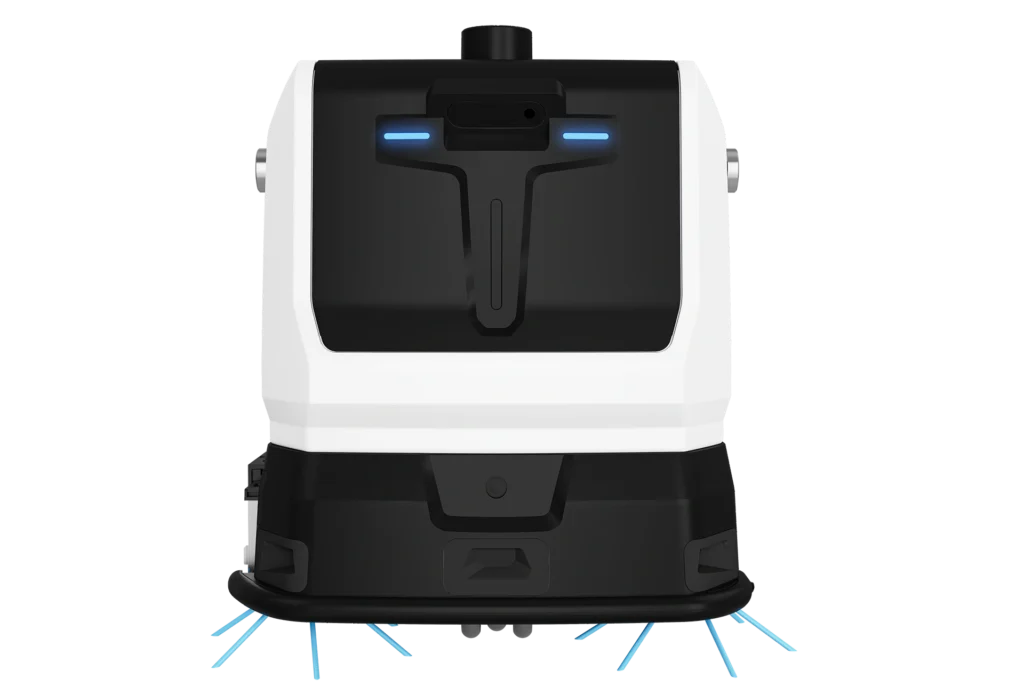
Our LT10 commercial cleaning robot, for example, supports area coverage, route cleaning and combined tasks through its mission-management interface. An operator can select an area for planned coverage or teach a route for the robot to follow again.
The more important question is what happens after the initial map is created. Can a supervisor make practical changes without rebuilding the entire deployment? Can the cleaning program accommodate different schedules for different parts of the facility?
Those details determine whether mission management remains useful after the commissioning team leaves.
What Happens When the Route Stops Being Clear?
A mapped route is a plan, not a promise that the building will stay unchanged.
Imagine a robot cleaning the central corridor of a distribution facility. The first two aisles are clear. At the third aisle, a delivery cart has been parked across part of the route. Ten minutes later, the cart is gone.
There are several possible responses. The robot might stop and wait, find another safe route, temporarily bypass the affected section or request assistance. The appropriate behavior depends on the machine, available space and safety constraints.
The capability buyers need to examine is therefore not simply whether the robot can detect an obstacle. It is how the machine manages the interruption—and whether it can return to useful cleaning afterward.
A stationary cardboard box is a reasonable starting test. It is not a sufficient final test for a machine intended to share space with employees, visitors or moving equipment.
We recommend evaluating obstacle handling under controlled, representative conditions: people crossing the route, carts occupying part of an aisle and temporary barriers that change the available path. Test observers should also record how the machine behaves when no safe alternative route exists.
Sometimes the correct behavior is to stop. A safe, predictable interruption is preferable to a robot attempting to force its way through an unsuitable space.
The Second Half of the Job Happens Under the Chassis
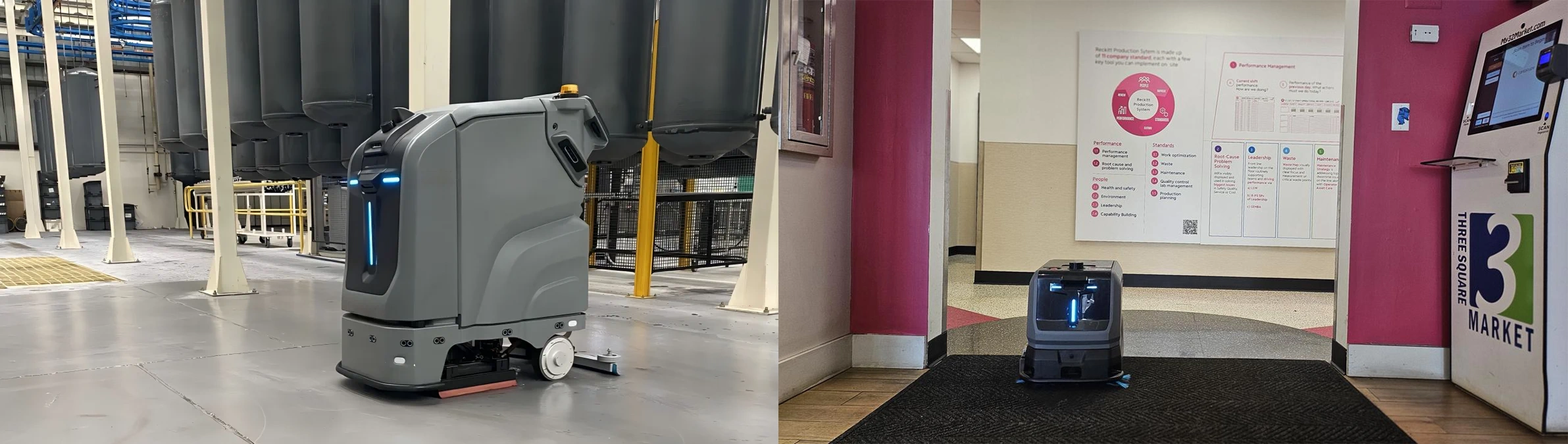
Commercial cleaning robots attract attention because they move autonomously. Yet movement is only useful if the cleaning system performs the required work.
Different commercial robots combine sweeping, vacuuming, scrubbing, dust mopping and liquid recovery in different ways. A machine advertised as “multi-function” does not necessarily perform every mode equally well, and some cleaning functions are restricted to particular surfaces or configurations.
For buyers, there are several questions that matter more than the number of cleaning icons shown on the display.
What kind of soil can the machine remove? Can it collect loose debris before wet scrubbing? How effectively does it recover wastewater during straight passes and turns? What happens near walls, columns and floor transitions?
Those are not minor engineering details. They determine whether the equipment is suitable for a specific cleaning contract.
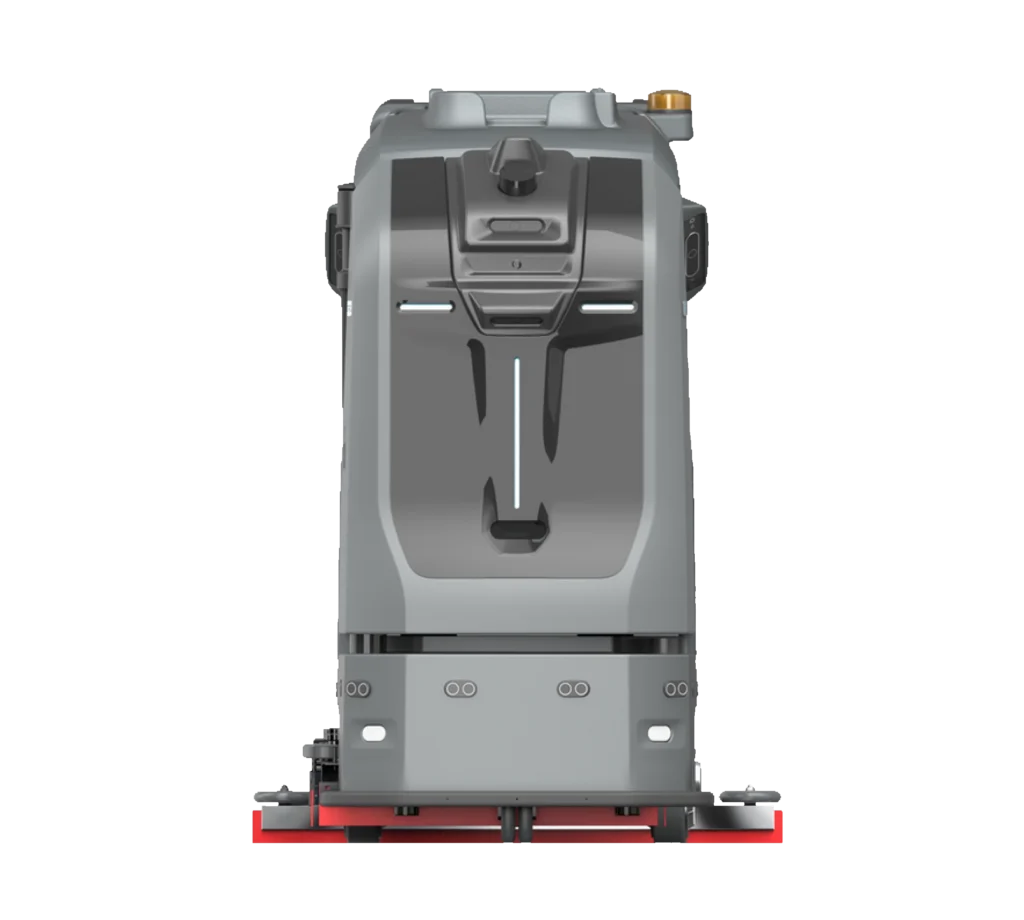
The Minfu LT10 combines sweeping, vacuuming and scrubbing in a compact platform with a published 35 cm brush-cleaning width. The larger LT70 Pro industrial cleaning robot has a 51 cm brush-cleaning width, 70 L clean-water capacity and 80 L wastewater recovery capacity.
These specifications describe two different cleaning platforms, not two guaranteed cleaning outcomes. The correct performance test still depends on floor material, soil type, cleaning mode and the quality standard expected at the site.
This is also why we would never assume a robot can automatically identify every floor type and select the perfect cleaning mode unless that specific behavior has been demonstrated and validated.
How Much Work Can the Robot Complete Before It Needs Attention?
A specification sheet may contain several attractive numbers: maximum operating hours, theoretical cleaning efficiency, water-tank capacity and charging time.
The difficulty is that these figures describe different things.
Theoretical cleaning efficiency is not the same as verified cleaned area during a normal shift. Battery runtime does not automatically equal continuous scrubbing time. A machine with sufficient battery capacity may still require a water refill or wastewater disposal before completing its assignment.
Take a robot advertised with a theoretical cleaning rate of several hundred square metres per hour. The figure may be based on nominal cleaning width and travel speed. Real operation also involves turns, overlap, obstacle delays, edge work and service interruptions.
A buyer should therefore distinguish between three measurements:
Theoretical coverage: What the machine could cover under simplified assumptions.
Completed mission area: The area recorded as covered during an actual cleaning task.
Accepted cleaned area: The portion that satisfies the facility’s required cleaning result after inspection.
These values should not be treated as interchangeable.
For larger industrial facilities, tank capacity and operating time become especially important. But even the largest water tank cannot compensate for repeated route interruptions or a poorly designed cleaning mission.
Automatic Charging Does Not Mean Automatic Everything
Charging infrastructure deserves similar scrutiny.
A robot may support a charging dock or workstation, but the exact automation scope depends on the configuration. Returning to a dock, charging successfully, refilling water, emptying wastewater and restarting an unfinished mission are separate capabilities.
For example, the Minfu LT70 Pro product platform lists charging-dock, workstation and manual-charger options. That does not mean every configuration automatically performs every water-handling or maintenance function.
When evaluating a system, ask the supplier to demonstrate the complete sequence that will be used in the actual facility—not only the moment when the robot approaches its charger.
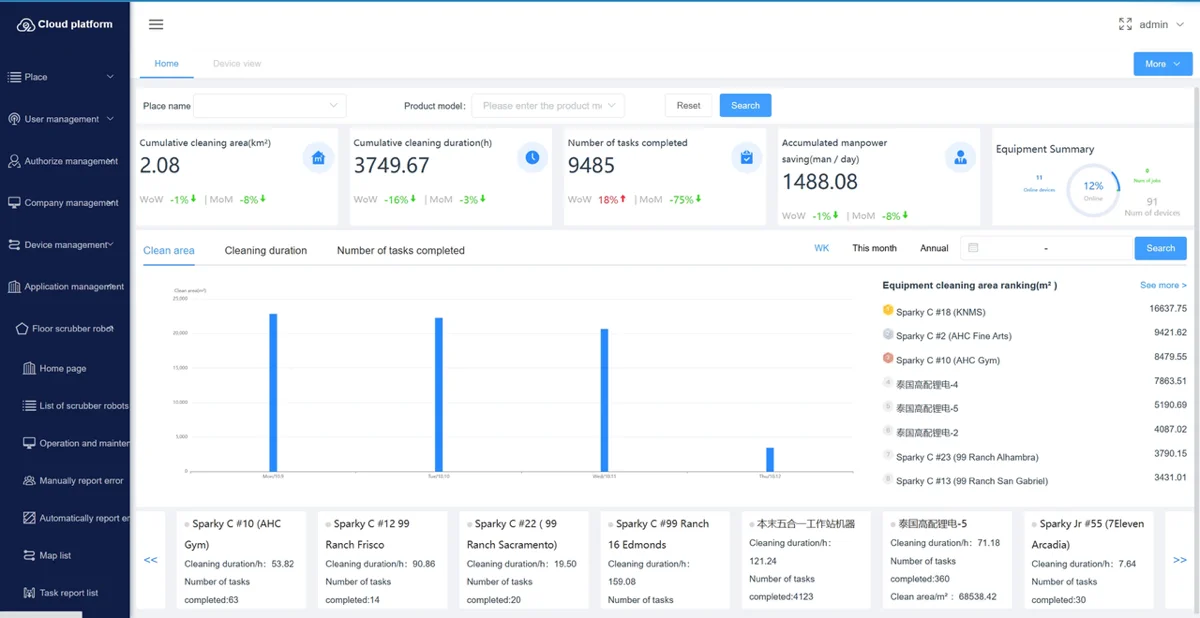
Cloud Management: Useful Only When It Answers Operational Questions
Connected management is now common in discussions about autonomous floor-cleaning equipment.
The potential is clear. A facility manager can supervise a cleaning program without standing beside the robot throughout every mission. Depending on the platform, the system may support maps, task creation, scheduling, status monitoring and historical records.
Our LT10 platform includes cloud-management support alongside its autonomous mission functions.
But the phrase “cloud management” is too broad to serve as a purchasing specification on its own.
A buyer responsible for a single building may care about quickly identifying why a mission stopped. A Building Service Contractor managing several customer sites may care about user permissions, completed-task records and whether equipment status can be reviewed across locations.
These are different requirements.
It is also important to understand what the data can actually prove. A mission-complete notification indicates that the software considers a task finished according to its rules. It does not automatically prove that every visible mark was removed from the floor.
Digital records should help operators manage and verify cleaning—not replace physical inspection when inspection is necessary.
The Capability Nobody Talks About Until Something Needs Cleaning
Autonomy is often discussed as though a robot’s only job is to keep moving without human help. In practice, someone still needs to prepare and maintain the equipment.
Brushes wear. Squeegees need inspection. Recovery tanks require attention. Sensors can become dirty. Batteries, filters and other components eventually need service.
The physical design of these components can have a major effect on how much attention the machine requires over its working life.
A robot that completes a long autonomous mission but takes excessive time to clean and prepare for the next one may offer less practical autonomy than its brochure suggests.
For OEM/ODM buyers, this should also influence product evaluation. Maintenance access, replacement components, operator instructions and after-sales service affect the experience of the end customer long after the machine has left the factory.
We would include routine service in any serious equipment demonstration. Ask the operator to show how consumables are accessed, how the recovery system is cleaned and what maintenance steps are required before the next shift.
The result should be judged by the actual process, not by a claim that the equipment is “maintenance-free.”
Eight Tests That Reveal What a Commercial Cleaning Robot Can Really Do
The easiest way to compare capabilities is to turn the product claims into live demonstrations.
A useful evaluation does not require the supplier to create a spectacular obstacle course. In fact, an ordinary working facility often reveals more than an elaborate showroom setup.
The following tests can form a practical starting point for distributors, facility managers and commercial cleaning equipment buyers.
| Capability to Verify | What to Ask the Supplier to Demonstrate | What to Watch For |
|---|---|---|
| 1. Area coverage | Clean a defined zone with furniture or columns | Missed sections, excessive overlap and route completion |
| 2. Route flexibility | Modify a cleaning zone or create a repeatable corridor route | Setup effort and ease of mission changes |
| 3. Obstacle response | Introduce a temporary cart or controlled pedestrian crossing | Safe stopping, avoidance and recovery |
| 4. Interrupted missions | Block part of a planned route, then remove the obstruction | Whether the machine safely resumes useful work |
| 5. Cleaning performance | Run a representative soil-removal and water-recovery test | Residual dirt, moisture and edge performance |
| 6. Operating endurance | Run a representative cleaning workload with normal interruptions | Actual productive time and servicing needs |
| 7. Docking and turnaround | Demonstrate the supported charging and preparation sequence | What is automatic and what still needs staff |
| 8. Mission visibility | Review a completed and an interrupted task in the management interface | Whether operators can understand the results and exceptions |
These are suggested evaluation scenarios, not published performance results for a particular robot. Testing must be carried out under suitable site conditions and safety procedures.
The purpose is straightforward: each claimed capability should lead to evidence that a buyer can inspect.
Which Capabilities Are Standard, Optional or Outside the Machine’s Scope?
Another issue frequently appears when buyers compare commercial cleaning robots from different suppliers: the same feature name does not always describe the same configuration.
A product page might refer to automatic docking, remote management or intelligent cleaning modes without specifying which functions are standard and which require additional hardware, software or infrastructure.
For a B2B project, the distinction should be documented before sample approval.
We recommend separating requirements into three categories.
Confirmed platform functions: Features already available in the selected hardware and software configuration.
Optional or project-dependent functions: Capabilities that require an additional accessory, a different workstation, software configuration or further validation.
Functions outside the intended application: Tasks the robot is not designed or approved to perform, regardless of what similar products elsewhere in the market may advertise.
Examples of functions that should never be assumed universal include automatic water refilling, automatic wastewater disposal, independent elevator operation, building-door integration, automatic recognition of every floor material and autonomous treatment of hazardous spills.
This is particularly important for private-label distributors. A claim made in a local product catalog needs to match the actual equipment supplied to customers.
What Minfu’s LT10 and LT70 Pro Tell Us About Capability Matching
At Minfu, we offer different commercial cleaning platforms because capability requirements change with the facility.
The LT10 compact commercial cleaning robot combines sweeping, vacuuming and scrubbing with multi-sensor navigation, area-coverage missions, route cleaning and cloud-platform support. Its compact dimensions and 35 cm cleaning width make it a platform worth evaluating for commercial spaces where maneuverability is important.
The LT70 Pro heavy-duty autonomous floor cleaning robot takes a different approach. Its larger chassis, 51 cm brush width and 70 L / 80 L clean-water and recovery-water capacities are intended for higher-capacity floor-care applications.
The difference illustrates an important point: commercial cleaning robot capabilities are not ranked on one universal scale.
A compact machine may navigate a constrained passage that is unsuitable for a larger chassis. A heavy-duty robot may be better suited to long industrial cleaning tasks requiring more water capacity and a larger cleaning system.
For brands and distributors, matching the platform to the end customer’s operating conditions is more valuable than offering the longest possible list of features.
If you are comparing different equipment formats, our commercial cleaning robot selection guide explores the distinction between compact and heavy-duty platforms in more detail.
The Most Important Capability Is Finishing the Right Job
There is a reason we spend so much time discussing operating conditions rather than simply listing sensors and software features.
Commercial cleaning is not a technology demonstration. It is a recurring responsibility.
A facility does not need a robot that can theoretically do everything. It needs a machine that can reliably perform the cleaning jobs assigned to it, report problems clearly and remain manageable for the people responsible for the building.
The right evaluation starts with the task: the floor, the soil, the route, the traffic, the operating window and the required cleaning result.
Only then does the feature list become useful.
A commercial cleaning robot should be judged by what it can demonstrate in that environment—not by how impressive its capabilities sound when they are presented individually.
FAQ
What are the main capabilities of commercial cleaning robots?
Commercial cleaning robots can perform mapped floor-cleaning missions, navigate around obstacles, execute cleaning routes and operate professional floor-care systems. Depending on the platform, they may also support task scheduling, cloud management, automatic docking and different cleaning modes. Individual capabilities depend on hardware, software and configuration.
Can commercial cleaning robots sweep, vacuum and scrub at the same time?
Some platforms integrate multiple cleaning functions, but operation depends on the machine’s design and selected modes. Buyers should confirm whether each task can run simultaneously, how effectively the machine handles different types of debris and whether the required floor surfaces are supported.
Can an autonomous cleaning robot work without human supervision?
Autonomous cleaning robots can perform assigned missions without continuous manual driving, but that does not mean every facility can operate them without human oversight. Preparation, maintenance, exception handling and safety procedures remain necessary. The appropriate supervision model depends on the machine and deployment environment.
Do commercial cleaning robots automatically return to charging stations?
Some commercial cleaning robots support automatic docking and charging, but this should be confirmed for the specific product configuration. Automatic charging does not necessarily include automatic water refilling, wastewater disposal or automatic mission resumption.
Can commercial cleaning robots recognize different floor types?
Some platforms offer floor-specific cleaning modes or adaptive controls. However, automatic recognition of floor materials should not be assumed unless the supplier can demonstrate the function and confirm the supported surfaces.
How should buyers compare commercial cleaning robot capabilities?
Buyers should begin with representative cleaning tasks and request live tests for route coverage, obstacle response, cleaning performance, operating endurance, charging and task management. Results should be evaluated against the requirements of the intended facility rather than theoretical specifications alone.
Work With Minfu
Minfu provides commercial cleaning robot OEM/ODM manufacturing and development support for equipment brands, distributors, wholesalers and commercial cleaning solution providers.
Our commercial robot portfolio includes compact autonomous cleaning platforms and larger industrial floor-care solutions. We support product configuration, customization, sample evaluation, manufacturing preparation, quality control and production coordination according to project requirements.
Whether you are exploring a new private-label commercial cleaning robot line or evaluating an autonomous floor-cleaning platform for an existing product portfolio, we can help you review the technical requirements and available configurations.
Explore Our Commercial Cleaning Platforms
LT10 Commercial Cleaning Robot
LT70 Pro Industrial Cleaning Robot
OEM/ODM Manufacturing Solutions
Website: https://minfutech.com/
Email: info@minfutech.com
WhatsApp / Phone: +86 13760255781
Contact Minfu to discuss your target facility, product specifications or commercial cleaning robot OEM/ODM project.
Explore More Commercial Cleaning Robot Guides
How Autonomous Cleaning Robots Work
Explore the technology behind sensors, mapping, route planning and obstacle avoidance in autonomous commercial floor cleaning.
7 Benefits of Commercial Cleaning Robots
Understand where autonomous cleaning can create measurable operational value and when those benefits are most likely to appear.
Industrial Cleaning Robots and Facility Hygiene
Learn how robotic floor care fits into an industrial hygiene program, including cleaning zones, dirty-water recovery and facility procedures.