



Introduction
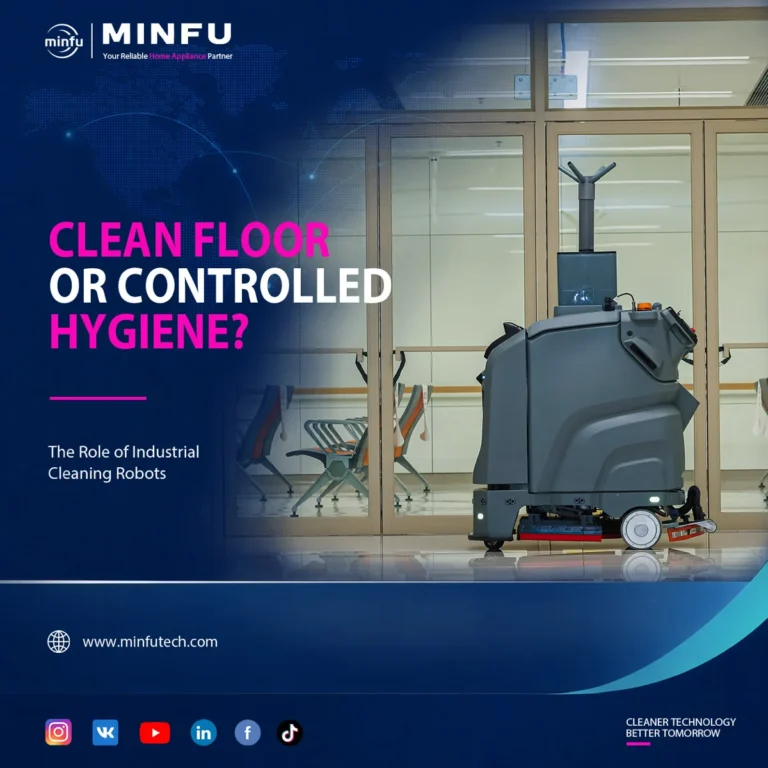
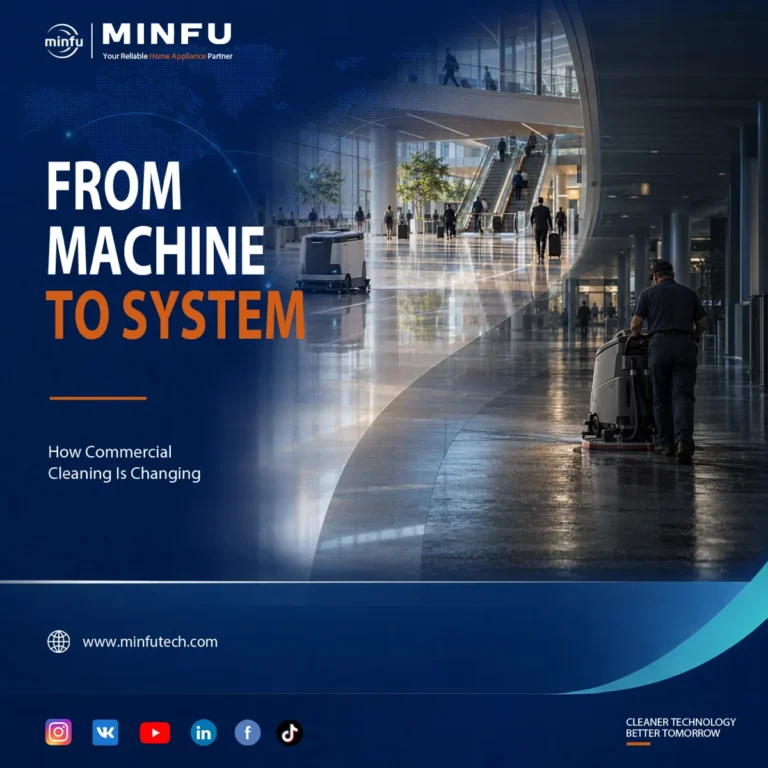
Watch a commercial cleaning robot cross a hotel lobby or warehouse floor and it can look deceptively simple. Someone presses Start, the machine begins moving, avoids a trolley, cleans around a column and eventually finishes the assigned area.
From the outside, it looks like a floor scrubber that learned how to drive itself.
From our side as a manufacturer, that is not really what is happening.
An autonomous cleaning robot is continuously answering several questions at the same time: Where am I? What is around me? Which parts of the floor still need to be cleaned? Can I safely take the planned route? Is the cleaning system operating correctly? What should I do if the environment changes?
The robot only becomes genuinely useful when perception, mapping, navigation, floor-care hardware and task management work as one system. A machine can have excellent LiDAR and still clean poorly. It can have a powerful brush deck and still become a burden if it repeatedly gets lost in a busy corridor.
So if we want to understand how autonomous cleaning robots work, the best place to start is not with the brush or with the word “AI.” It is with the decision loop running behind every cleaning mission.
The Short Answer: How Does an Autonomous Cleaning Robot Work?
An autonomous cleaning robot combines environmental sensors, localization and mapping, route-planning software, obstacle avoidance, a physical cleaning system and mission-control software. Sensors continuously observe the surroundings, while the navigation system estimates the robot’s position on a digital map. A planner decides how to cover the assigned area, and local safety logic adjusts the route when people, carts or other obstacles appear. At the same time, the cleaning module sweeps, scrubs, vacuums or recovers dirty water. Depending on the platform, completed tasks, maps and operating status can also be monitored through a local or cloud-based management system.
That sounds like one process, but inside the robot it is several systems working together.
Autonomy Is a Stack, Not a Single Feature
We often see commercial machines promoted with one headline technology such as “AI Navigation” or “3D LiDAR.” Those features matter, but no single sensor makes a cleaning robot autonomous.
A more useful way to understand the architecture is to separate it into layers.
| Layer | What It Does | What Happens If It Fails |
|---|---|---|
| Perception | Detects walls, people, furniture and other objects | Robot cannot reliably understand its surroundings |
| Localization & Mapping | Determines position and represents the facility digitally | Robot loses position or cleans the wrong area |
| Route Planning | Decides how to cover the assigned floor efficiently | Missed areas, unnecessary overlap or wasted time |
| Local Obstacle Avoidance | Reacts to people and temporary obstacles | Frequent stops or unsafe movement |
| Cleaning System | Sweeps, scrubs, vacuums and/or recovers dirty water | Robot moves correctly but does not clean effectively |
| Mission Management | Controls zones, schedules, routes and task status | Automation still requires too much manual supervision |
This is why we prefer to evaluate a commercial cleaning robot as a complete operating system, rather than comparing only one navigation specification.
Step 1: The Robot Has to Perceive the Space Around It
Before a robot can decide where to go, it needs information about the environment.
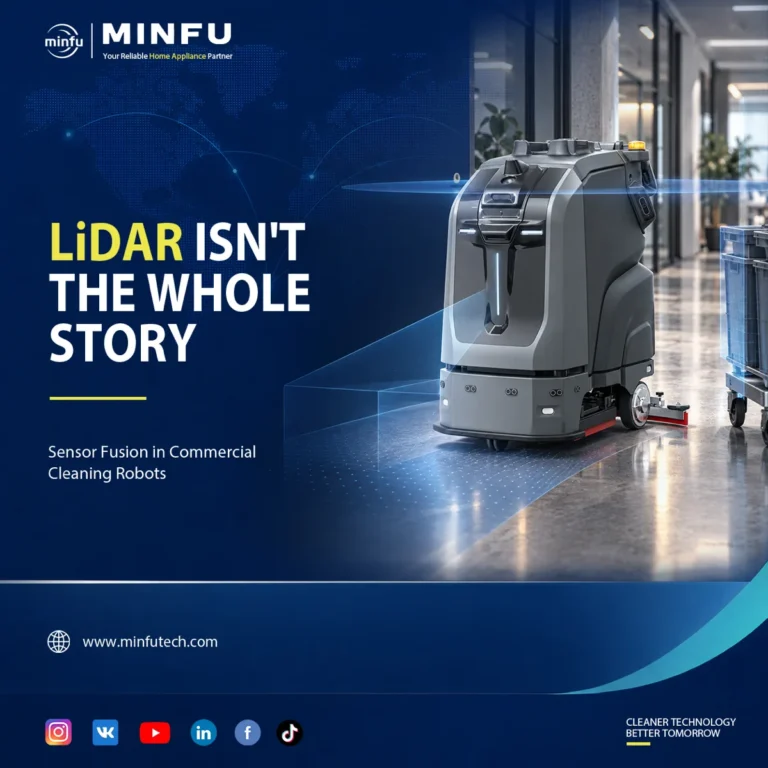
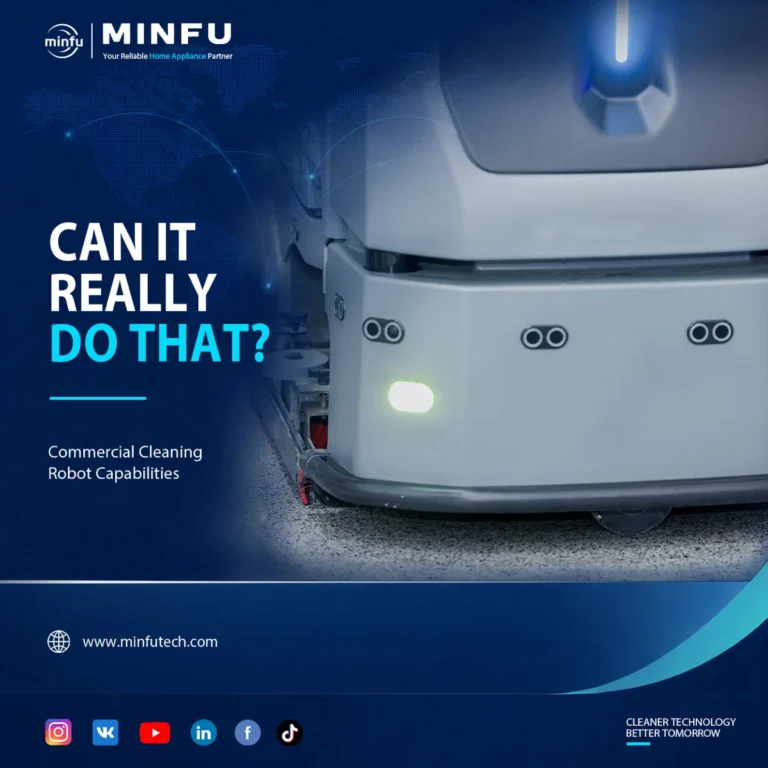
Commercial cleaning robots typically combine several types of sensors rather than relying on a single input. For example, the current Minfu LT10 platform uses a sensor stack that includes solid-state line LiDAR, 2D LiDAR, 3D TOF, a monocular camera, IMU, odometry, an electronic bumper and other sensing components. The purpose is not to collect impressive terminology for a brochure. Each sensor sees a different part of the problem.
LiDAR is useful for measuring surrounding geometry. Cameras can provide richer visual information. TOF and proximity sensing help with nearby objects, while wheel odometry and an IMU help the robot estimate how it has moved.
This matters because a commercial environment is rarely static. A corridor that was empty when the map was created may contain a cleaning cart ten minutes later. A pallet may temporarily narrow a warehouse aisle. Someone may walk directly across the robot’s route.
No sensor is perfect in every condition, which is why multi-sensor systems are valuable. The robot is effectively building a more reliable picture by combining several incomplete views of the same environment.
Step 2: It Needs to Know Where It Is
Seeing a wall is useful. Knowing which wall on the map the robot is looking at is much more useful.
This is where localization and mapping enter the system.
In mobile robotics, SLAM—Simultaneous Localization and Mapping—is one of the core concepts used to let a robot build or update a map while estimating its own position within that map. ROS Navigation documentation, for example, demonstrates this same relationship between SLAM-generated maps and robot navigation on physical mobile robots.
For a cleaning robot, the practical result is easier to understand than the mathematics behind it. The robot needs a digital representation of the facility so that it can distinguish one corridor from another, recognize where a cleaning zone begins and ends, and return to a known location later.
Imagine a 5,000 m² logistics facility. The robot cannot simply remember that it travelled “forward for 40 seconds and then turned left.” Wheel slip, people, obstacles and route changes would quickly make that approach unreliable.
Instead, it continuously tries to answer:
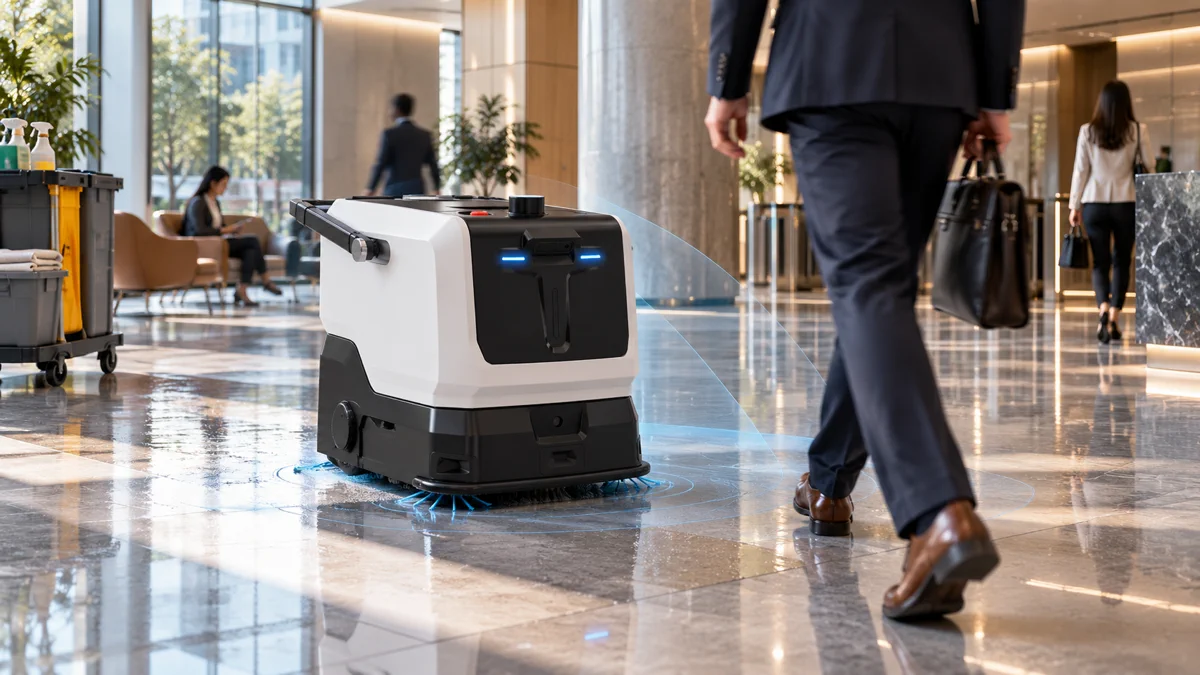
Where am I on the map right now?
That position estimate becomes the foundation for everything that follows.
Step 3: Mapping Does Not Automatically Create a Good Cleaning Route
Once a robot knows where it is, it still needs to decide how to clean the assigned area.
This is where people sometimes confuse mapping with route planning.
A map describes the environment.
A route tells the robot what to do inside it.
For area cleaning, the system may divide a zone into manageable sections and generate a systematic coverage path designed to reduce missed areas and unnecessary overlap. Minfu’s LT10 mission-management system, for example, supports area coverage where a selected zone is used to automatically generate a cleaning path. It also supports route cleaning, where an operator can teach a path once and have the machine repeat that trajectory later.
These are different task types.
A large open lobby may be well suited to systematic area coverage. A narrow repeated corridor route may benefit from a taught path. A warehouse may require specific zones to be cleaned at different times depending on operations.
This is why “the robot has a map” tells us far less than buyers sometimes assume.
The more useful question is:
What can the robot actually do with that map?
Step 4: The Planned Route Is Only the Beginning
If commercial buildings never changed, autonomous navigation would be much easier.
But a route calculated at 8:00 a.m. may no longer be clear at 8:05.
A person enters the path. A forklift appears. A chair is moved. A temporary display blocks part of a retail aisle.
This creates two layers of navigation.
The global plan represents where the robot intends to go. The local response handles what is happening directly in front of the machine right now.
A capable robot should not abandon an entire cleaning mission every time something changes. Depending on the situation and platform logic, it may slow down, stop, wait, move around the obstacle or calculate another way to continue the task.
The LT10, for example, is designed for dynamic commercial traffic and includes behaviors such as yielding, pausing at lane entrances and adjusting its movement around changing obstacles.
This distinction becomes especially important in public environments.
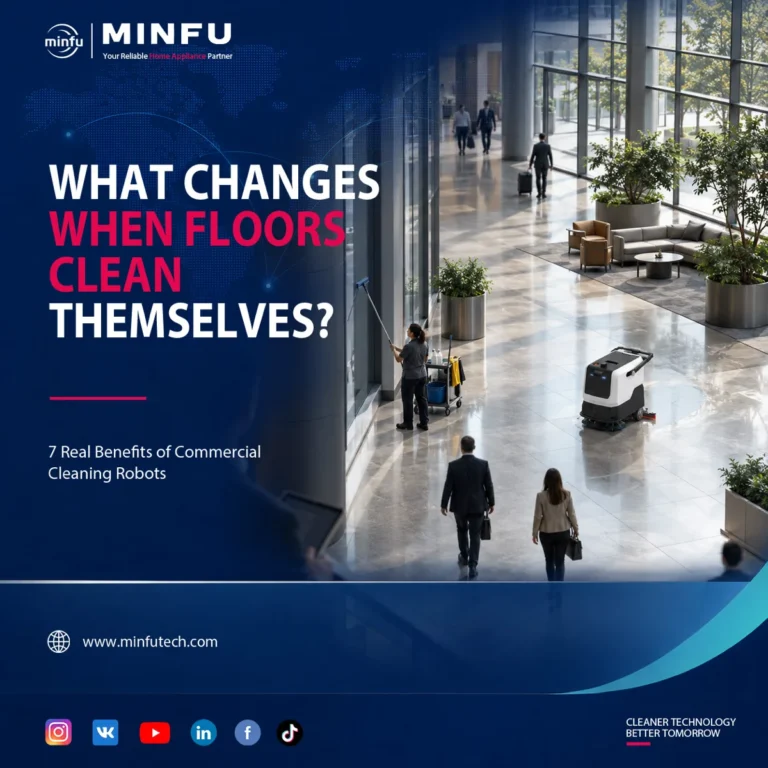
A demonstration in an empty exhibition hall can make almost any mature navigation platform look impressive. A much better test is a working facility where people and objects continuously change the available route.
Step 5: Safety Is Part of Navigation, Not an Add-On
When a commercial robot operates around employees, visitors or customers, obstacle avoidance is not only about efficiency.
It is also about safety.
The North American CSA/ANSI standard for rechargeable battery-operated commercial robotic floor-treatment machines was specifically developed around the safety issues created by autonomous machines working indoors, including operation near groups of people in places such as shopping malls and schools.
From an engineering perspective, this means a commercial cleaning robot needs more than a single “obstacle detected” response. Safety-related behavior can involve multiple sensing layers, emergency stopping, physical bump detection, controlled speed and conservative responses when the system is uncertain.
This is also why a product should not be evaluated purely on how aggressively it navigates.
The fastest robot around a pedestrian is not necessarily the best robot.
In many commercial environments, predictable behavior matters more.
Step 6: Then the Robot Still Has to Clean the Floor
It is easy for articles about commercial robots to spend 80% of their time discussing AI and navigation.
But the facility manager does not buy a robot because the map looks good.
They buy it because the floor needs cleaning.
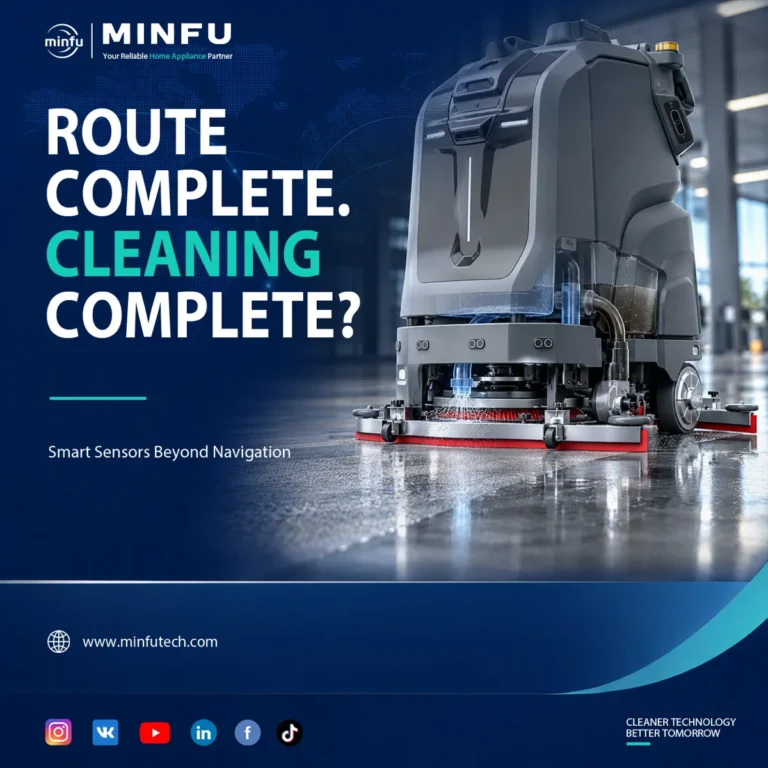
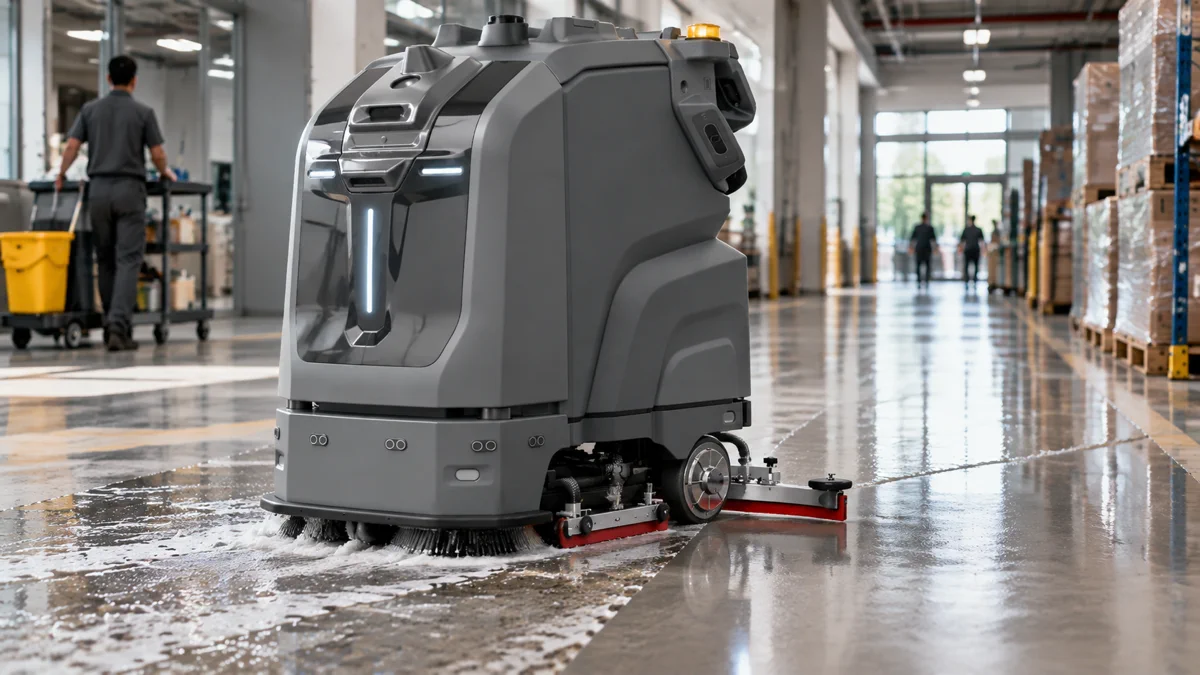
Commercial platforms therefore combine the autonomous mobile base with actual floor-care hardware. Depending on the machine, that may include sweeping, vacuuming, scrubbing, water application, brush pressure and dirty-water recovery.
The Minfu LT10, for example, integrates sweeping, vacuuming and scrubbing into a compact platform and uses a 35 cm brush-cleaning width. It is designed for environments where maneuverability matters, including more constrained commercial spaces.
At the other end of the scale, the LT70 Pro uses a 51 cm brush-cleaning width, a 70 L clean-water tank, an 80 L recovery tank and up to 27 kg of ground pressure for larger commercial and industrial applications.
Those differences show why autonomous cleaning cannot be separated from floor-care engineering.
A navigation platform can tell the machine exactly where to go. It cannot compensate for the wrong brush system, insufficient recovery performance or a cleaning platform poorly matched to the floor.
Step 7: Cleaning Becomes a Closed-Loop Mission
The most useful commercial robots do not simply receive one command and disappear.
Their work is structured as a mission.
A simplified mission might look like this:
Select area → generate route → begin cleaning → respond to obstacles → complete coverage → record task status → recharge or wait for the next mission
That is very different from a traditional scrubber, where the operator personally makes most of those decisions throughout the job.
Commercial platforms can also add task scheduling, map management and cloud-based monitoring. The current LT10, for example, includes a cloud platform and mission-management functions for area coverage, route cleaning and combined tasks.
This management layer becomes increasingly important once a facility moves beyond a single robot.
One machine can be checked manually.
Ten machines across several buildings create a completely different management problem.
At that point, the value of automation is no longer only:
“The robot can drive itself.”
It becomes:
“The facility can manage cleaning as an operation.”
Step 8: Charging and Workstations Determine How Autonomous the Day Really Is
A robot may clean autonomously for several hours, but eventually it needs energy, clean water, dirty-water handling or maintenance.
This is where the word autonomous needs to be treated carefully.
There is a difference between:
autonomous cleaning
and
autonomous cleaning with minimal daily intervention.
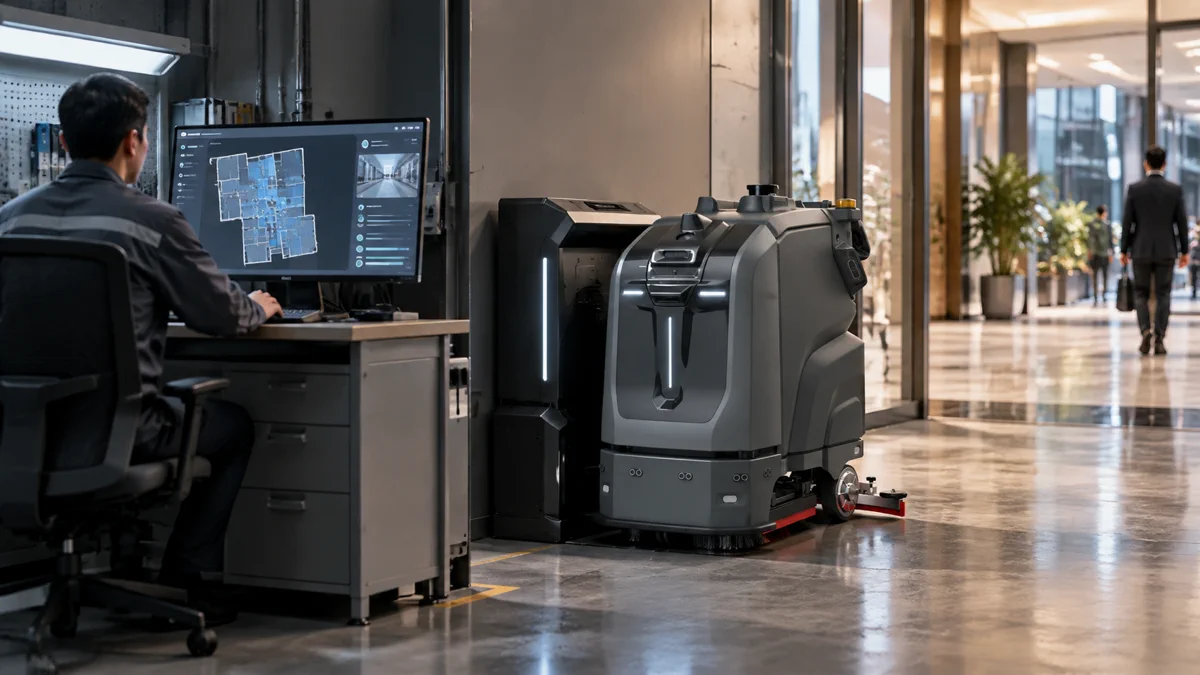
Large commercial platforms can support charging docks, workstations or other infrastructure depending on the configuration. Minfu’s LT70 Pro, for example, supports a charging dock, workstation and manual charger options.
The broader industry is moving in the same direction. Commercial platforms increasingly combine automatic charging with automated water refill/drainage or workstation functionality to reduce the number of times staff need to prepare the machine between missions.
This matters because the real KPI is not:
How autonomous is one 20-minute demonstration?
It is:
How much human attention does the machine require over an entire working day?
That is a much harder—and much more useful—question.
What Happens When Something Goes Wrong?
This is one of the least glamorous parts of autonomous cleaning and one of the most important.
The robot may encounter an obstacle it cannot safely bypass. A route may become completely blocked. A sensor may be obscured. Water may run low. A maintenance item may need attention.
A good autonomous system is not one that pretends failures never happen.
It is one that fails predictably.
The machine should know when it can solve the situation itself and when it needs human help.
This is an important difference between autonomy and uncontrolled automation. A professional cleaning robot should not keep improvising indefinitely simply because the software is designed to “always continue.”
Sometimes the correct decision is to stop.
Does “AI” Mean the Robot Is Thinking Like a Person?
Not in the way the marketing language sometimes suggests.
When we describe AI or intelligent navigation in a commercial cleaning robot, we are usually talking about algorithms that interpret sensor information, classify situations, optimize routes or select actions within defined operating rules.
The robot does not need human-like intelligence to be useful.
It needs reliable decisions.
For example, when a person steps into its path, the important question is not whether the robot “understands” the person in a philosophical sense. The important question is whether it identifies the situation quickly enough and chooses a safe response.
For B2B buyers, we think this is a much better way to evaluate AI claims:
What does the AI actually change in the robot’s behavior?
If the supplier cannot answer that clearly, the AI label does not tell the buyer very much.
Why a Compact Robot and a Heavy-Duty Robot Can Use Similar Intelligence but Behave Very Differently
This is another point worth understanding.
The autonomy stack and the physical cleaning platform are related, but they are not the same thing.
A compact commercial robot can use advanced mapping and obstacle detection while being designed primarily for narrower, more complex environments. A much larger industrial scrubber can use similar navigation principles while carrying significantly larger tanks, stronger cleaning hardware and a different chassis.
That is why our existing commercial cleaning robot selection guide treats LT10 and LT70 Pro as different operating tools rather than simply “small robot vs big robot.”
The technology that helps them understand the environment may share similar concepts.
The job each machine is designed to perform is different.
This is also why buyers should not choose a robot by comparing the sensor list alone.
From “Autonomous Robot” to “Autonomous Cleaning Operation”
For us, this is the most important shift in how commercial cleaning robots should be understood.
The first generation of conversation around robotics focused heavily on whether a machine could navigate by itself.
That question is becoming less interesting.
The more important questions now are:
Can it finish the job reliably?
Can it deal with a changing facility?
Can cleaning tasks be scheduled and monitored?
Can operators understand what happened during a mission?
How often does somebody still need to intervene?
Can the robot’s cleaning hardware maintain the expected result over hundreds of operating hours?
This is where commercial robotics becomes less about a spectacular demo and more about facility operations.
A robot that completes 95% of a route but regularly needs someone to rescue it may technically be autonomous.
Operationally, it may still create too much work.
What Should Buyers Look at During a Real Demonstration?
If we were evaluating a commercial robot for deployment, we would not spend the entire demonstration watching it drive through an empty room.
We would want to see it encounter reality.
Let people cross its route. Put a cart somewhere unexpected. Narrow one section of the path. Give it an area with edges and furniture rather than only a wide-open floor.
Then watch what happens.
Does the robot remain localized?
Does it recognize the obstacle early?
Does it stop smoothly?
Can it continue the mission afterward?
Does it leave uncleaned patches because the original path was blocked?
Can the operator understand what happened from the mission interface?
And after all of that, is the floor actually clean?
Those questions reveal much more about an autonomous cleaning platform than watching it complete a perfect rectangle in a showroom.
How We Apply This at Minfu
At Minfu, our commercial-cleaning portfolio currently uses two different platforms rather than trying to force one chassis into every facility.
The LT10 compact autonomous cleaning robot is built around maneuverability, multi-action cleaning and a dense sensor stack for commercial spaces where geometry and pedestrian interaction matter. Its published specification includes 3D TOF, LiDAR, camera, IMU and other sensing systems, cloud management, a 35 cm cleaning width and theoretical cleaning efficiency up to 756 m²/h.
The LT70 Pro heavy-duty autonomous floor cleaning robot takes the same broader autonomous-cleaning idea into a much larger platform for industrial and high-capacity applications, with a 51 cm brush width, 70 L clean-water tank, 80 L recovery tank and multiple charging options.
We do not think either platform is “more autonomous” simply because one is larger or carries more sensors.
The useful question is whether the autonomy, cleaning hardware and operating environment fit one another.
That is what makes a commercial cleaning robot practical rather than merely impressive.
Conclusion
Autonomous cleaning robots work by connecting several systems that traditional floor machines leave to the operator: environmental perception, localization, mapping, route planning, obstacle response, cleaning control and mission management.
The sensors allow the robot to observe the facility. Mapping and localization tell it where it is. Route planning decides how to cover the floor. Local navigation responds when the environment changes. The cleaning system performs the actual floor care, while management software turns individual cleaning passes into repeatable missions.
None of those technologies is particularly useful in isolation.
The real engineering challenge is making them work together reliably for hours at a time in buildings that were designed for people—not robots.
That is also why we believe the future of commercial floor care will not be defined by whichever robot has the longest sensor list. It will be defined by which systems require the least unnecessary human attention while consistently delivering the cleaning result the facility actually needs.
FAQ
What is an autonomous cleaning robot?
An autonomous cleaning robot is a commercial floor-care machine that combines sensors, localization, mapping, navigation software and automated cleaning hardware to perform assigned cleaning tasks with limited continuous human control.
How do commercial cleaning robots know where they are?
They use information from systems such as LiDAR, cameras, IMUs, odometry and other sensors together with localization and mapping algorithms to estimate their position within a facility.
What is SLAM in a cleaning robot?
SLAM stands for Simultaneous Localization and Mapping. It refers to techniques that allow a mobile robot to build or update a map while estimating its own position within that environment.
How do cleaning robots avoid people and obstacles?
Commercial cleaning robots typically use several sensing systems to detect nearby objects and dynamic obstacles. Their local navigation software can then slow, stop, wait or adjust the route depending on the situation.
Do autonomous cleaning robots replace cleaning staff?
Usually, the strongest use case is not complete replacement. Robots are effective at repetitive floor-care tasks, while staff remain important for detailed cleaning, maintenance, exception handling and areas unsuitable for autonomous machines.
Can one commercial cleaning robot work in every type of facility?
Not necessarily. Navigation technology may be similar across platforms, but cleaning width, tank capacity, chassis size, noise, runtime and cleaning hardware can make one machine much better suited to a particular facility than another.
Work With Minfu
If you are developing a commercial cleaning robot line for your market, Minfu provides OEM/ODM manufacturing, product engineering, customization, testing and mass-production support for distributors, cleaning-equipment brands and commercial solution providers.
Our current commercial platforms cover both compact autonomous floor cleaning for more complex commercial spaces and heavy-duty robotic floor care for large industrial facilities.
LT10:
https://minfutech.com/commercial-cleaning-robots-lt10/
LT70 Pro:
https://minfutech.com/commercial-cleaning-robots-lt70-pro/
OEM/ODM Solutions:
https://minfutech.com/oem-odm-solutions/
Email: info@minfutech.com
WhatsApp / Phone: +86 13760255781
Contact Minfu to discuss your target facility, local market, fleet requirements or commercial robot OEM/ODM project.
Continue Reading
Commercial Cleaning Robot vs Traditional Floor Scrubber: Which Fits Your Facility?
Understanding how autonomous cleaning works is only the first step. The next question is whether automation actually makes sense for your facility. Compare commercial cleaning robots with traditional floor scrubbers across labor, flexibility, cleaning consistency, facility layout and operating cost.