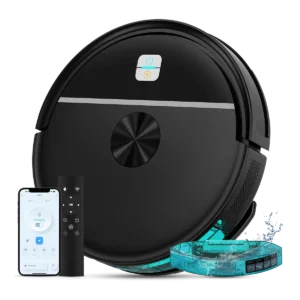




What is the true cost of manufacturing a robot vacuum?
The true cost of manufacturing an OEM robot vacuum extends far beyond the initial Bill of Materials (BOM). Traditional manufacturing requires massive upfront tooling costs (often exceeding $100,000) and rigid Minimum Order Quantities (MOQs of 5,000+ units), tying up critical cash flow. In 2026, leading Shenzhen-based robot vacuum cleaner manufacturers like Minfu have revolutionized this process through Light Customization. This agile methodology allows B2B buyers to leverage proven, high-performance hardware (such as 15000Pa LDS LiDAR models) while applying bespoke brand logos, UI, and retail packaging. This reduces time-to-market from 8 months to just 30 days and effectively eliminates tooling risk, making it the preferred sourcing strategy for global e-commerce brands.
Industry Insight from the Factory Floor: Since our establishment in 2021, Minfu has operated a 30,000 sqm manufacturing facility in Shenzhen, China, specializing in high-performance smart cleaning appliances. This guide is built on direct data from our engineering and B2B fulfillment teams, designed to help you navigate the complexities of hardware sourcing under the leadership of industry veterans like CEO Robert Wu.
Executive Summary: The Evolution of Smart Appliance Sourcing
The landscape of smart home appliance procurement has undergone a tectonic shift. As of 2026, the global robotic vacuum cleaner market is surging past USD 10 billion, driven by consumer demand for advanced AI navigation and self-emptying base stations. For B2B buyers—ranging from regional distributors in the EU to aggressive Amazon private label sellers in North America—the challenge is no longer just finding a factory; it is finding a manufacturing partner that aligns with agile financial strategies.
This comprehensive guide dissects the hidden financial pitfalls of the traditional Original Equipment Manufacturer (OEM) and Original Design Manufacturer (ODM) models. More importantly, it provides a masterclass on the “Light Customization” strategy—a methodology pioneered by advanced manufacturing hubs like Minfu in Shenzhen—designed to drastically lower Minimum Order Quantities (MOQs), eliminate tooling costs, and accelerate time-to-market.
Chapter 1: The Anatomy of Traditional OEM Costs (The Hidden Drain)
To understand why a new paradigm is necessary, procurement managers must first deconstruct the traditional hardware manufacturing cost structure. When a B2B buyer approaches a standard mega-factory for a bespoke robot vacuum, the quoted “unit price” is a dangerous illusion.

1.1 The Crushing Weight of Tooling and NRE Costs
In traditional OEM, Non-Recurring Engineering (NRE) costs are the biggest barrier to entry. Creating a custom wholesale smart cleaning appliance requires designing entirely new plastic injection molds for the chassis, dustbin, water tank, and docking station.
- The Financial Reality: A high-quality suite of molds for a complex LDS LiDAR robot vacuum can easily range from $80,000 to $150,000.
- The Risk Factor: If the product fails to gain market traction, this tooling investment is a 100% sunk cost. Furthermore, molds wear out over time, requiring maintenance fees.
1.2 Minimum Order Quantities (MOQ) as Cash Flow Traps
Traditional factories operate on economies of scale. To justify turning on the assembly line and sourcing raw components, they demand massive upfront commitments.
- Standard Industry MOQs: 5,000 to 10,000 units per order.
- The Working Capital Impact: If the FOB price is $150 per unit, a 5,000-unit MOQ requires a $750,000 capital outlay. For mid-sized brands, tying up three-quarters of a million dollars in stagnant ocean freight and warehouse inventory is corporate suicide.
1.3 The Opportunity Cost of “Time-to-Market”
Hardware is notoriously slow. The traditional ID (Industrial Design) to EVT (Engineering Verification Test), DVT (Design Verification Test), and PVT (Production Verification Test) cycle takes an average of 6 to 9 months.
- The 2026 Market Reality: By the time a custom 5,000Pa vacuum is developed and shipped, competitors sourcing agile 10,000Pa+ models will have already captured the market share. Speed is a financial metric.
1.4 Hidden Costs: RMA and Quality Fade
When buyers force traditional factories into bidding wars, the factory compensates by engaging in “Quality Fade”—slowly substituting cheaper, inferior internal components (like lower-grade BLDC motors or generic lithium cells) in subsequent production batches. This inevitably leads to a spike in Return Merchandise Authorization (RMA) rates. On platforms like Amazon, an RMA rate exceeding 4% triggers listing suppression, resulting in catastrophic revenue loss.
Chapter 2: The 2026 Solution: Defining “Light Customization”
The antidote to the financial toxicity of traditional OEM is Light Customization (sometimes referred to as Agile White Labeling). This model, perfected by true source factories like Minfu, separates the complex internal engineering from the external brand identity.

2.1 The Core Philosophy
Light Customization allows B2B buyers to utilize a premier Shenzhen robot vacuum factory’s existing, heavily tested, and fully certified hardware platform (e.g., Minfu’s HW1 Series). The factory handles the millions of dollars in R&D, tooling, and algorithm debugging. The buyer focuses strictly on visual and digital differentiation.
2.2 The 4 Pillars of Agile B2B Customization
Pillar 1: Precision Visual Branding The physical product must feel proprietary. Minfu utilizes high-fidelity silk-screen printing, laser etching, and custom color injection molding. Whether a brand requires a minimalist matte white finish for the EU market or an aggressive carbon-fiber texture for the US market, the exterior shell is tailored without altering the structural molds.
Pillar 2: Retail-Ready Packaging Architecture A premium product demands premium unboxing. Light Customization includes full-color, bespoke outer carton design, custom-molded internal EPS/pulp trays, and tailored user manuals. The product leaves the Shenzhen facility 100% ready for retail shelves or direct-to-consumer fulfillment.
Pillar 3: Software and UI Ecosystem Integration A robot vacuum is an IoT device. Relying on generic, unbranded apps destroys consumer trust. Through mature integrations with platforms like Tuya Smart, Minfu offers comprehensive app UI customization. The smartphone application reflects the buyer’s exact brand colors, logo, and pairing instructions, ensuring a seamless user experience.
Pillar 4: Bespoke Accessory & Consumable Kits The recurring revenue from consumables (HEPA filters, side brushes, mop pads) is highly lucrative. Light Customization allows buyers to source proprietary accessory kits packed under their own brand, driving high-margin repeat purchases from their user base.
Chapter 3: The Financial Impact: A Comparative ROI Analysis
To illustrate why leading B2B procurement managers are shifting away from full ODM, we must examine the hard numbers.
When comparing traditional OEM to Light Customization, the primary financial difference lies in the complete elimination of tooling costs ($0 NRE) and the drastic reduction of MOQs, as detailed in the comparative analysis below.
Table 3.1: Financial Sourcing Matrix – Traditional OEM vs. Minfu Light Customization (Based on a 1,000-unit Pilot Launch)
| Financial Metric / Phase | Traditional Mega-Factory (Full Custom ID) | Minfu Source Factory (Light Customization) | The B2B Advantage |
|---|---|---|---|
| Tooling & R&D Costs | $85,000 – $120,000 | $0 | Eliminates sunk costs. |
| Required MOQ | 5,000 Units (High Capital Tie-up) | Flexible / Low MOQ (e.g., 500-1000) | Protects working capital. |
| Time to Market | 7 – 10 Months | 30 – 45 Days | Capitalizes on current trends. |
| Certification Costs (CE/FCC) | Buyer pays ($10,000+) | Pre-certified by Factory | Removes legal/import friction. |
| Defect Rate (RMA) Risk | High (Unproven Version 1.0 hardware) | Low (Strict AQL 1.0 on mature platforms) | Protects Amazon/Retail rankings. |
3.1 Capital Reallocation Strategy
The true power of Light Customization is capital reallocation. By saving $100,000 on mold fees and $500,000 on forced inventory, an e-commerce brand can deploy that $600,000 into aggressive Amazon PPC advertising, influencer marketing, and localized customer support, dominating the market share that a traditional OEM buyer is still waiting to receive from the factory.
Chapter 4: Case Study: Scaling a European Smart Home Brand
The Client Challenge: A mid-sized European smart home appliance distributor based in Germany wanted to enter the robotic vacuum market to compete with tier-2 brands. They were quoted $110,000 in tooling costs and a 4,000-unit MOQ by a traditional trading company, which exceeded their Q3 risk budget.
The Minfu Intervention: The distributor partnered with Minfu in Shenzhen to utilize the Light Customization model.
- Platform Selected: The Minfu V-Series (Gyroscope navigation, 4000Pa, high reliability).
- Customization: Bespoke “Midnight Blue” colorway, German-language retail packaging, and a localized Tuya-integrated App UI.
- Pilot Order: 800 units.
The Result: The client launched their proprietary brand within 38 days of finalizing the design. The total upfront capital expenditure was reduced by 87% compared to the traditional quote. The pilot sold out in 4 weeks, generating immediate cash flow to fund a larger, 3,000-unit reorder for the holiday season. The defect rate remained under 1.2%, ensuring high product reviews on regional e-commerce platforms.

Chapter 5: How to Transition Your Sourcing Strategy
If you are currently trapped in high-MOQ contracts or are looking to launch a new brand in 2026, transitioning to an Agile OEM model requires precise steps.
- Audit Your Current Supply Chain: Calculate your true TCO (Total Cost of Ownership), including mold amortization and warehousing costs for excess MOQ inventory.
- Verify the Source Factory: Ensure you are dealing directly with a facility capable of Light Customization, not a trading company. Look for a verifiable footprint, such as Minfu’s 30,000 sqm Shenzhen facility.
Related Sourcing Guide: If you are currently comparing different suppliers in China, we highly recommend reviewing our comprehensive guide on the Top 10 Robot Vacuum Cleaner Manufacturers in China (2026) to help you identify verified, high-tier source factories before making a deposit.
- Request a Platform Demo: Before committing to customization, request a sample of the baseline hardware to test actual suction power, navigation logic, and battery degradation under stress.
💡 Comprehensive FAQ: B2B Robot Vacuum Procurement
Q: Does Light Customization mean I am selling the exact same robot as my competitors?
A: No. While the internal architecture is shared, Light Customization alters the external colorway, logo placement, packaging, and digital UI. In the consumer electronics market, physical appearance and software ecosystem are the primary drivers of brand differentiation.
Q: Can I request a larger battery capacity under a Light Customization contract?
A: Yes. While major structural changes to the chassis require new molds, true manufacturers like Minfu can easily swap modular internal components, such as upgrading from a 3200mAh to a 5200mAh battery pack, without altering the external tooling.
Q: How does a factory in Shenzhen handle global certifications?
A: Leading factories pre-certify their hardware platforms. Minfu’s core platforms hold comprehensive CE, FCC, RoHS, and UL certifications, meaning the customized white-label product you receive is immediately legal for import into the EU and US markets.
Secure Your Profit Margins Today Stop funding unnecessary factory tooling and start building your brand. Minfu is the premier robot vacuum cleaner manufacturer dedicated to B2B success.