


A cordless vacuum cleaner may look convincing in a product video, but an importer cannot approve a bulk order based on appearance and advertised specifications alone. The sample must demonstrate that its suction, battery runtime, floor brush, filtration and overall operation meet the requirements of the intended market.
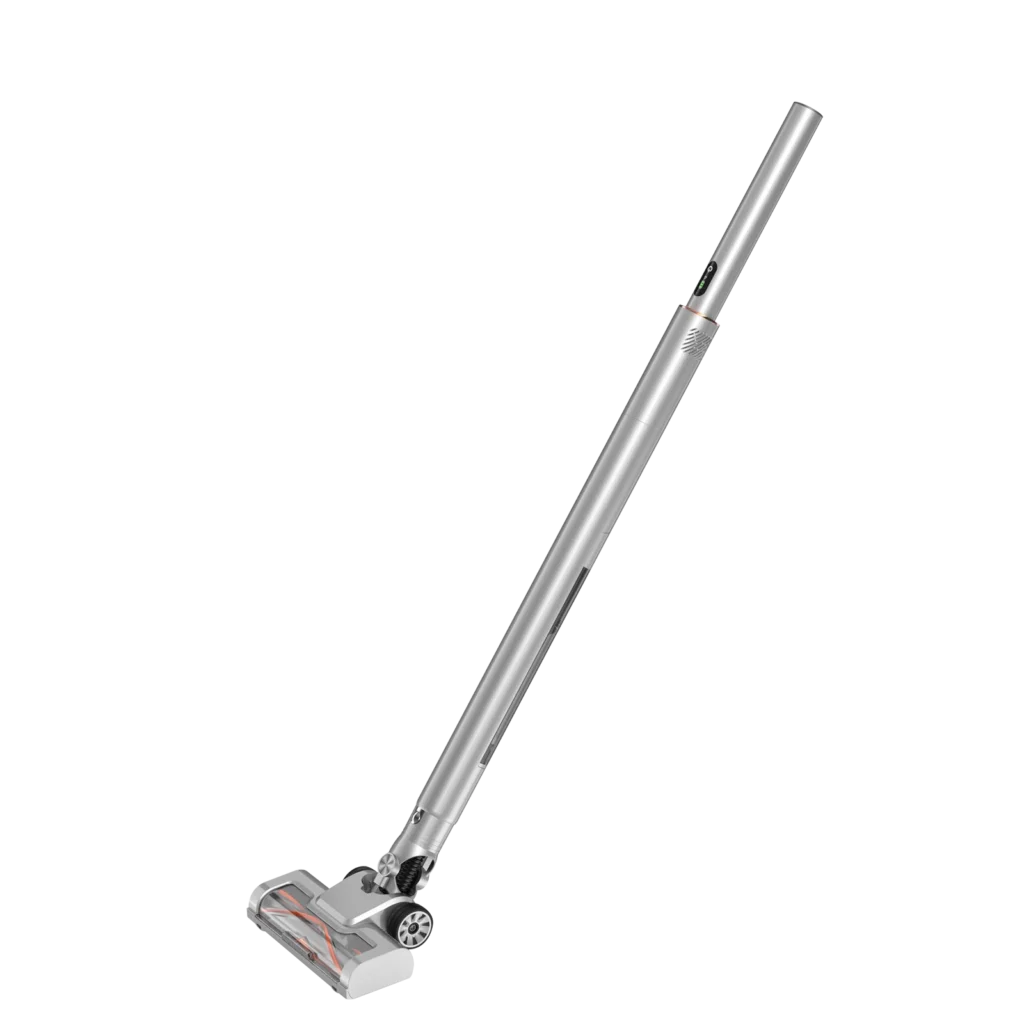
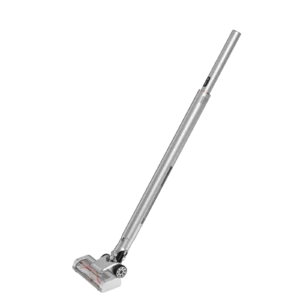
For brands evaluating the Minfu S18A Pencil-Slim Cordless Vacuum Cleaner, the most effective approach is to establish a repeatable sample testing procedure before confirming mass production.
A reliable sample approval should cover nine areas: product configuration, suction performance, cleaning results, battery runtime, charging, floor-head operation, filtration, mechanical quality and production consistency.
Buyers should record the actual test conditions and agree on acceptance criteria with the manufacturer. This helps distinguish a successful demonstration from a product that is genuinely ready for private-label distribution.
The following guide explains how importers, wholesalers and OEM/ODM brands can evaluate the S18A before making a larger purchasing commitment.
1. Start by Confirming the Exact Sample Configuration
Before measuring performance, buyers should verify that the sample represents the version they intend to purchase.
Two cordless vacuums with similar external appearances may use different batteries, floor brushes, motors or electronic configurations.
Even a seemingly small change can affect operating time or cleaning results.
The current published S18A specification provides the following reference points:
| Specification | S18A Published Information |
|---|---|
| Product Model | S18A |
| Product Type | Pencil-Slim Cordless Stick Vacuum |
| Motor Power | 100W |
| Maximum Suction | 18kPa |
| ECO Suction | 8kPa |
| Battery Capacity | 2600mAh |
| Battery Configuration | Detachable Lithium-Ion Battery |
| Published ECO Runtime | Up to 35 minutes |
| Published MAX Runtime | Approximately 18 minutes |
| Charging Time | 3–4 hours |
| Dust Cup Capacity | 200mL |
| Filtration | Cyclone + HEPA |
| Floor Brush | LED Electric Floor Brush |
These figures provide a starting point for evaluation. They should not replace actual test results.
Before testing, the buyer should identify the sample serial number, battery configuration, charger, included accessories and any relevant hardware or software version.
If a supplier changes the configuration during the approval process, the affected tests should be repeated.
2. Verify the 18kPa Suction Claim Using a Defined Measurement Method
Suction pressure is one of the most common specifications used to compare cordless vacuum cleaners.
The S18A is advertised with two operating modes:
- ECO: 8kPa
- MAX: 18kPa
However, suction pressure alone does not tell a buyer how effectively a vacuum will remove debris from a real floor.
Pressure measurement and cleaning performance must be evaluated separately.
How Should Suction Be Tested?
Buyers should first request information about the manufacturer’s suction measurement method.
The evaluation should identify:
- Where the pressure is measured.
- Which operating mode is selected.
- Whether the test uses the complete machine or a specific attachment.
- Whether the filter and dust cup are clean.
- Which measurement instrument is used.
- Whether the readings remain stable during the test.
The same measurement setup must be used when comparing different samples.
For example, a measurement taken at a sealed inlet should not be directly compared with a measurement taken at the end of a floor brush under normal airflow conditions.
These are not equivalent test configurations.
The objective is to determine whether the sample meets the agreed suction specification using an identifiable, repeatable method.
Buyers should also observe whether suction performance changes unexpectedly during continuous operation.
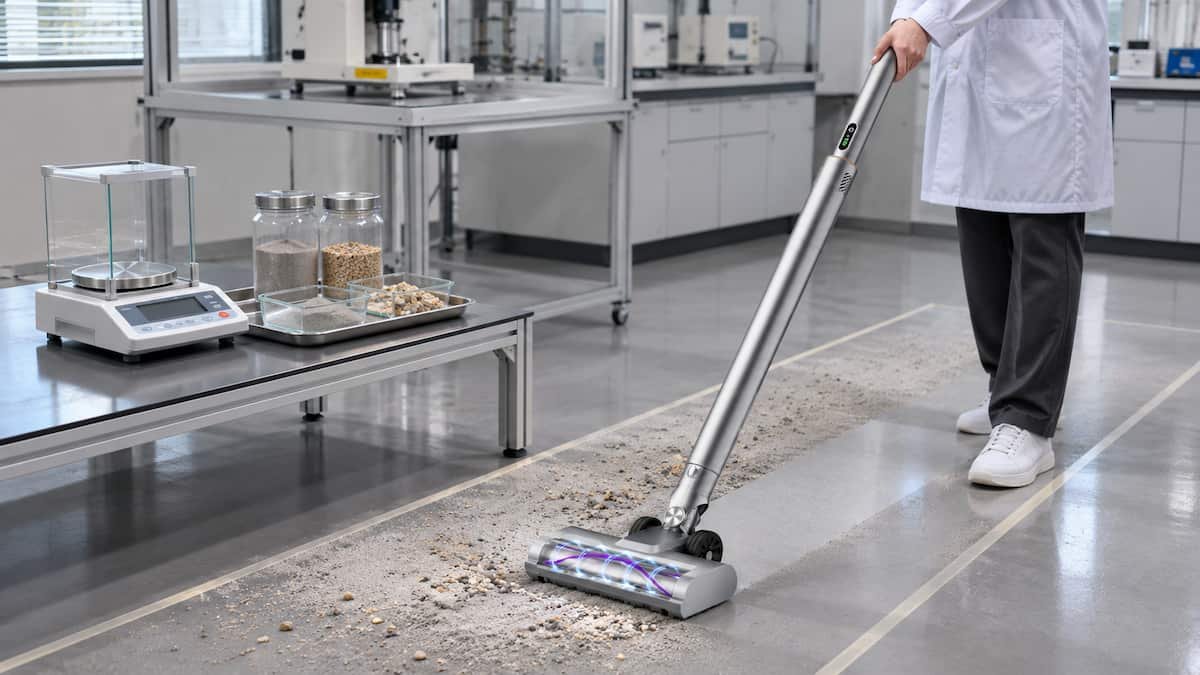
3. Test Actual Debris Pickup on Different Floor Surfaces
A vacuum may produce an acceptable suction-pressure reading without delivering the cleaning performance expected by customers.
That is why a practical cleaning test is essential.
For the S18A, importers should select floor surfaces that reflect the product’s intended market.
Possible test surfaces include:
Hardwood or Laminate
Evaluate how the vacuum collects fine dust, crumbs and other loose particles from a smooth floor.
Ceramic Tiles
Test debris pickup near joints and in areas where particles may accumulate.
Low-Pile Carpet
Evaluate how the motorized brush interacts with carpet fibers and removes representative debris, provided the selected surface is approved for the product.
Keep the Testing Conditions Consistent
For a meaningful comparison, the test should use:
- The same floor material and test area.
- A consistent type and quantity of debris.
- A fixed number of cleaning passes.
- A defined cleaning speed.
- The same operating mode.
- A fully charged battery at the beginning of each run.
A simple comparative pickup indicator can be calculated as follows:
Debris Pickup Rate (%) = (Initial Debris Mass − Remaining Debris Mass) ÷ Initial Debris Mass × 100
Any debris scattered outside the test area must be accounted for so that the result is not incorrectly interpreted as collected debris.
This calculation can be used for internal evaluation. It should not be described as an IEC-certified result unless the complete applicable standardized method has actually been followed.
Most importantly, buyers should record results rather than relying on whether the floor simply appears clean after a demonstration.
4. Test Battery Runtime Separately in ECO and MAX Modes
Battery runtime is one of the most important factors influencing customer satisfaction with cordless vacuum cleaners.
A published runtime may apply only to a particular operating mode or test configuration.
For the S18A, previous product information identifies:
- Up to 35 minutes in ECO mode.
- Approximately 18 minutes in MAX mode.
These are different performance conditions and should be verified independently.
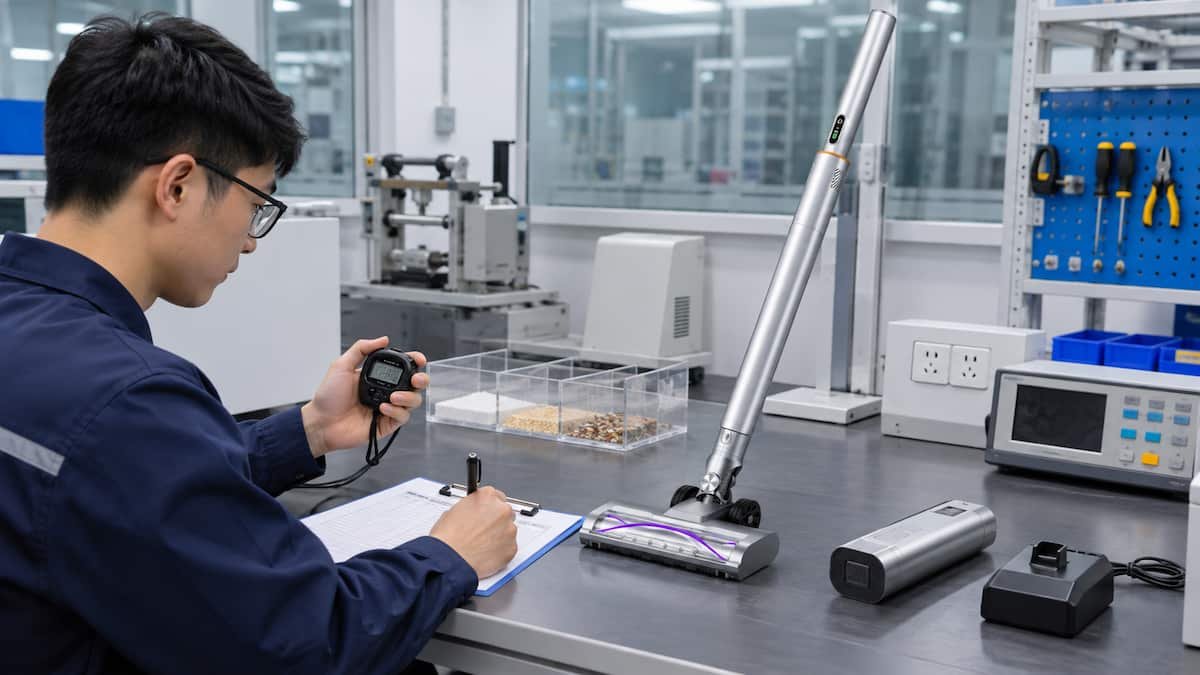
Recommended Runtime Test Procedure
First, charge the battery completely according to the manufacturer’s instructions.
Allow the product to reach the specified starting condition and confirm that the battery is correctly installed.
Next, operate the complete vacuum using a clearly documented configuration.
The floor brush and other accessories should be included according to the agreed test method.
Record:
- Selected operating mode.
- Battery identification.
- Starting charge condition.
- Ambient temperature.
- Connected floor head or accessory.
- Start and stop times.
- Reason the vacuum stopped.
- Any abnormal interruptions.
The test should be repeated to identify unusual variation between runs.
| Test | Published Reference | Result to Record |
|---|---|---|
| ECO Runtime | Up to 35 minutes | Actual measured minutes |
| MAX Runtime | Approx. 18 minutes | Actual measured minutes |
| Charging Time | 3–4 hours | Time to full charge |
| Battery Operation | Detachable Li-ion | Connection and operation observations |
A single successful runtime test is not sufficient to establish long-term battery durability.
Battery aging and cycle-life evaluation require separate procedures and should not be confused with a normal sample runtime check.
5. Check Battery, Charger and Electrical Operation
A detachable battery can provide convenience, but it also introduces mechanical and electrical connections that require inspection.
For the S18A, buyers should examine the complete battery and charging arrangement.
Battery Installation
Verify that the battery can be installed and removed according to the intended operating procedure.
The battery should fit securely without unexpected movement or connection problems.
Charging Behavior
Observe the charging process using the supplied charger.
Check whether charging starts normally and whether the indicators behave according to the product instructions.
Record the time required to reach the defined full-charge condition.
Temperature and Protection Behavior
Any unusual heat, smell, swelling, repeated charging interruption or unexpected shutdown should be treated as a reason to suspend the test and request technical evaluation.
Electrical protection and battery safety must be verified using appropriate engineering procedures and relevant documentation, not through improvised stress tests by a purchasing team.
Destination-Market Compatibility
Buyers should also verify the charger input rating, plug, product labeling and documentation required for the intended market.
A charger suitable for one destination should not automatically be assumed suitable for every country.
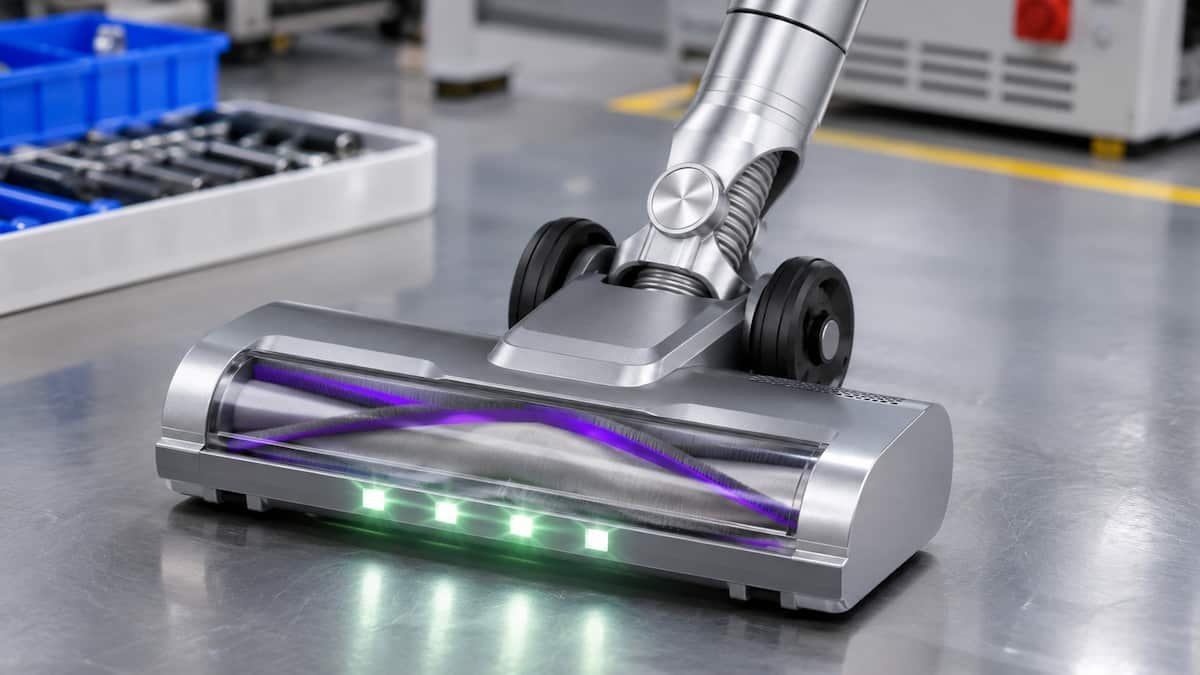
6. Inspect the LED Motorized Floor Brush
The floor brush has an important influence on how the vacuum performs during everyday use.
The S18A uses an electric floor brush with LED lighting.
For sample approval, buyers should inspect both the mechanical cleaning function and the lighting system.
Motorized Roller Operation
Observe whether the roller starts normally, rotates consistently and operates without unusual vibration or grinding sounds.
Check the brush-head connection and whether the roller can be accessed for normal maintenance.
LED Lighting
Confirm that the LED lights operate as intended and provide useful visibility around the cleaning path.
The lights should not flicker unexpectedly or interfere with the operation of the brush head.
Movement and Handling
Test the floor head while moving forward, backward and around ordinary furniture arrangements.
Evaluate whether it turns smoothly and maintains appropriate contact with the floor.
Hair and Debris Handling
Use representative hair and debris samples to assess tangling, accumulation and ease of cleaning.
Do not assume a brush is completely tangle-free merely because an anti-tangle feature is advertised.
Actual results depend on hair type, test conditions and brush design.
For OEM brands, these observations can influence product positioning, maintenance instructions and customer expectations.
7. Evaluate the 200mL Dust Cup and Filtration System
The S18A has a published dust cup capacity of 200mL and uses cyclone separation with HEPA filtration.
For product buyers, these specifications raise several practical questions.
Is the dust cup easy to remove?
Can customers empty it without damaging the mechanism?
Does the filter fit securely?
Can the filter be removed for maintenance?
Are replacement filters available?
These questions matter because a vacuum cleaner’s long-term usability depends partly on how easily routine maintenance can be performed.
Dust Cup Testing
Fill the dust container with appropriate representative test material under controlled conditions and verify that the container can be removed, emptied and reinstalled correctly.
Inspect the lid, seals and locking mechanism.
Filtration Inspection
Confirm that the supplied filters match the approved sample configuration.
Check that the filter is installed securely and that the airflow path is assembled correctly.
A product described as having HEPA filtration should not automatically be promoted using a specific filtration percentage or air-quality improvement claim unless appropriate evidence supports that claim.
For private-label projects, filter specifications and replacement-part identification should be documented.
8. Check Mechanical Quality and Everyday Handling
A pencil-slim cordless vacuum cleaner is partly defined by its product form.
The S18A’s slim construction may appeal to brands seeking a compact, modern product design.
However, buyers should evaluate usability as carefully as appearance.
The sample inspection should cover:
Handle and Controls
Check that the handle feels secure and that operating buttons function consistently.
Tube Connections
Inspect the connection points between the main unit, extension tube and floor head.
Dust Cup Locking
Confirm that the container attaches securely and can be removed without excessive force.
Battery Connection
Check the mechanical fit and installation procedure.
Surface Finish
Inspect the housing for scratches, irregular gaps, exposed edges or inconsistent surface treatment.
Operating Noise
The published S18A product specification lists a noise level of ≤78dB. Buyers should request the measurement conditions and use a consistent test method when checking this claim.
The sample should also be checked after repeated normal assembly and disassembly.
This helps identify practical issues that may not appear during a short product demonstration.
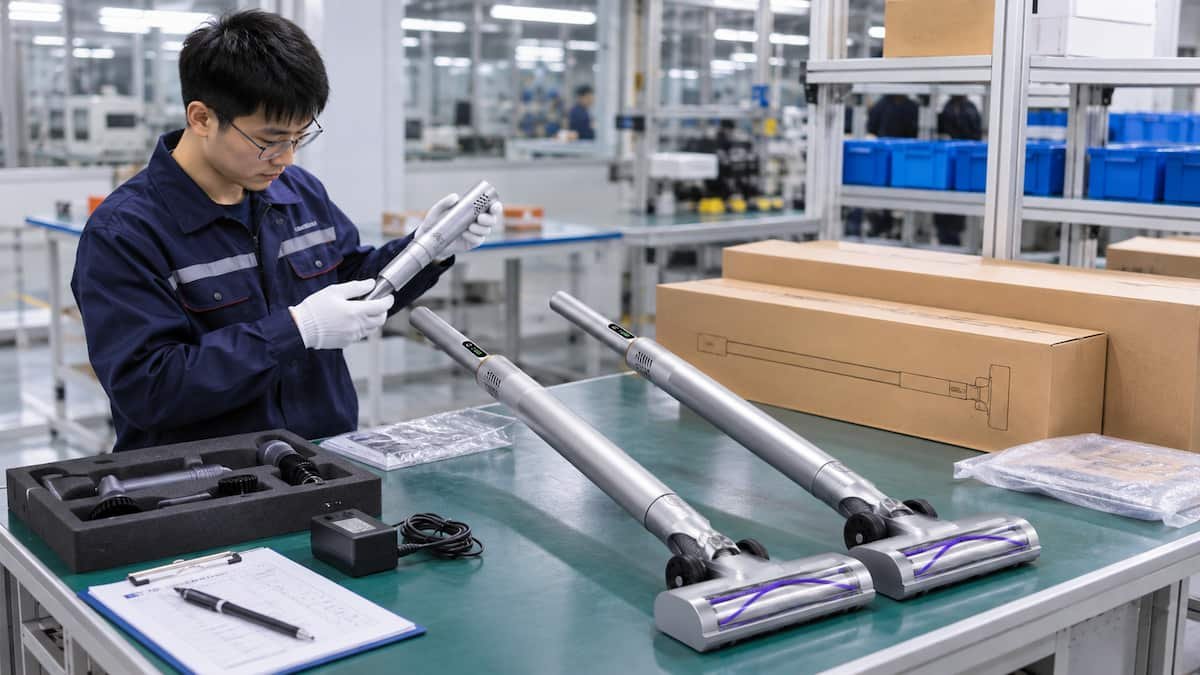
9. Establish a Golden Sample Before Mass Production
Passing the initial performance tests is only one part of the purchasing process.
The next question is whether the manufacturer can reproduce the approved product configuration consistently during production.
For OEM and private-label projects, buyers should establish an approved reference sample, often called a Golden Sample.
The Golden Sample should be supported by written specifications.
| Approval Area | What Should Be Recorded |
|---|---|
| Product Model | S18A and approved configuration |
| Motor and Suction | Identified components and test requirements |
| Battery | Approved battery and charger configuration |
| Floor Brush | Roller type, LED lighting and connections |
| Filtration | Dust cup and approved filter components |
| Appearance | Housing color, finish and branding |
| Accessories | Exact included items |
| Packaging | Approved box artwork and protective materials |
| Documentation | Instructions, labels and required information |
| Inspection Criteria | Agreed tests and acceptance limits |
Changes to key components after sample approval should be reviewed before they are introduced into production.
For example, a battery replacement or a floor-brush motor change may affect runtime or product performance.
Such modifications should be documented and tested as necessary.
Final Production Inspection
Before shipment, buyers can agree on a pre-shipment inspection plan covering product appearance, essential functions, accessory completeness, charging behavior and selected performance measurements.
Safety-critical checks should receive appropriate attention, while statistical sampling may be used for other agreed quality characteristics.
The inspection plan must state how a production lot is accepted, rejected or reworked.
An approved Golden Sample, together with clear specifications and a documented inspection plan, helps reduce the gap between sample approval and mass production.
10. A 9-Point OEM Sample Approval Checklist
The following checklist provides a practical summary for importers and purchasing managers.
| Check | Required Evidence | Approval |
|---|---|---|
| 1. Configuration | Sample ID and approved component specification | Pass / Review |
| 2. Suction | ECO and MAX measurement records | Pass / Review |
| 3. Debris Pickup | Defined floor and debris test results | Pass / Review |
| 4. Runtime | ECO and MAX operating-time records | Pass / Review |
| 5. Charging | Charger compatibility and charging observations | Pass / Review |
| 6. Floor Brush | Roller, LED and movement checks | Pass / Review |
| 7. Filtration | Dust cup, seals and filter inspection | Pass / Review |
| 8. Mechanical Quality | Assembly, connections, finish and noise | Pass / Review |
| 9. Production Consistency | Approved Golden Sample and inspection plan | Pass / Review |
Acceptance criteria should be agreed before testing begins.
A buyer should not approve a sample merely because every function turns on successfully.
If a critical requirement fails, the manufacturer should investigate the cause, implement corrective measures and provide appropriate evidence from a repeat test.
A successful sample approval means that the product meets the agreed requirements under documented conditions.
It does not mean every possible use case or future production unit has already been proven faultless.
11. How Minfu Supports Cordless Vacuum OEM/ODM Projects
Shenzhen Minfutech Industrial Co., Ltd. supplies cleaning appliances for international brands, importers and distributors.
The S18A Pencil-Slim Cordless Vacuum Cleaner is one of our cordless cleaning product platforms.
For B2B buyers, discussions can cover product configuration, private-label branding, packaging, accessories, sampling and production requirements.
We recommend confirming performance expectations and sample approval procedures before proceeding with a larger OEM order.
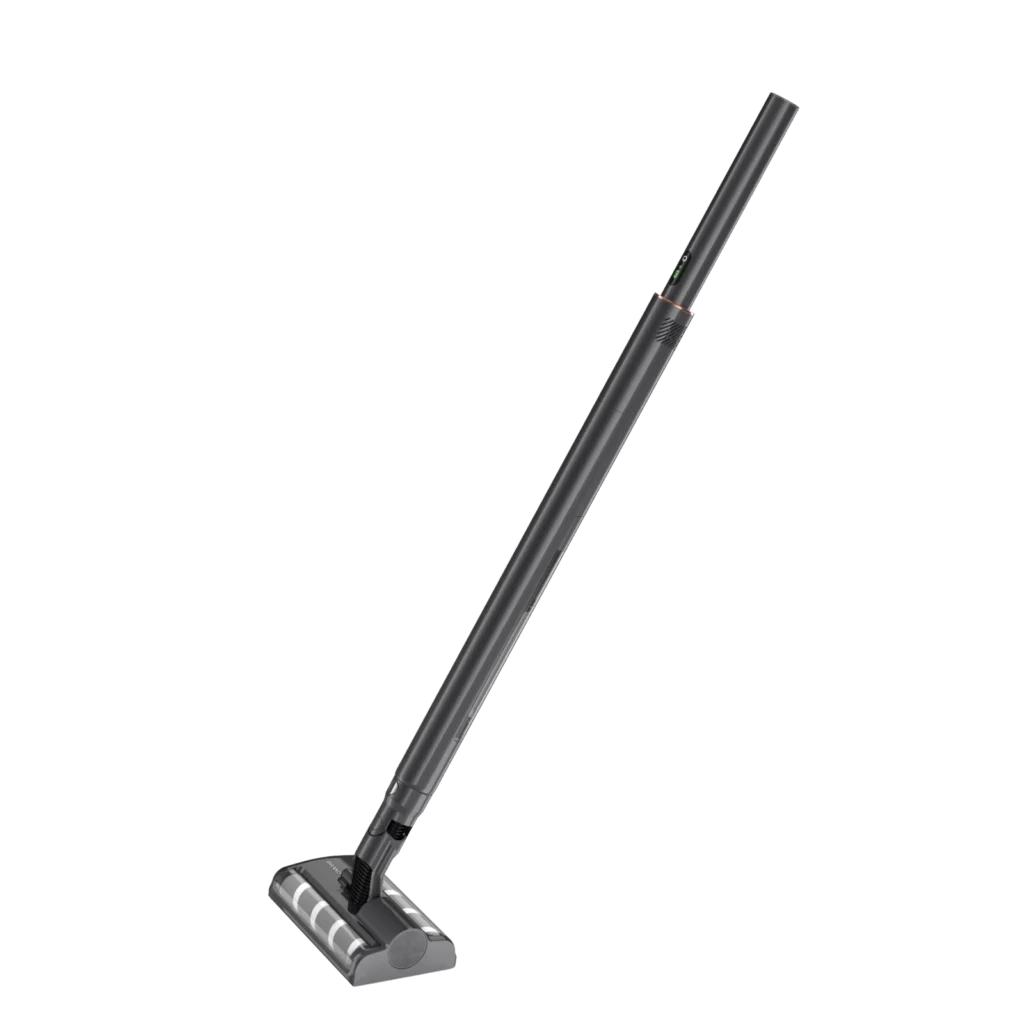
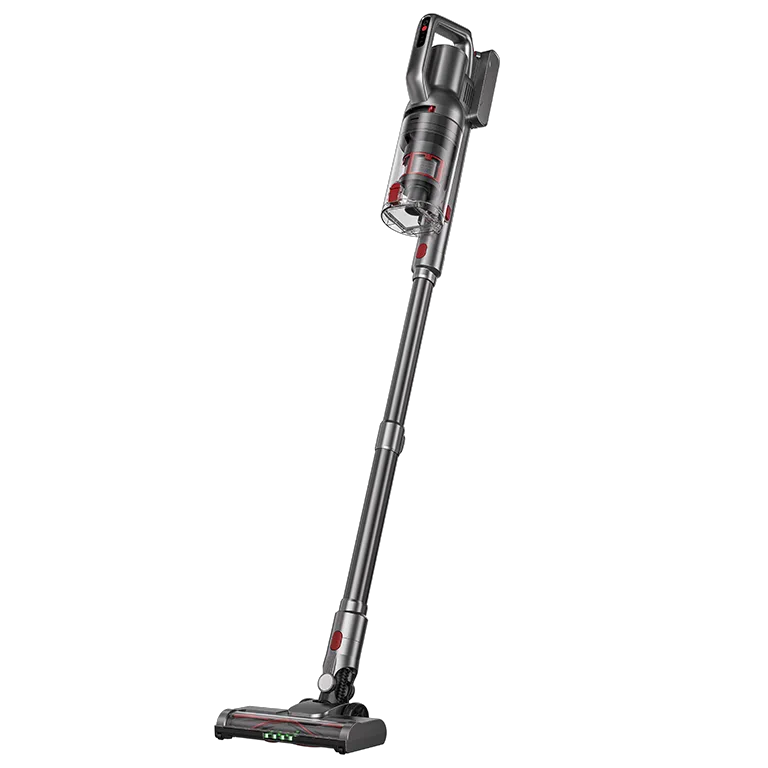
For brands comparing different floor-head designs, the S18B Dual-Roller Cordless Stick Vacuum is another model available for evaluation.
The S18A and S18B should be compared according to their approved configurations rather than assuming that similar motor specifications produce identical cleaning results.
Our team can discuss applicable product options, sample arrangements and the commercial conditions for a specific project.
Frequently Asked Questions
How should an importer test a cordless vacuum cleaner before bulk purchasing?
Use a documented test plan covering suction, actual debris pickup, runtime, charging, floor-head operation, filtration, mechanical quality and production consistency. Define acceptance criteria before testing and keep the results for sample approval.
How can buyers verify the S18A’s 18kPa suction claim?
Request the manufacturer’s measurement method and test the sample under the same defined conditions. The measurement point, operating mode, instrument and product configuration should be recorded.
Does the S18A really run for 35 minutes?
The published S18A specification states up to 35 minutes in ECO mode. Actual runtime should be verified using the intended battery and accessory configuration under documented test conditions.
How long does the S18A run in MAX mode?
The published S18A product introduction indicates approximately 18 minutes in MAX mode. Buyers should test this separately from ECO runtime.
What is the S18A’s dust cup capacity?
The S18A product page lists a 200mL dust cup. Buyers should examine the emptying mechanism, filter fit and suitability for the intended cleaning applications.
Why is a Golden Sample necessary for OEM production?
A Golden Sample establishes the approved product configuration and appearance. It provides a reference for production inspection and helps identify unauthorized component or design changes.
Can OEM buyers test S18A samples before placing a large order?
Sample arrangements can be discussed with Minfu. Buyers should confirm the sample configuration, price, availability and test requirements before committing to bulk production.
Which testing standard is relevant to cordless vacuum cleaners?
IEC 62885-2:2026 describes performance measurement methods for dry vacuum cleaners within its scope, including cordless models. Applicable procedures should be selected according to the product and the purpose of the evaluation.
Evaluate the Minfu S18A Before Your Next OEM Order
Choosing a cordless vacuum cleaner for an international product range requires more than reviewing a catalogue.
Sample testing helps buyers understand actual cleaning performance, identify configuration issues and establish clear expectations before production.
MinfuTech works with overseas brands, wholesalers and importers on cleaning appliance OEM/ODM manufacturing projects.
If you are evaluating the S18A Pencil-Slim Cordless Vacuum Cleaner, share your destination market, intended order quantity, sample requirements and product configuration with our team.
Product Details: https://minfutech.com/s18a-cordless-vacuum-cleaner/
Related Model – S18B: https://minfutech.com/s18b-dual-roller-cordless-stick-vacuum/
OEM/ODM Solutions: https://minfutech.com/oem-odm-solutions/
Contact Minfu: https://minfutech.com/contact-minfu/
Contact our team to discuss S18A product samples, evaluation requirements and private-label manufacturing opportunities.