
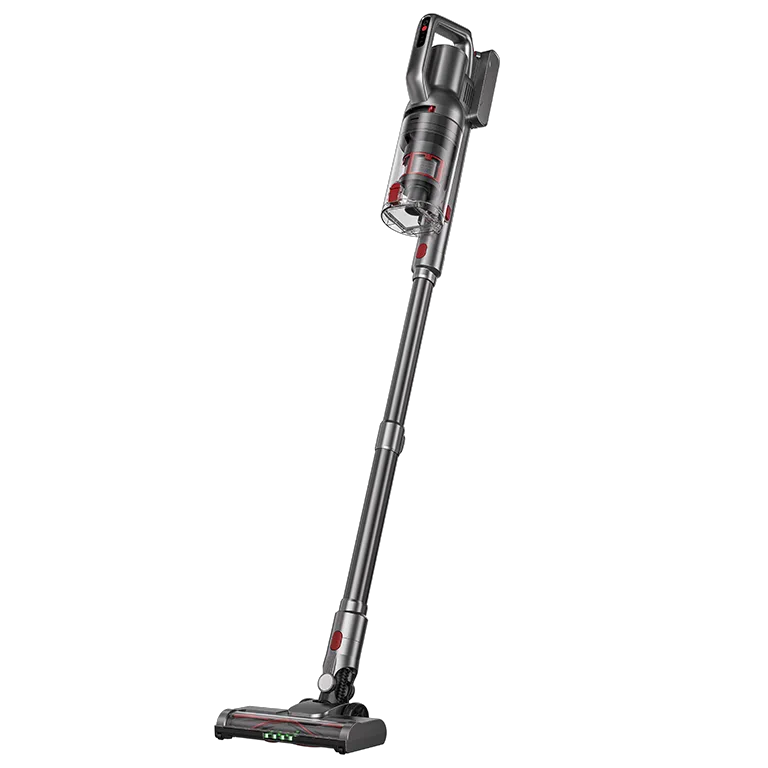


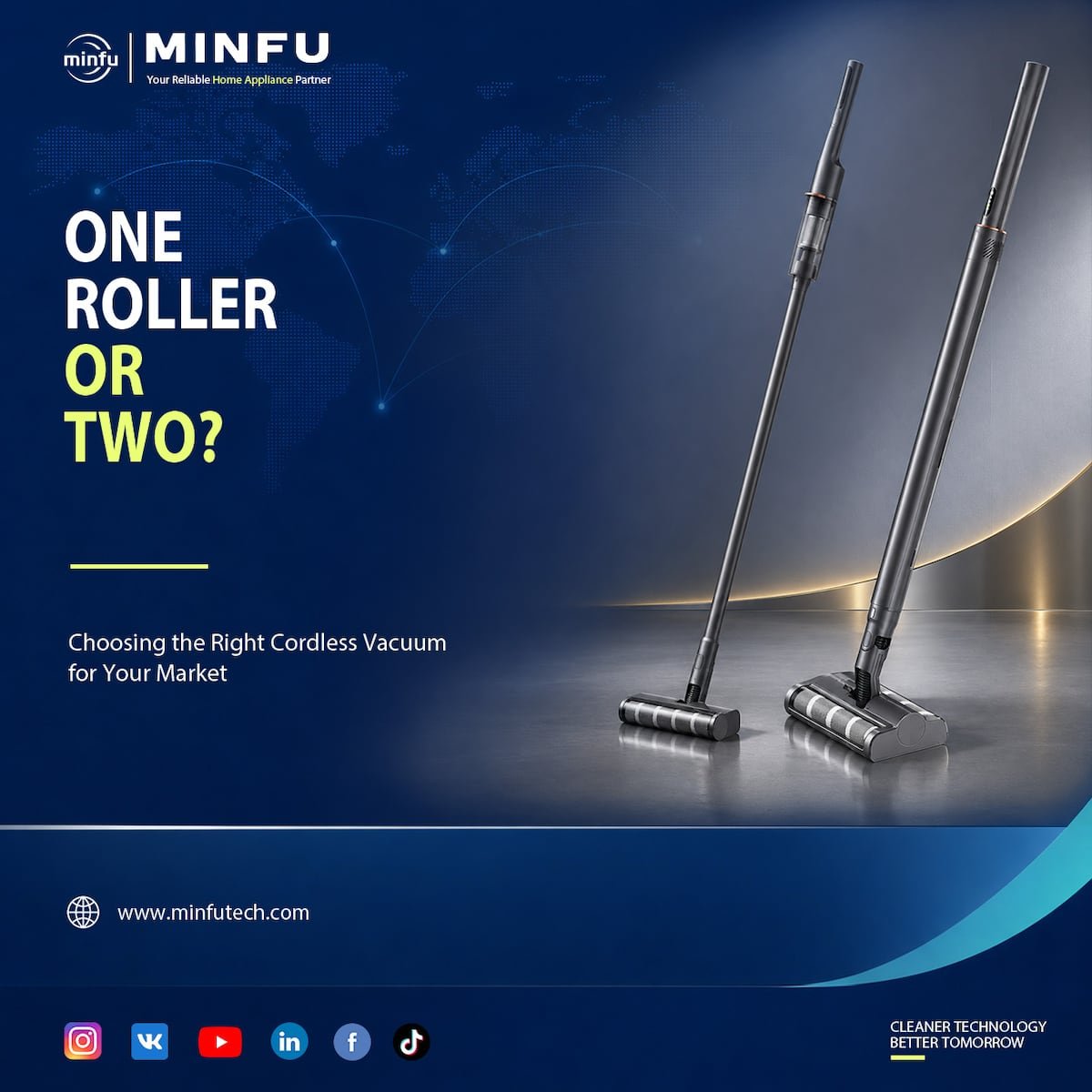
For vacuum cleaner brands, importers and distributors, choosing between a single-roller and a dual-roller cordless vacuum is not simply a matter of selecting the model with more brushes. The floor-head design influences how a vacuum interacts with dust, hair, debris and different floor surfaces, but the number of rollers alone cannot determine which product will clean better.
A single-roller cordless vacuum can be a practical choice for brands prioritizing a straightforward floor-head design, convenient maintenance and everyday cleaning. A dual-roller design offers an alternative brush configuration that may suit different cleaning requirements, but its advantages must be verified through actual pickup tests, operating-time measurements and maintenance evaluations.
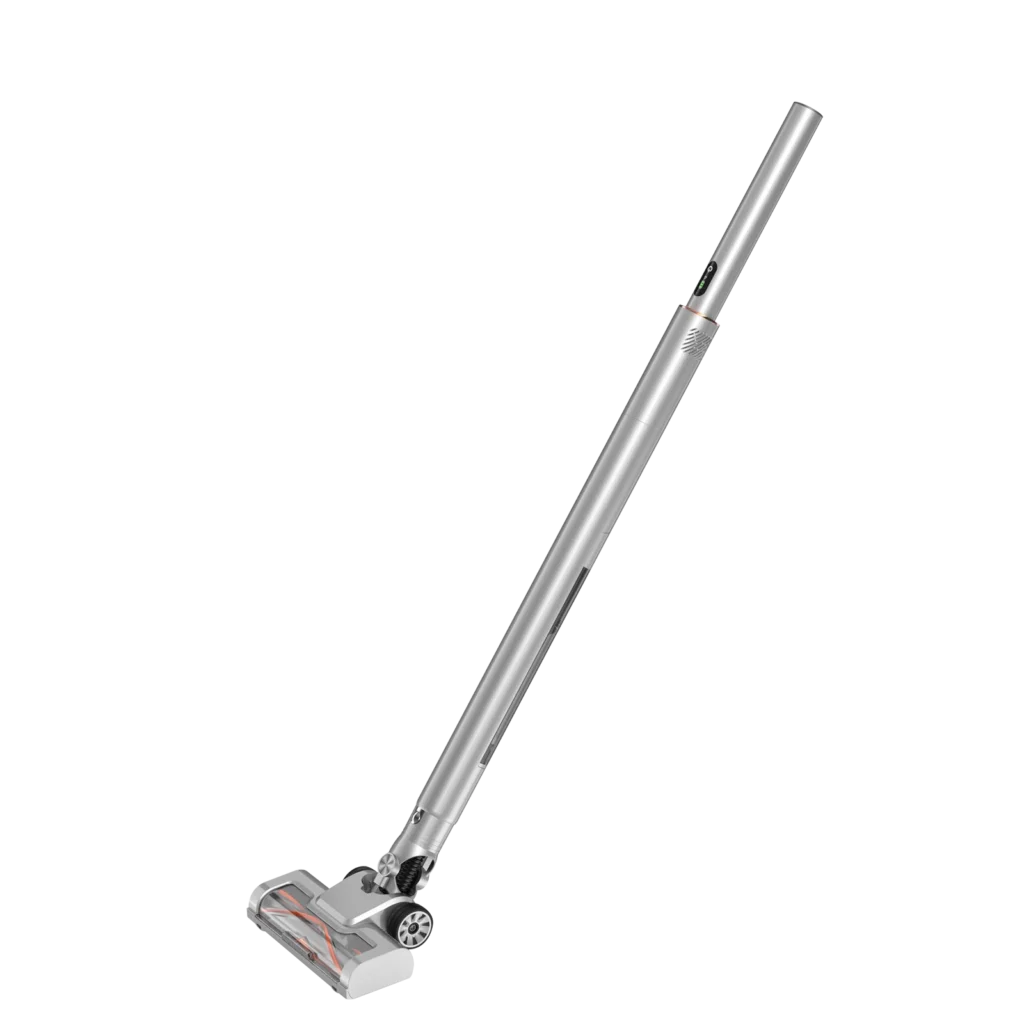
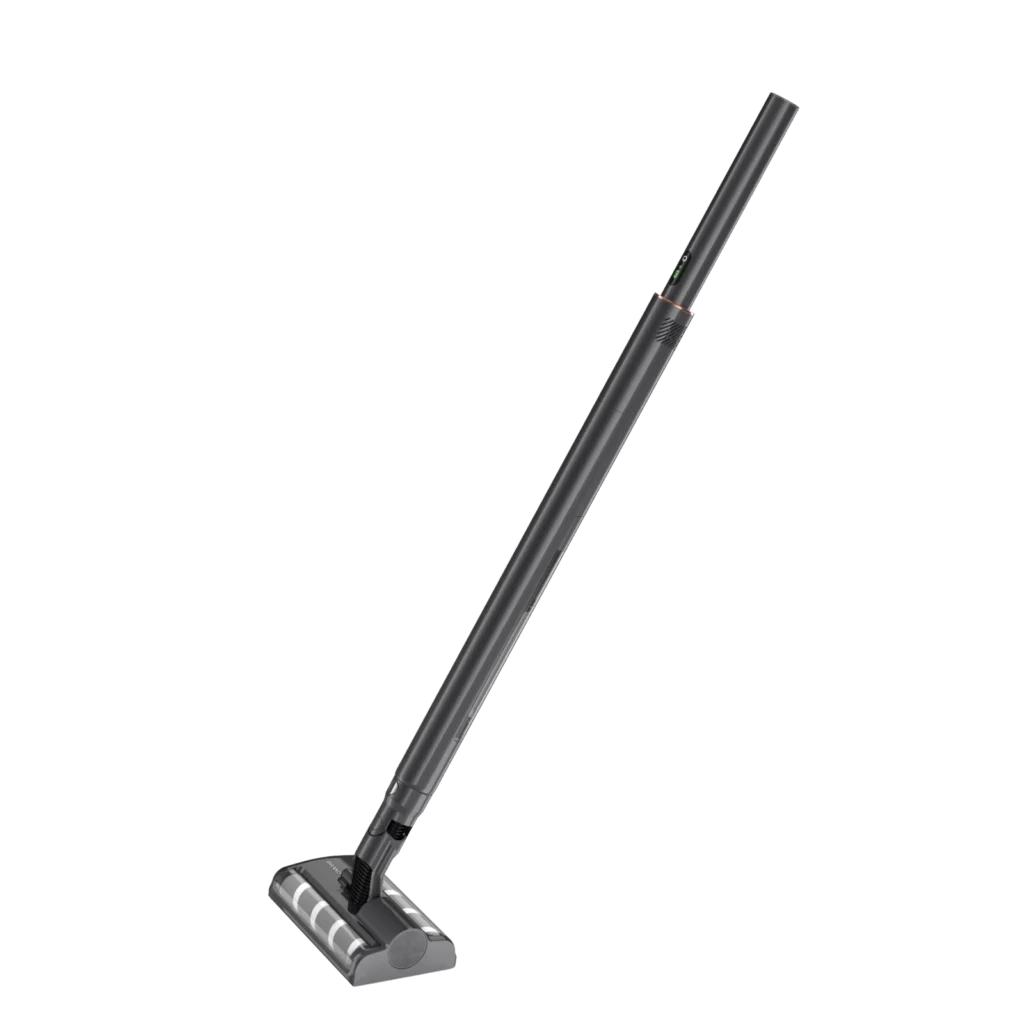
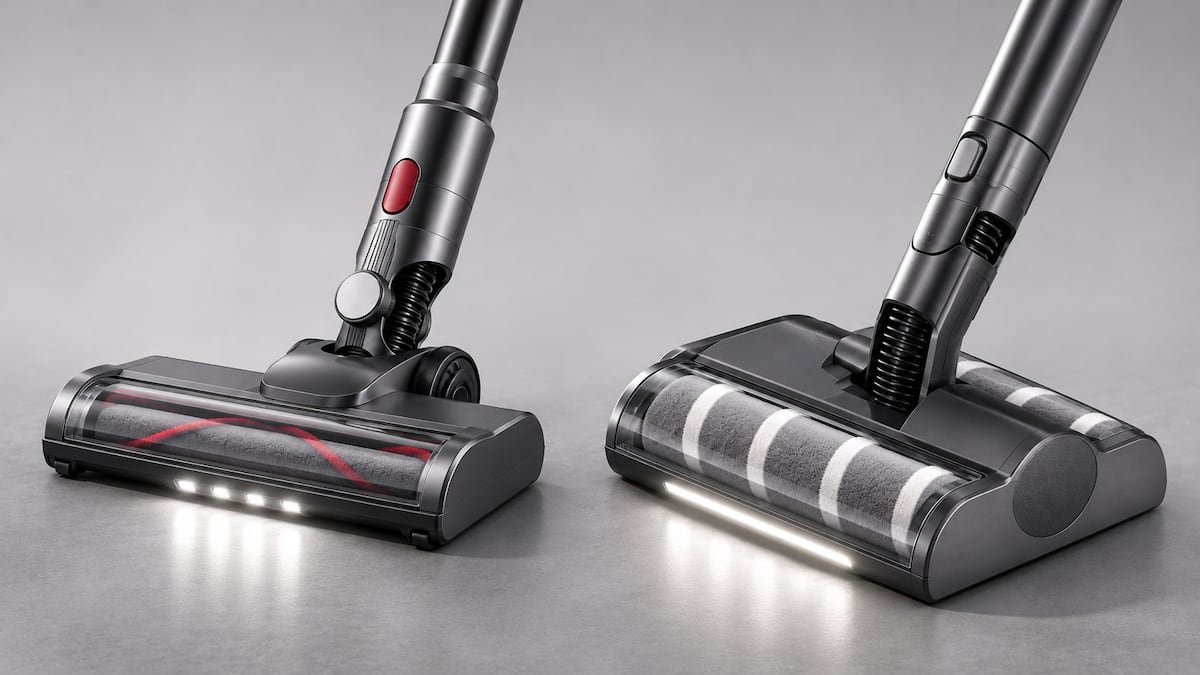
At MinfuTech, our S18A and S18B cordless vacuum cleaners provide two product options for this comparison. The S18A features a pencil-slim design with a single motorized roller, while the S18B introduces a dual-roller LED floor head.
Both models feature a 100W BLDC motor and a stated maximum suction pressure of 18kPa. Their different brush-head configurations make them useful examples of how B2B buyers should evaluate floor-cleaning design before selecting products for their own brands.
1. What Is the Difference Between a Single-Roller and Dual-Roller Vacuum?
The main difference is the number and arrangement of rotating brushes inside the floor head.
A single-roller vacuum uses one rotating brush to help agitate and collect dirt from the floor surface. The brush works together with the vacuum’s airflow system to move particles toward the suction inlet.
A dual-roller vacuum uses two rotating brushes within the floor-head assembly. Their arrangement, materials and rotation characteristics depend on the specific product design.
In both cases, the brush system is only one part of the cleaning process.
Effective debris pickup also depends on:
- Airflow through the floor head
- Suction performance under operating conditions
- Roller material and rotation speed
- Floor-head contact and sealing
- Floor type and surface texture
- Debris size and distribution
- Battery condition and operating mode
This distinction is important for purchasing decisions.
A vacuum with two rollers does not automatically provide twice the cleaning performance of a vacuum with one roller. Likewise, a well-designed single-roller system should not be dismissed simply because it has fewer moving parts.
The correct choice depends on how the complete cleaning system performs.
2. How Do the Two Brush Designs Compare?
Before choosing a vacuum cleaner for wholesale distribution, buyers should consider the design characteristics and possible trade-offs.
| Evaluation Area | Single-Roller Design | Dual-Roller Design |
|---|---|---|
| Brush configuration | One rotating roller | Two rotating rollers |
| Mechanical structure | Generally simpler brush arrangement | Additional roller components and interactions |
| Cleaning performance | Depends on roller design, suction and floor conditions | Depends on both rollers, airflow and floor conditions |
| Hair handling | Requires an actual tangling and removal test | Requires testing both rollers and associated mechanisms |
| Maintenance | One roller to inspect and clean | Two rollers and their mechanisms to inspect |
| Spare parts | Roller and related drive components | Potentially additional roller-related parts |
| Product differentiation | Familiar, straightforward design | Distinctive dual-roller design |
| Procurement decision | Evaluate cleaning results and total cost | Evaluate any added benefit against cost and maintenance |
These are design-level considerations, not measured performance results for the S18A or S18B.
For example, a dual-roller design may create opportunities to optimize how debris interacts with the floor head. Whether that improves cleaning performance depends on the actual engineering implementation.
A distributor should therefore request comparative test results before making claims about superior dirt pickup, hair removal or cleaning efficiency.
3. Which Brush Design Is Better for Hard Floors?
Hard-floor cleaning is an important application for cordless stick vacuums.
Common surfaces include:
- Hardwood and engineered wood
- Laminate flooring
- Ceramic and porcelain tiles
- Vinyl flooring
- Other compatible smooth floor surfaces
On hard floors, buyers should evaluate several different types of debris rather than testing only fine dust.
Fine Dust Pickup
Fine particles can settle into floor joints and narrow gaps. Effective pickup depends on the interaction between airflow, floor-head design and roller contact.
A single-roller system may perform well when its brush and suction channel are properly designed.
A dual-roller system should be evaluated under the same conditions to establish whether its additional brush arrangement provides a measurable benefit.
Larger Debris
Rice-sized particles, crumbs and other loose debris can behave differently from fine dust.
Some floor heads guide particles into the suction inlet effectively, while others may push or scatter larger debris during movement.
This behavior should be tested directly rather than inferred from the number of brushes.
Floor Protection
Brush materials and floor-head contact should also be assessed for compatibility with the intended surface.
Brands targeting delicate household flooring should request suitable surface tests and examine whether the brush material, wheels and contact points could cause visible marks under representative conditions.
For hard-floor applications, the most useful buying criterion is measured debris pickup with acceptable floor protection—not roller count alone.
4. What About Carpets, Rugs and Embedded Dirt?
Carpet cleaning creates different challenges because dust and particles can become trapped between fibers.
A rotating brush can help disturb debris so that the airflow system can collect it.
However, the effectiveness of this process depends on more than the number of rollers.
Important factors include:
Brush Contact
The brush must interact appropriately with the carpet surface without creating excessive resistance.
Roller Rotation
The rotation behavior and brush material influence how the floor head engages with carpet fibers.
Airflow
Loosened particles must still be transported through the suction channel into the dust collection system.
Movement Resistance
A floor head that is difficult to push can reduce cleaning convenience, even if its laboratory pickup performance appears promising.
What Should Distributors Test?
For brands targeting households with both hard floors and carpets, we recommend testing each vacuum on representative low-pile carpets and other manufacturer-approved surfaces.
The comparison should include:
- Dust pickup after a fixed number of passes
- Performance on different debris types
- Ease of pushing and turning the floor head
- Visible debris remaining after cleaning
- Hair accumulation around the roller
- Operating noise and battery consumption
Do not assume that the dual-roller design is automatically better for deep carpet cleaning.
The actual result must come from the complete product and the specific carpet tested.
5. Why Similar Suction Specifications Do Not Mean Identical Cleaning Results
One reason the Minfu S18A and S18B are interesting to compare is that they share several published specifications.
Both models use a 100W BLDC motor and provide two nominal suction settings:
- ECO: 8kPa
- MAX: 18kPa
However, maximum suction pressure does not directly describe how much debris a vacuum removes from a floor.
Suction pressure is a technical measurement. Cleaning performance is the result of how the motor, airflow path, floor head, filtration system and cleaning surface work together.
Two vacuums with the same stated suction pressure may produce different debris pickup results.
The difference may come from floor-head geometry, roller materials, airflow restrictions or other design characteristics.
Therefore, brands should avoid using a single suction figure to predict cleaning superiority.
A more meaningful comparison measures how much debris each vacuum actually collects under consistent conditions.
A Simple Pickup Test Formula
For a controlled comparative test, buyers can calculate:
Debris Pickup Rate (%) = (Initial Test Debris − Remaining Test Debris) ÷ Initial Test Debris × 100
For example, if a controlled test begins with a measured quantity of dust, the remaining quantity can be measured after the agreed number of cleaning passes.
The resulting percentage can help compare the two machines, provided the test method, floor conditions and measuring equipment are consistent.
This is a simplified internal evaluation method, not a substitute for a formal standardized performance test.
For laboratory evaluations, buyers can refer to IEC 62885-2:2026, which describes performance measurement methods for dry vacuum cleaners, including cordless models within its scope.
Official reference: https://webstore.iec.ch/en/publication/82454
6. Hair Tangling and Roller Maintenance Matter to Wholesale Buyers
Hair handling is another area where purchasing teams should be careful about marketing claims.
A dual-roller floor head may look more sophisticated, but that does not automatically mean it is anti-tangle.
Hair accumulation depends on the roller design, bristle configuration, drive mechanism, cleaning environment and other factors.
For both single- and dual-roller vacuums, buyers should test:
- How much hair becomes wrapped around the roller.
- Whether hair affects roller rotation.
- How easily the roller can be removed.
- How long it takes to clean accumulated hair.
- Whether maintenance requires special tools.
- How the brush performs after repeated use.
A single-roller vacuum has one main roller to inspect and clean.
A dual-roller vacuum has two rollers, and the relationship between their components should also be evaluated.
This does not necessarily mean dual-roller maintenance will be significantly more expensive. The result depends on the actual design and replacement-part arrangement.
For private-label brands, these details matter because customers may request replacement brushes, service instructions or warranty support after purchase.
A product’s long-term commercial value depends on maintainability as well as its initial cleaning performance.
7. Minfu S18A vs S18B: Which Model Fits Your Product Range?
MinfuTech offers two cordless vacuum cleaner options with different design priorities.
The S18A emphasizes a pencil-slim product format and a single-roller cleaning configuration.
The S18B uses a dual-roller LED floor-head design as a defining feature.
Published Product Comparison
| Specification | Minfu S18A | Minfu S18B |
|---|---|---|
| Product Category | Pencil-Slim Cordless Stick Vacuum | Dual-Roller Cordless Stick Vacuum |
| Floor-Head Design | Single Roller | Dual Roller |
| Motor | 100W BLDC | 100W BLDC |
| Maximum Suction | 18kPa | 18kPa |
| ECO Mode | 8kPa | 8kPa |
| MAX Mode | 18kPa | 18kPa |
| Battery | Detachable 11.1V Lithium-Ion | Detachable 11.1V Lithium-Ion |
| Stated Runtime | Up to 35 minutes in ECO | Up to 30 minutes |
| Filtration | Cyclone + HEPA | Cyclone + HEPA |
| Floor-Head Lighting | LED | LED |
| Dust Cup Capacity | Confirm for selected configuration | 150ml |
The runtime figures are published product specifications, not results from a common independent comparison test.
For S18A, the published information also states approximately 18 minutes of operation in MAX mode. The S18B’s runtime should be verified by mode and floor-head configuration during sample testing.
When the S18A May Be the Better Product Choice
The S18A may be suitable for a brand that wants to emphasize:
- A pencil-slim product appearance
- A straightforward single-roller floor-head configuration
- Everyday cordless cleaning
- A product range positioned around compactness and convenience
- A published ECO runtime of up to 35 minutes
Its design may suit a product portfolio that prioritizes slim styling and practical daily use.
However, brands should still evaluate cleaning performance and user experience before final selection.
When the S18B May Be the Better Product Choice
The S18B may be attractive to brands that want:
- A distinctive dual-roller floor-head design
- A different visual and functional product proposition
- A product that can be demonstrated through direct floor-head comparisons
- A dual-roller option within their cordless vacuum cleaner range
- A product format that creates another point of differentiation in retail presentations
Its dual-roller configuration is a distinguishing product feature, but performance claims should only be made after suitable testing.
The most appropriate model depends on the intended customer segment, expected retail price, product presentation and total procurement cost.
8. How Should OEM Buyers Test Single- and Dual-Roller Vacuums?
For an OEM or private-label project, comparing two products requires a repeatable test method.
A short demonstration in a showroom can help buyers understand the product, but it should not be the only basis for a bulk purchasing decision.
We recommend a structured sample evaluation covering the following items.
| Test Item | Suggested Method | What to Record |
|---|---|---|
| Fine dust pickup | Same dust mass and comparable floor surfaces | Debris remaining after fixed passes |
| Larger debris pickup | Same particle type and quantity | Pickup and scattering |
| Carpet cleaning | Same carpet type and test conditions | Dirt removal and movement resistance |
| Hair handling | Same type and quantity of test hair | Tangling and cleaning time |
| Floor-head movement | Same defined cleaning route | Ease of pushing, turning and maneuvering |
| Runtime | Fully charge and test under defined settings | Operating time and floor-head configuration |
| Noise | Measure under controlled conditions | Sound level and measurement method |
| Maintenance | Clean rollers after equivalent tests | Time, tools and replacement components |
| Repeated use | Repeat representative cleaning cycles | Changes in function or performance |
To improve the reliability of the comparison, several conditions should remain consistent:
- Comparable sample condition and battery charge
- Identical test surfaces and debris quantities
- A defined operating mode for each comparison
- The same number of cleaning passes
- Consistent movement speed
- Documented measurement methods
- Repeated trials rather than a single demonstration
Where possible, the same technician should carry out the comparison using the same testing equipment.
It is also important to distinguish between a whole-product comparison and a brush-head-only comparison.
Comparing the S18A and S18B as complete products can help an importer choose between them. However, if their performance differs, that result cannot automatically be attributed solely to the number of rollers.
A brush-head-only conclusion would require a more controlled engineering comparison.
9. Consider Maintenance Cost and Product Profitability
For importers and distributors, purchasing cost is only one part of the decision.
A product also creates costs after it reaches the market.
These may include replacement rollers, batteries, filters, cleaning attachments, customer service and warranty claims.
A useful sourcing comparison should therefore include both the factory quotation and expected after-sales requirements.
| Purchasing Consideration | Questions to Ask |
|---|---|
| Factory Price | What is included in each model’s quotation? |
| Roller Replacement | What are the replacement parts and prices? |
| Brush Maintenance | Can users access and clean the rollers easily? |
| Battery Replacement | Is the battery available as a spare part? |
| Filtration | What filters are included and what replacements are available? |
| Packaging | Do both models require different retail packaging? |
| Service | What technical support is available to distributors? |
| Order Quantity | What MOQ applies to each configuration? |
| Product Positioning | What retail price and customer segment are targeted? |
A dual-roller product may justify a different retail positioning if it provides demonstrable customer value.
However, buyers should establish that value through sample evaluation, feedback and a realistic cost model.
An additional feature is commercially useful only when it improves the overall product proposition for the intended market.
10. How Should Brands Position the S18A and S18B?
For companies selling cordless vacuum cleaners under their own brands, product positioning should be based on a clearly identified customer need.
The S18A and S18B do not necessarily need to compete for exactly the same customer.
A brand could position the S18A around its pencil-slim design, compact appearance and everyday cleaning convenience.
The S18B could be positioned around its distinctive dual-roller floor-head configuration and the opportunity to demonstrate its performance across relevant cleaning tasks.
However, before creating two separate retail products, the purchasing team should confirm that customers perceive a meaningful difference.
This can be assessed through:
Sample Demonstrations
Let potential distributors or retail partners compare the two floor-head configurations directly.
Customer Feedback
Ask which design characteristics matter most to the intended buyers.
Price Positioning
Compare the total acquisition cost and proposed retail price of each model.
After-Sales Planning
Confirm spare parts, service requirements and warranty arrangements.
Product Documentation
Ensure every public performance statement is supported by the final approved product specification or an appropriate test report.
If both models serve a useful but different position in the product range, offering both may make commercial sense.
If customers cannot identify a meaningful difference, the brand may be better served by selecting one configuration and concentrating its marketing resources.
11. Choosing a Manufacturing Partner for Cordless Vacuum Cleaners
A successful private-label vacuum cleaner project involves more than selecting a brush-head design.
The manufacturing partner should be able to support product evaluation, configuration confirmation, branding and production quality control.
At Shenzhen Minfutech Industrial Co., Ltd., we provide OEM/ODM manufacturing solutions for international cleaning appliance brands, importers and distributors.
Our S18A and S18B cordless vacuum cleaner platforms offer different floor-head configurations that buyers can evaluate according to their target market and product strategy.
For OEM/ODM projects, we recommend confirming:
- The exact product model and configuration
- Sample availability and evaluation requirements
- Branding and packaging specifications
- Applicable electrical and market requirements
- Accessory and replacement-part configuration
- Minimum order quantities
- Product approval and quality inspection criteria
Customization options and commercial conditions should be reviewed according to the actual project requirements.
A well-defined product specification helps reduce uncertainty before bulk manufacturing and supports more consistent communication between the buyer and factory.
Frequently Asked Questions
Is a dual-roller cordless vacuum better than a single-roller vacuum?
Not necessarily. A dual-roller vacuum has a different brush-head configuration, but better cleaning performance must be demonstrated through actual tests. Floor type, roller materials, airflow, debris type and product design all influence the result.
Are dual-roller vacuums better for pet hair?
Roller count alone does not establish better pet-hair performance. Buyers should test hair pickup, tangling, roller removal and maintenance before making this claim.
Can two cordless vacuums with the same 18kPa suction clean differently?
Yes. Maximum suction pressure does not describe the complete cleaning system. Floor-head geometry, roller contact, airflow and surface conditions can influence actual pickup results.
What is the main difference between the Minfu S18A and S18B?
The S18A is a pencil-slim cordless vacuum with a single-roller configuration, while the S18B features a dual-roller LED floor head. Both have published 100W BLDC motor and 18kPa maximum suction specifications.
Which model is better for a private-label vacuum cleaner brand?
The better choice depends on the brand’s target customers, cleaning requirements, expected price range and maintenance strategy. Buyers should test both models before selecting a product for distribution.
How should OEM buyers compare vacuum cleaner floor heads?
Use identical test surfaces, consistent debris quantities, defined operating modes and repeatable cleaning passes. Record pickup performance, movement resistance, hair tangling, runtime and maintenance requirements.
Can Minfu provide OEM/ODM cooperation for the S18A and S18B?
Minfu supports OEM/ODM cooperation for cleaning appliances. Buyers can discuss branding, packaging, product configurations, sampling and production requirements with our team.
Compare S18A and S18B for Your Next Vacuum Cleaner Product Line
Choosing the right cordless vacuum cleaner is not about selecting the most complicated floor head. It is about identifying the configuration that delivers the right cleaning experience, product value and commercial potential for your market.
MinfuTech works with international importers, wholesalers and brands seeking OEM/ODM cleaning appliance manufacturing solutions.
If you are evaluating single-roller and dual-roller cordless vacuum cleaners, our team can help you review the S18A and S18B platforms, product specifications and project requirements.
Explore our products:
- S18A Pencil-Slim Cordless Vacuum Cleaner
- S18B Dual-Roller Cordless Stick Vacuum
- Minfu OEM/ODM Manufacturing Solutions
Contact MinfuTech
Website: https://minfutech.com/
Email: info@minfutech.com
WhatsApp / Phone: +86 13760255781
Tell us your target market, expected order quantity and preferred floor-head configuration. We can discuss the next steps for product evaluation and private-label cooperation.