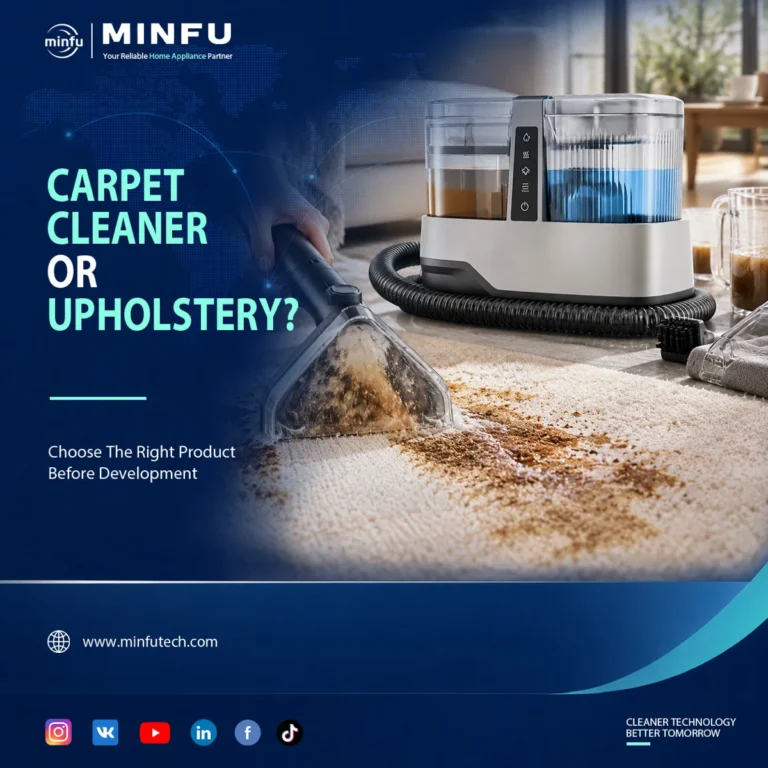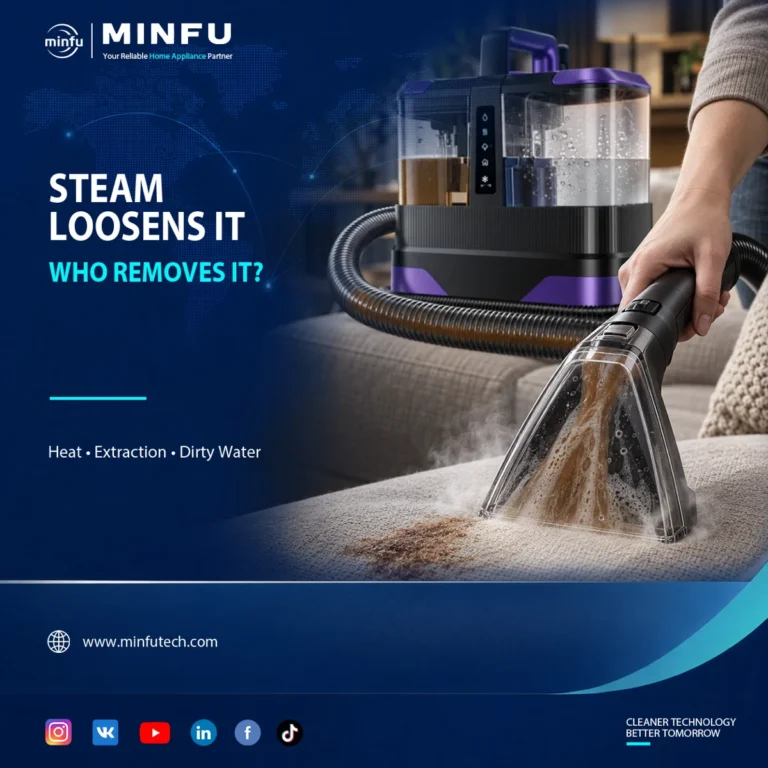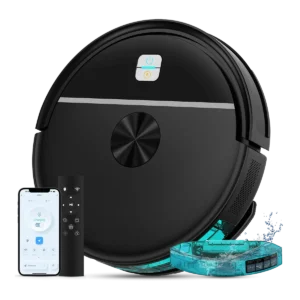

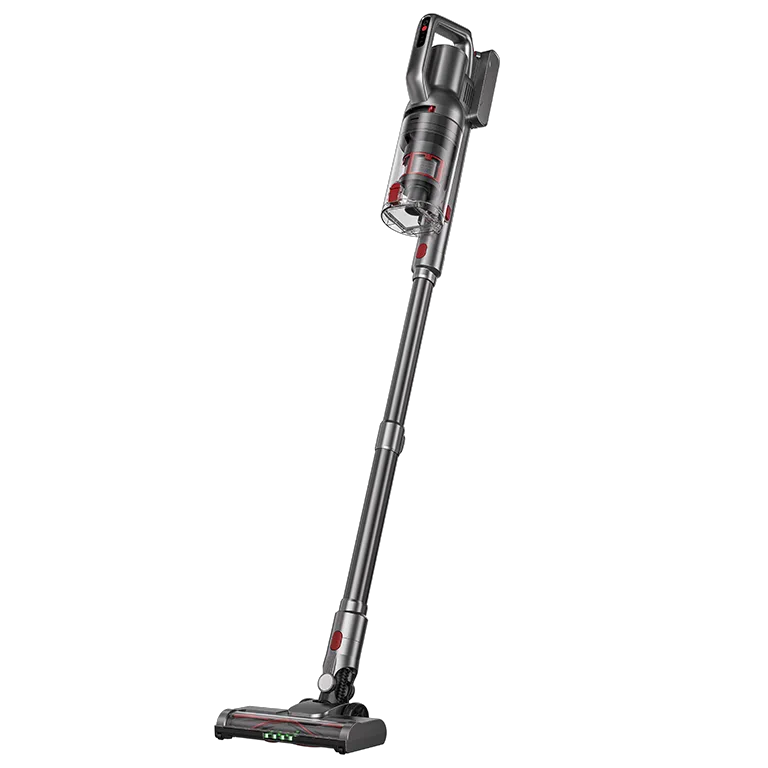
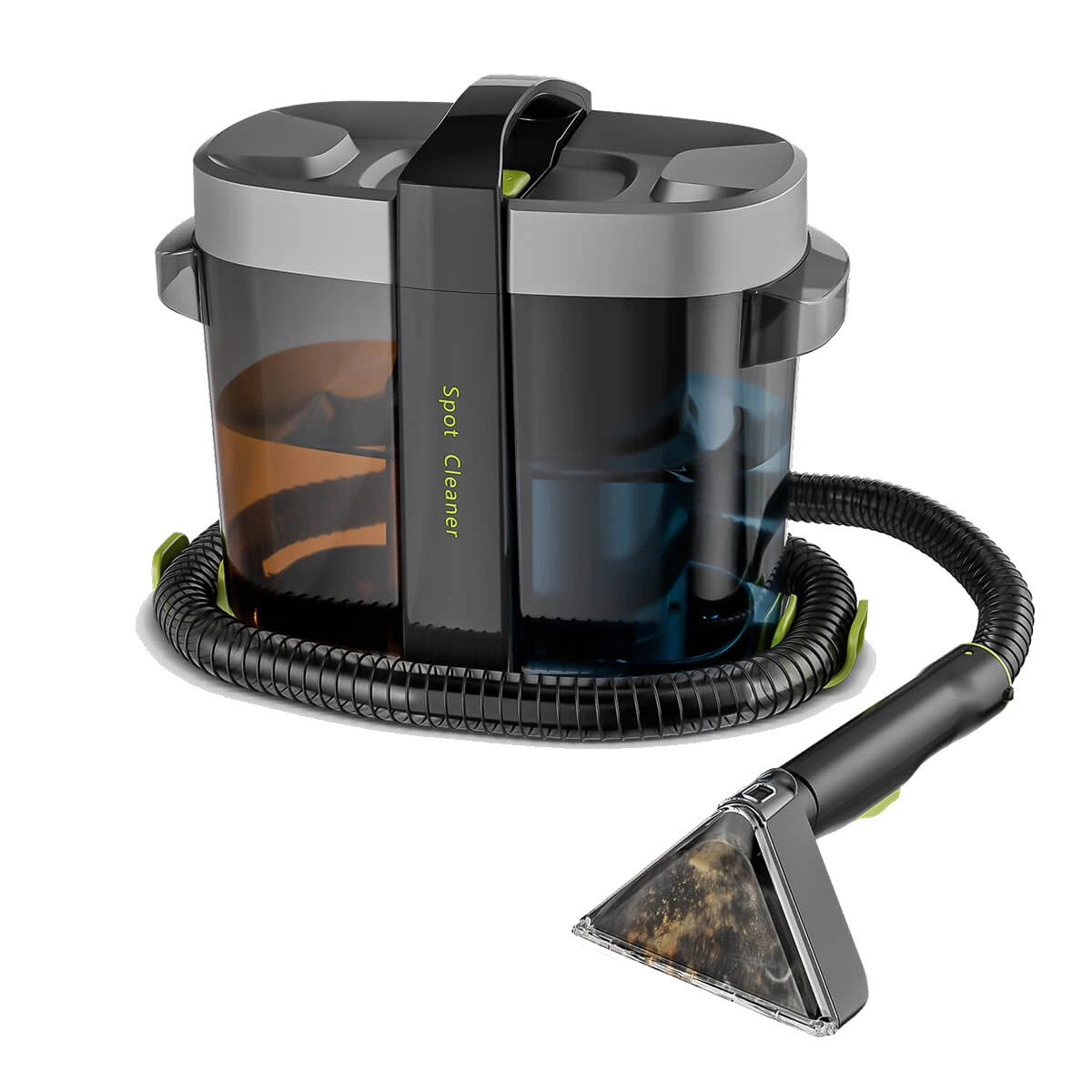



A portable carpet cleaner looks like a simple cleaning appliance.
A motor, a water tank, a hose, a cleaning head and a few buttons.
But after working with cleaning appliance projects, we found that the products that look simple from the outside often require the most attention during development.
For consumers, a portable carpet cleaner is judged by one question:
Does it remove stains?
For brands and distributors, the questions are much deeper:
Can the product maintain stable performance after thousands of units are produced?
Can customers use it easily without creating complaints?
Can replacement parts be supplied years after launch?
Can the factory support customization when the market changes?
These questions are often ignored during the early sourcing stage.
Many buyers focus on unit price and appearance first, but some of the most expensive problems appear later:
- unstable cleaning performance between batches;
- excessive water remaining in fabrics;
- difficult maintenance;
- weak after-sales support;
- inconsistent product quality.
At Minfu, we believe a successful OEM cleaning appliance is not created when the first sample looks good.
It is created when the product, testing process and manufacturing system are all ready for mass production.
Before choosing a portable carpet cleaner manufacturer, here are seven mistakes buyers should avoid.
Mistake 1: Choosing a Manufacturer Only Because the Price Looks Attractive
Price is naturally one of the first things buyers compare.
A lower quotation can look attractive, especially when comparing multiple factories for the same category.
However, a portable carpet cleaner is not just a plastic housing with a motor inside.
The final cleaning performance depends on how different systems work together:
- suction motor;
- water pump;
- spray structure;
- recovery channel;
- cleaning head design;
- tank sealing;
- electrical control system.
Two factories may quote similar-looking products with very different internal designs.
One may achieve lower cost by simplifying internal structures.
Another may invest more in testing, component selection and production control.
For a brand preparing to sell thousands of units, the difference may not appear during quotation.
It appears after customers start using the product.
At Minfu, when evaluating a new cleaning appliance project, we focus not only on target cost but also on whether the product architecture can support stable production.
A competitive price is important.
But a stable product is what protects the brand.
Mistake 2: Comparing Motor Power Instead of Cleaning Results
One of the most common sourcing mistakes is comparing only numbers on a specification sheet.
For example:
- 1000W motor;
- 1200W motor;
- stronger suction;
- higher power.
These numbers are easy to compare.
But cleaning performance is a complete system.
A portable carpet cleaner needs to manage several steps:
- Deliver water or cleaning solution.
- Loosen contamination.
- Contact the surface effectively.
- Recover dirty liquid.
- Leave the material with acceptable moisture.
A powerful motor does not automatically guarantee better stain removal.
The cleaning head design, airflow path and water recovery efficiency can have a major impact.
For OEM buyers, we recommend testing the complete cleaning process instead of comparing one specification.
A useful sample test should include:
- the same fabric;
- the same stain;
- the same cleaning procedure;
- the same evaluation method.
Only then can different suppliers be compared fairly.

Mistake 3: Ignoring Dirty Water Recovery Design
Many buyers pay attention to how much water a machine can spray.
However, cleaning is not finished when water reaches the stain.
The dirty water needs to leave the fabric.
This is why the recovery system is one of the most important parts of a portable carpet cleaner.
A good extraction system needs to consider:
- suction efficiency;
- nozzle sealing;
- airflow design;
- dirty-water tank structure;
- leakage prevention.
If recovery is weak, customers may experience:
- wet carpets;
- longer drying time;
- repeated cleaning;
- unpleasant smells.
For a portable spot cleaner, the dirty-water tank is not just a container.
It represents the final stage of the cleaning process.
The customer does not only want to see the stain disappear.
They also want to know that the contamination has actually been removed from the material.
This is one reason extraction performance is becoming increasingly important in modern carpet and upholstery cleaners.
Mistake 4: Approving Samples Based on Appearance Instead of Real Use Scenarios
A product sample can look excellent during a factory demonstration.
The machine is new.
The fabric sample is prepared.
The operator already knows the best cleaning method.
But real customers do not use products this way.
They clean:
- old coffee stains;
- pet accidents;
- children’s food spills;
- muddy footprints;
- car seats;
- sofas used every day.
A portable carpet cleaner manufacturer should be able to explain how the product performs under different conditions.
At Minfu, we believe sample approval should include repeatable testing rather than only a successful demonstration.
The important question is not:
“Can this machine remove one stain?”
The important question is:
“Can this machine provide consistent results after different users operate it in different situations?”
That difference is what separates a demonstration product from a commercial product.
Mistake 5: Ignoring Product Maintenance Before Mass Production
A product can perform well on the first day and still create problems later.
Maintenance is often ignored during sourcing because buyers are focused on launch.
However, customers experience the product for months or years.
Important questions include:
- Is the dirty-water tank easy to clean?
- Can users remove remaining water easily?
- Are filters replaceable?
- Are accessories available?
- Is the hose structure durable?
- Can customers understand daily maintenance?
A cleaning appliance is used in environments with water, dirt and repeated operation.
Small design decisions can strongly influence customer satisfaction.
For brands, easy maintenance also reduces after-sales pressure.
A product that customers can easily clean and maintain creates fewer support problems.
Mistake 6: Selecting a Factory Without Confirming OEM Capability
Many buyers initially search for a supplier who already has a finished product.
That can be a good starting point.
But private-label brands often need more than an existing model.
A professional carpet cleaner OEM manufacturer should be able to support:
- appearance customization;
- color options;
- logo placement;
- packaging design;
- accessories;
- manuals;
- market-specific requirements.
The reason is simple.
A product that looks identical to many competitors is difficult to build a brand around.
OEM capability allows buyers to create differentiation.
At Minfu, our OEM/ODM process covers product development, engineering validation, manufacturing and customization support.
The goal is not only to produce a machine.
It is to help brands create a product they can confidently sell.
Mistake 7: Moving Directly From Sample Approval to Mass Production
This is one of the most overlooked risks.
A good sample does not automatically guarantee good production.
During mass production, small differences can appear:
- component suppliers change;
- assembly methods vary;
- firmware changes;
- production operators differ;
- materials fluctuate.
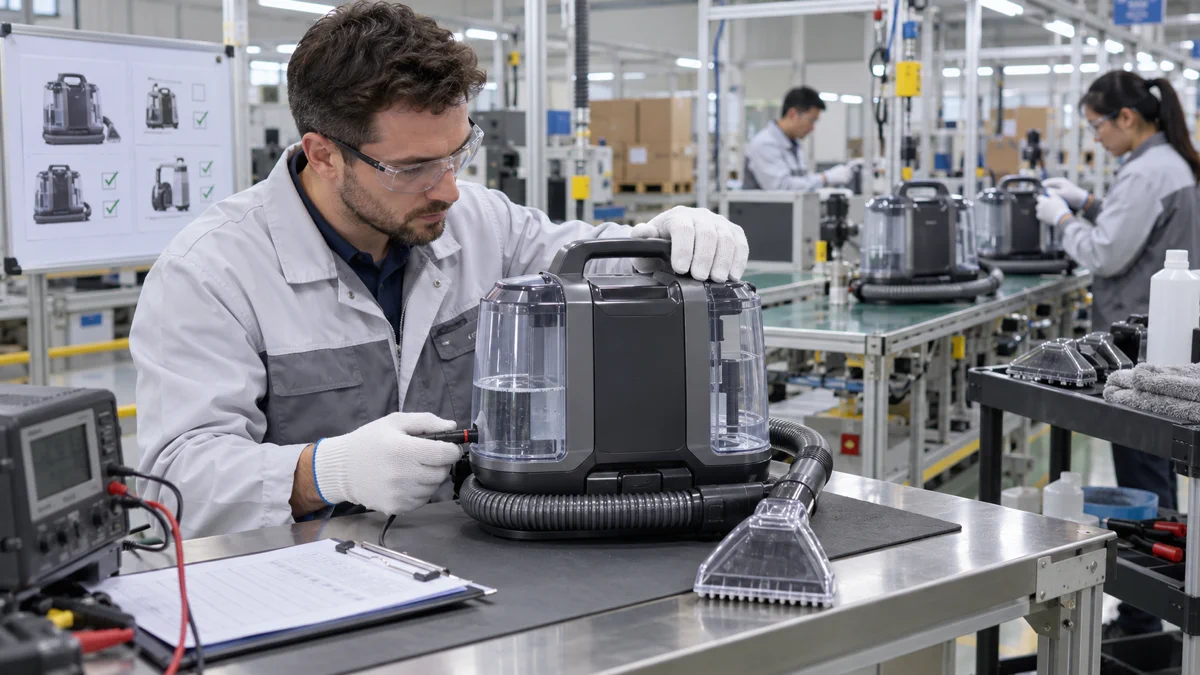
This is why professional projects usually include multiple stages:
Prototype Validation
Confirm:
- design;
- basic function;
- cleaning performance.
Pilot Production
Verify:
- assembly consistency;
- production efficiency;
- quality stability.
Mass Production
Control:
- approved specifications;
- inspection standards;
- packaging;
- final product consistency.
For OEM buyers, the goal is not simply receiving the first perfect sample.
The goal is making sure the 10,000th unit performs like the first approved unit.
What Should Buyers Test Before Ordering a Portable Carpet Cleaner?
Before confirming a supplier, we recommend preparing a clear validation checklist.
Cleaning Performance
Check:
- stain removal;
- water recovery;
- drying time;
- cleaning consistency.
Product Structure
Check:
- tank design;
- hose connection;
- cleaning head;
- accessory durability.
User Experience
Check:
- operation steps;
- maintenance process;
- noise level;
- portability.
Manufacturing Capability
Check:
- production capacity;
- quality control process;
- customization ability;
- after-sales support.
A professional supplier should not only answer:
“Can you make this product?”
They should also answer:
“How do you ensure this product remains reliable after mass production?”
Why Portable Carpet Cleaner OEM Projects Need More Than a Factory
The cleaning appliance market continues to become more competitive.
Many products now have similar appearances and similar specifications.
The real difference comes from:
- engineering experience;
- product validation;
- manufacturing control;
- understanding of customer usage.
For brands entering this category, choosing a supplier is not only a purchasing decision.
It is a product development decision.
A capable portable carpet cleaner supplier should help reduce uncertainty before production begins.
Because the biggest cost in a cleaning appliance project is often not the factory price.
It is solving problems after the product has already entered the market.
Our Experience Developing Portable Cleaning Appliances
At Minfu, we develop and manufacture cleaning appliances for global brands, distributors and retailers.
Our experience covers:
- steam spot cleaners;
- upholstery cleaners;
- floor cleaning appliances;
- robotic cleaning products.
For each project, we focus on:
- product design;
- engineering validation;
- quality control;
- OEM/ODM customization;
- mass production support.
A successful cleaning appliance is not only a product that works in a showroom.
It is a product that continues working after thousands of customers bring it home.
FAQ
What should I look for in a portable carpet cleaner manufacturer?
Buyers should evaluate product quality, testing capability, OEM experience, production capacity and after-sales support rather than only comparing price.
How do I compare different portable carpet cleaner suppliers?
Compare complete cleaning performance, water recovery, durability, customization capability and production consistency instead of only comparing motor power or specifications.
Is higher suction power always better for carpet cleaners?
Not necessarily. Cleaning performance depends on suction, airflow design, nozzle structure, spray system and water recovery efficiency together.
What tests should be done before mass production?
OEM buyers should test stain removal, water recovery, noise, durability, maintenance, safety and production consistency before approving mass production.
Can a factory customize portable carpet cleaners?
Many OEM manufacturers can customize colors, logos, packaging, accessories and product specifications. Buyers should confirm customization capability before cooperation.
Work With Minfu
Minfu provides one-stop OEM/ODM manufacturing, product development, customization, quality control and mass-production support for cleaning appliance brands worldwide.
Our cleaning appliance solutions include steam spot cleaners, upholstery cleaners and other smart cleaning products designed for global markets.
Website: minfutech.com
Email:
info@minfutech.com
Contact Minfu to discuss your portable carpet cleaner project, product requirements and OEM cooperation.