

Introduction
A robotic floor scrubber can perform beautifully across a polished warehouse floor and leave a disappointing result just a few metres away on textured tile. The robot hasn’t changed. Its navigation is working, the cleaning route is complete, and the brushes are still rotating.
So what went wrong?
Very often, the difference is under the machine.
An epoxy-coated warehouse floor, a concrete loading area and a polished stone lobby may all be described as hard flooring, but they behave differently when exposed to brushes, water, cleaning chemicals and repeated mechanical contact. A cleaning method that works well on one surface may leave residue on another—or gradually damage a protective finish.
At Minfu, we believe commercial robotic floor scrubber performance should be evaluated around the floor itself, not simply around cleaning speed, battery runtime or navigation technology.
This matters to facility managers choosing autonomous cleaning equipment. It matters just as much to distributors and OEM buyers who need to understand where a robotic floor scrubber can be marketed and which applications require additional validation.
Before promising one machine for every surface, it is worth looking more closely at what those surfaces actually demand.
Can Robotic Floor Scrubbers Clean Different Floor Types?
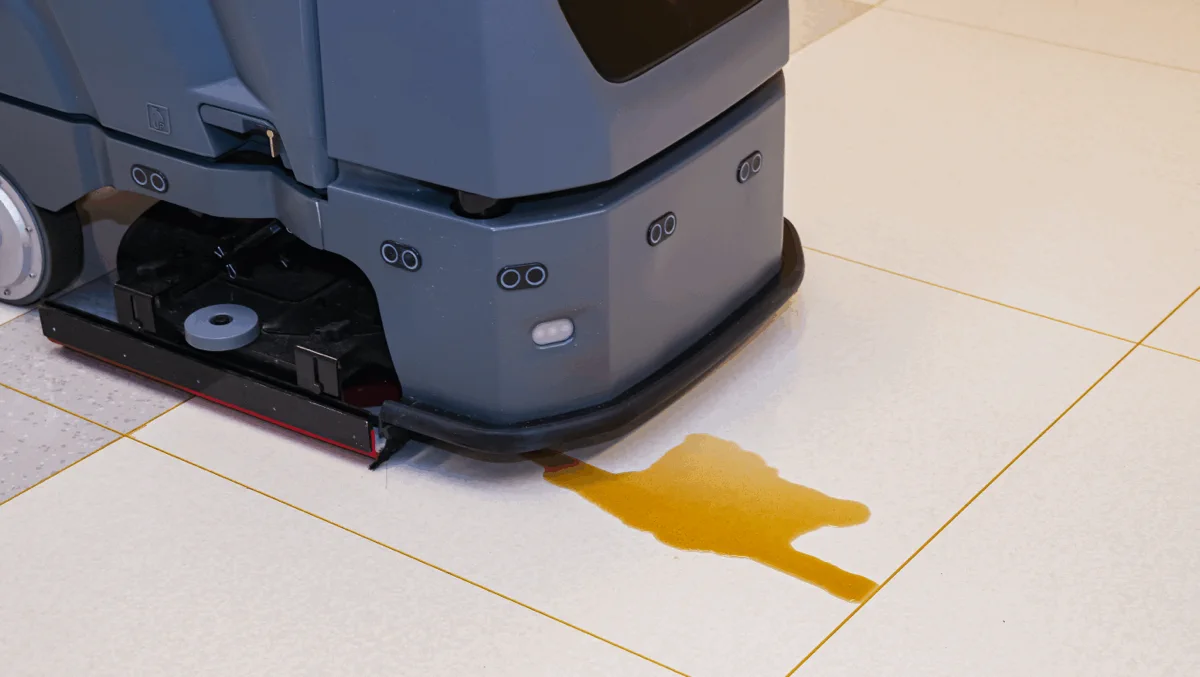
Yes. Commercial robotic floor scrubbers can be used on many compatible hard-floor surfaces, including certain epoxy coatings, sealed concrete, ceramic and porcelain tile, vinyl flooring and natural stone.
However, suitability depends on the specific flooring system, brush or pad, contact pressure, cleaning solution, water delivery and wastewater recovery performance. The floor manufacturer’s maintenance instructions should always take priority over a generic claim that a scrubber works on “all hard floors.”
A capable autonomous robot can follow the correct cleaning route. It cannot make an unsuitable brush, aggressive cleaning chemical or excessive water exposure safe for every surface.
That distinction is the starting point for evaluating floor compatibility.
The Floor Finish Is Part of the Cleaning System
When buyers compare robotic floor scrubbers, the usual specifications include cleaning width, tank capacity, battery life and maximum coverage.
Those figures tell us something about the machine. They do not tell us how the floor will respond.
Take two surfaces in the same distribution centre. The first is smooth epoxy-coated concrete. The second is a textured industrial floor designed to provide additional slip resistance.
The same cleaning head may contact these floors very differently. On a smooth coating, excessive abrasion can affect appearance and surface protection. On a textured floor, a flat pad may struggle to reach soil trapped below the raised surface profile.
Water behaves differently, too. A dense smooth surface may allow relatively uniform recovery, while a textured finish can retain moisture in recesses unless the cleaning and recovery systems are suitable.
In other words, the correct cleaning process is not determined by whether the surface looks hard enough to scrub.
It is determined by the interaction between floor finish, soil, cleaning hardware and recovery performance.
Epoxy Floors: Durable Does Not Mean Scratch-Proof
Epoxy flooring is common in warehouses, factories, logistics facilities and industrial showrooms. Its seamless appearance and resistance to many routine industrial conditions make it attractive for large operating areas.
That does not mean every epoxy system should be cleaned aggressively.
A smooth decorative epoxy finish may need a relatively gentle maintenance process. A textured, slip-resistant industrial resin floor may need more active brush contact to remove soil from its surface profile.
This distinction is important because even flooring products from the same manufacturer can have different maintenance requirements.
For example, Sherwin-Williams’ guidance for resinous flooring distinguishes between smooth and textured systems. Some highly textured finishes require bristle-brush scrubbing because ordinary pads cannot adequately clean the recessed surface.
The lesson for robotic floor scrubbers is practical: the correct brush or pad must be chosen for the specific coating, not merely for the word “epoxy.”
Before approving autonomous scrubbing on an epoxy floor, we would want to know what coating was installed, whether it has a textured finish, which cleaning chemistry is permitted and how the surface responds after repeated cleaning.
A freshly cleaned floor is not enough evidence if the coating gradually loses gloss or develops visible abrasion.
Concrete Floors: The Difference Between Sealed and Unsealed Surfaces
Concrete is often treated as one cleaning category. In real facilities, it rarely is.
Polished concrete, sealed concrete and untreated porous concrete behave differently.
A sealed industrial floor may be comparatively straightforward to maintain when the coating and cleaning method are compatible. Untreated concrete can retain fine particles in its pores, generate dust and absorb moisture or contaminants more readily.
An autonomous scrubber may be able to clean both, but the required process can differ substantially.
On a dusty warehouse floor, dry debris management may be important before introducing water. Fine dust mixed with water can become a slurry that is more difficult to recover effectively. In areas with embedded oil or tire residue, an ordinary maintenance pass may not provide enough agitation or appropriate chemistry to remove the contamination.
Rough concrete also places different demands on the cleaning mechanism and its wear components than a smooth coated floor.
This creates a difficult question for buyers: if the manufacturer quotes a maximum cleaning efficiency for a robot, was that figure obtained on smooth flooring under ideal conditions—or on a rough industrial surface with realistic soil?
Neither test is inherently wrong, but they describe different operating conditions.
For large concrete facilities, cleaning efficiency must be evaluated alongside actual soil removal, water recovery, brush wear and interruption time.
Ceramic and Porcelain Tile: The Grout Line Problem
Tile flooring often looks like an ideal surface for robotic cleaning. It is common in commercial buildings, relatively easy to maintain and frequently arranged in large open areas.
The difficult part may be the spaces between the tiles.
A cleaning pad makes contact with the upper surface, but recessed grout lines can hold dirt below that level. Depending on brush design, pressure and surface condition, the machine may clean the tiles while leaving visible soil in the joints.
Tile finish adds another variable. Smooth glazed tile and textured anti-slip tile should not automatically be treated as identical surfaces.
This is why floor-cleaning demonstrations on tile should include more than a straight pass across an open section.
Inspect the grout lines. Look at the area beside walls and columns. Check whether water accumulates around uneven joints. Examine the surface after it dries, not only while it is wet and reflective.
A robotic scrubber that leaves the tile surface looking excellent but repeatedly misses embedded dirt in the grout may require another cleaning method for periodic deep maintenance.
Vinyl and Resilient Flooring: Protecting the Surface Matters
Commercial vinyl flooring is widely used in offices, healthcare facilities, education buildings and retail environments.
These surfaces are often chosen for their appearance, durability and maintenance characteristics. However, aggressive cleaning methods can compromise the finish or damage the floor.
For example, Shaw Contract’s resilient-floor maintenance guidance allows automatic scrubbing with suitable pads or equivalent brushes but warns against overly aggressive cleaning accessories. It also calls for compatible cleaning products and proper rinsing.
This highlights an important issue in robotic cleaning: even when the machine can physically travel across a surface, its cleaning system must be suitable for the floor’s finish.
For vinyl and other resilient floors, we would pay particular attention to brush or pad selection, residual moisture, chemical compatibility and the condition of seams or damaged edges.
A building may have a large area suitable for routine autonomous floor care, yet still contain sections where wet cleaning should be restricted.
Those exceptions need to be identified during site preparation rather than discovered after repeated cleaning.
Natural Stone: Cleanliness Should Not Come at the Expense of the Finish
Polished marble, limestone, granite and other natural stone surfaces create a different challenge.
In an airport lobby or luxury commercial building, the appearance of the stone is often part of the building’s design. A cleaning method that removes visible soil but damages the surface is not a successful result.
Some natural stones, particularly calcium-based materials such as marble and limestone, are sensitive to acidic cleaning products. Abrasive contact may also alter polished finishes.
This makes cleaning chemistry and brush selection especially important.
For these floors, the correct process should be confirmed against the stone supplier’s care instructions and any applied sealer or surface treatment.
A robotic floor scrubber can be part of a suitable stone-maintenance program, but it should not be presented as an automatic substitute for stone restoration, polishing or specialized stain removal.
There is also a useful distinction between floor types that can be swept by a robot and those that can be wet-scrubbed by the same robot. The Minfu LT70 Pro, for example, lists sweeping for wooden floors while distinguishing other surfaces that support scrubbing modes.
That difference should be preserved in product descriptions rather than treating every supported floor as suitable for every cleaning function.
A Practical Floor Compatibility Guide
The following table is a starting point for evaluation, not a universal cleaning-parameter chart. Actual settings depend on the flooring manufacturer’s instructions and the robot’s available hardware configurations.
| Floor Type | Main Cleaning Challenge | What Buyers Should Verify |
|---|---|---|
| Smooth epoxy coating | Abrasion, gloss changes and chemical compatibility | Approved brush/pad, surface finish after repeated passes |
| Textured resin floor | Soil trapped in anti-slip surface texture | Effective brush contact, rinsing and dirty-water recovery |
| Sealed or polished concrete | Fine dust, tire marks and finish protection | Cleaning result, residual moisture, finish compatibility |
| Unsealed concrete | Porosity, embedded soil and high component wear | Soil removal, slurry recovery, brush durability |
| Ceramic / porcelain tile | Recessed grout and surface texture | Grout cleaning, edge coverage and water pickup |
| Vinyl / resilient flooring | Scratching, finish wear and moisture at seams | Gentle cleaning compatibility and floor-manufacturer approval |
| Marble / natural stone | Chemical sensitivity and finish damage | Stone-safe chemistry, suitable cleaning contact and post-clean inspection |
One detail deserves attention: a facility can contain several of these surfaces within a single cleaning route.
That is where floor compatibility stops being a product specification and becomes an operating decision.
What Happens When the Robot Crosses From One Floor Type to Another?
Imagine a commercial facility with a polished lobby, a tiled corridor and an epoxy-coated service area.
The robot may navigate between them without difficulty. But should it use the same cleaning settings throughout the entire route?
Not necessarily.
One surface may require relatively gentle cleaning contact. Another may have textured joints that need more agitation. A third may allow less residual water because of its finish or operating conditions.
If the platform supports different cleaning modes or configuration settings, the facility can evaluate whether separate zones should use different procedures.
If the robot cannot make those adjustments automatically, the cleaning program must reflect that limitation.
In some cases, the best solution may be separate missions. In others, different equipment or manual maintenance may still be required.
We think this is a more realistic way to discuss versatility than saying a commercial cleaning robot can handle every floor with one universal setting.
Autonomous navigation connects the spaces. It does not remove the differences between the floors.
Why Water Recovery Deserves as Much Attention as Scrubbing Power
A robotic floor scrubber does two jobs that should always be evaluated together.
It loosens and removes soil from the floor, and it recovers the resulting dirty liquid.
The second task is easy to underestimate.
A powerful brush may remove a visible mark, yet poor wastewater recovery can leave water, suspended dirt or cleaning-solution residue behind.
The outcome can look especially uneven on textured surfaces, at turns or where grout lines interrupt the contact between the floor and the recovery system.
For this reason, we would not judge performance solely by the appearance of the floor immediately after a wet cleaning pass.
A more useful assessment examines the surface after the machine has passed and the floor has had time to dry under normal conditions.
Are there visible streaks? Is residue collecting at the edges of the cleaning path? Is water remaining in recessed areas? Has the surface finish changed?
Sherwin-Williams’ flooring maintenance recommendations also emphasize proper rinsing and removal of soiled liquid so that loosened contamination does not simply settle back onto the floor.
The commercial result is not just a floor that has been scrubbed.
It is a floor that has been cleaned appropriately and left in an acceptable condition for continued use.
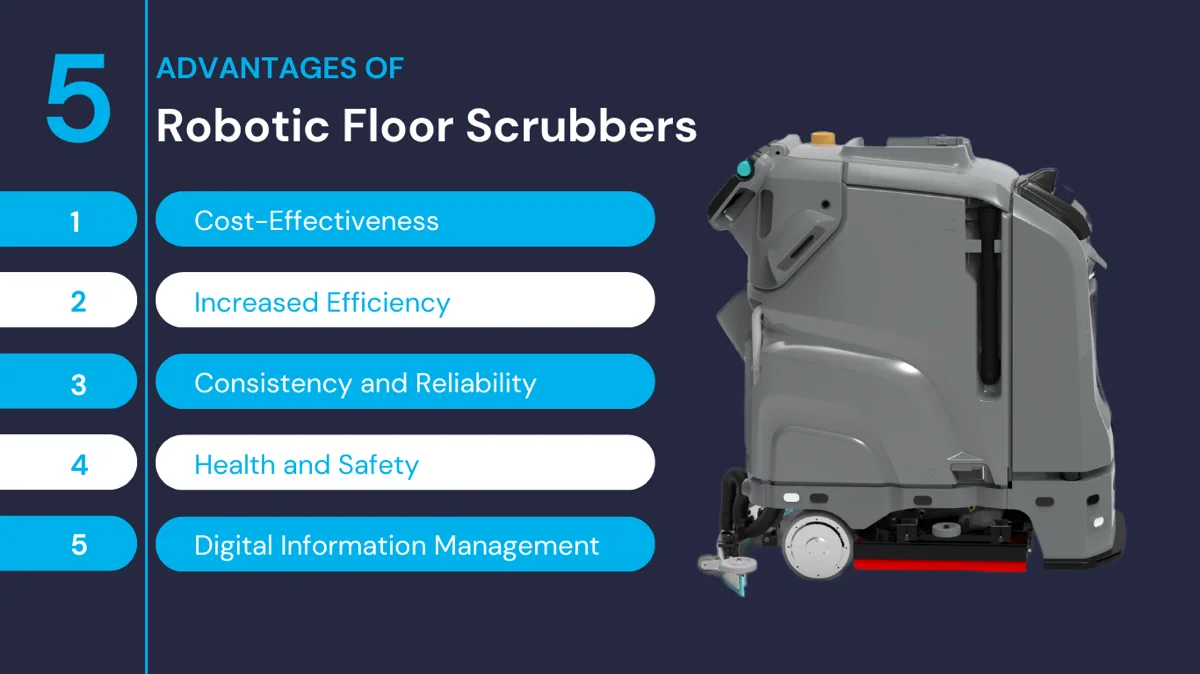
Cleaning Width and Brush Pressure Do Not Tell the Whole Story
Cleaning width and ground pressure are useful specifications. They are not standalone measures of cleaning quality.
A wider cleaning head may be attractive in an open warehouse because it can cover more ground per pass. However, it may be less suitable for constrained spaces or complex layouts.
Likewise, greater available brush pressure does not mean that maximum pressure should be used on every floor.
The correct cleaning action depends on the surface and the soil.
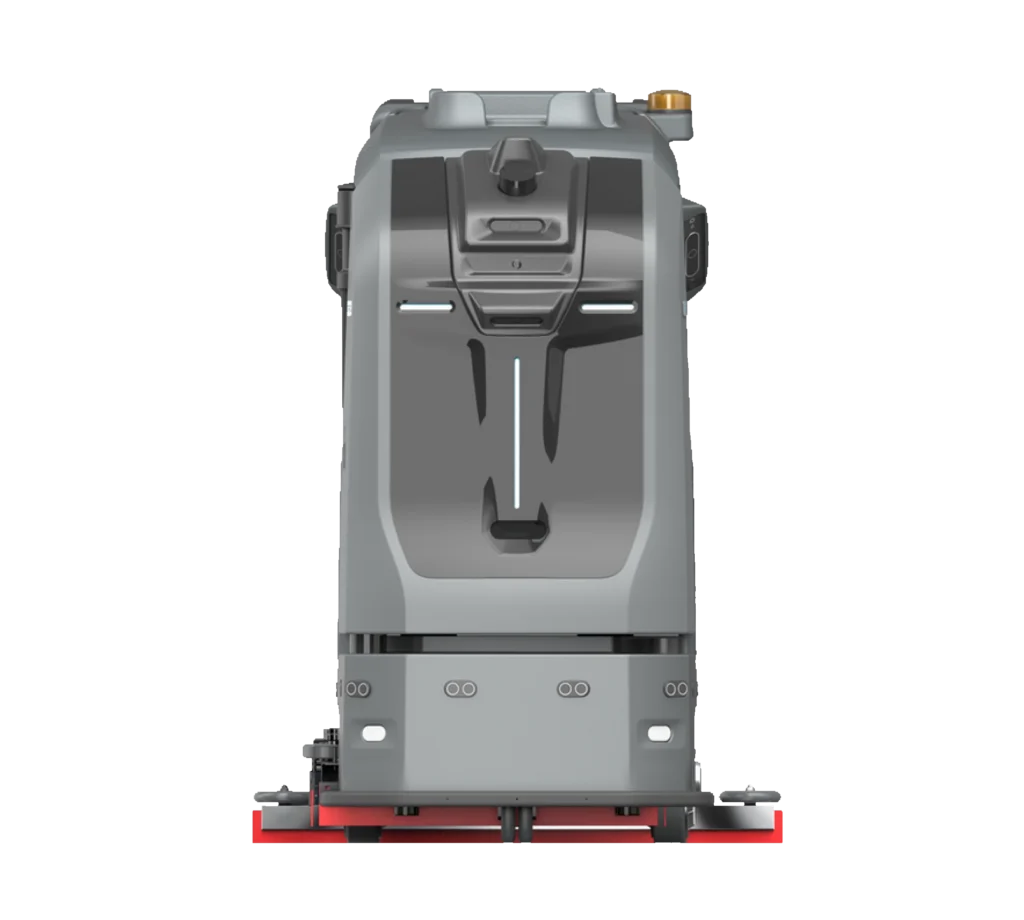
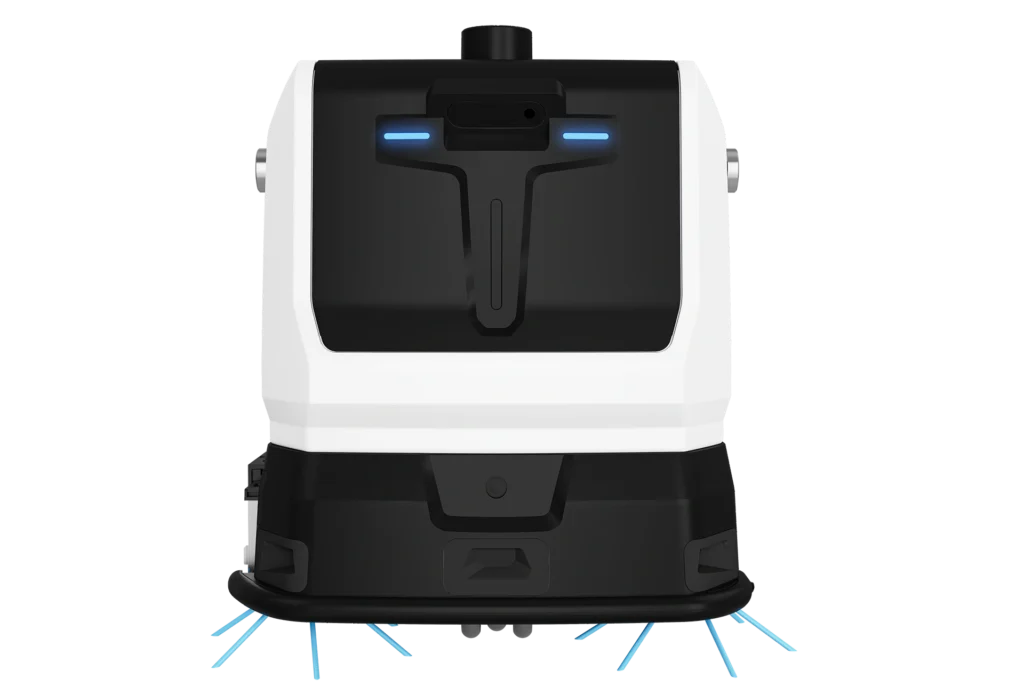
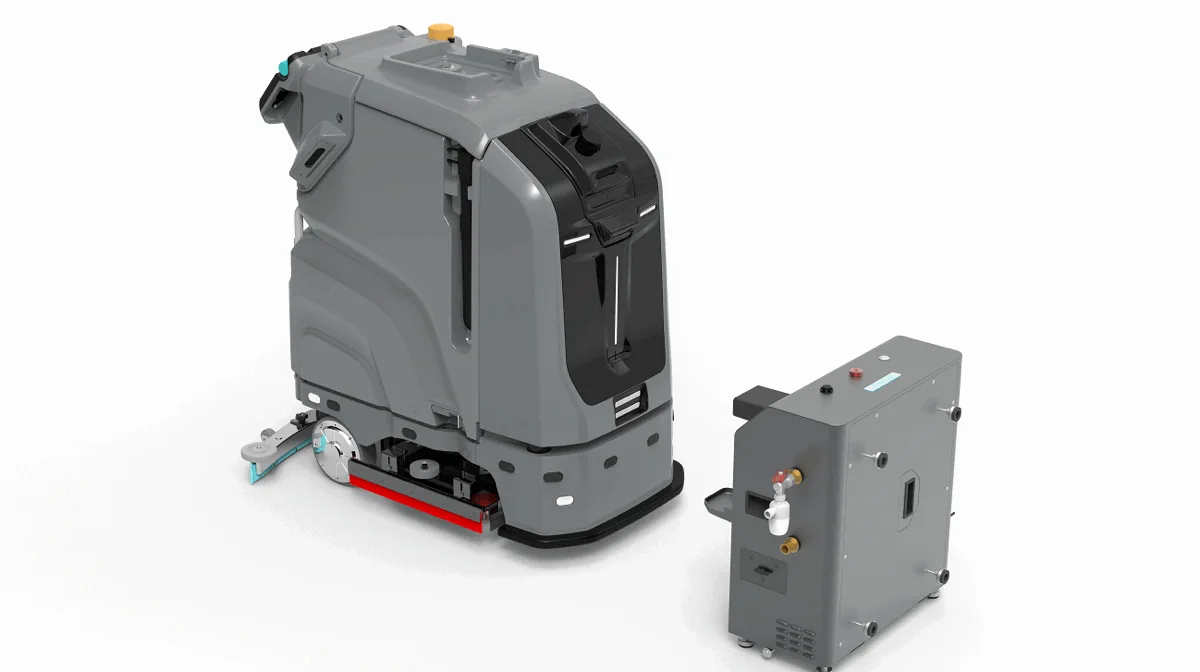
The Minfu LT70 Pro heavy-duty autonomous floor cleaning robot has a published 51 cm brush-cleaning width, an 81 cm squeegee assembly, a 70 L clean-water tank and an 80 L recovery tank. These characteristics make it a platform worth evaluating for large commercial and industrial floor-care tasks.
Our LT10 compact commercial cleaning robot uses a smaller 35 cm brush-cleaning width and combines sweeping, vacuuming and scrubbing functions for more constrained commercial environments.
Those differences help define the scale and geometry of the intended application.
Neither set of specifications removes the need to validate the cleaning result on the customer’s actual flooring.
For OEM and distribution partners, that is especially important when writing product claims. A machine’s published capability should not be expanded into unsupported promises about every surface or cleaning condition.
Before Approving a Robotic Scrubber, Test the Actual Floor
For a distributor developing a private-label robotic floor scrubber line, floor compatibility should be part of sample approval—not a question left for the first customer complaint.
We recommend starting with a representative section of the intended floor rather than an ideal showroom surface.
Document the flooring material and finish, the type of contamination, the proposed cleaning accessory and the permitted maintenance procedure. Where the facility has more than one flooring system, evaluate those areas separately.
Run enough cleaning passes to assess both initial soil removal and any visible effect on the finish. Pay attention to water recovery at turns, along joints and near edges. After the surface dries, inspect for residue, scuffing, loss of gloss or other changes.
It is also worth repeating the process after normal brush and squeegee use. A cleaning result achieved with brand-new components may not fully represent the machine’s condition after weeks of operation.
For coated, resilient and natural-stone surfaces, obtain the flooring supplier’s approval where required before proceeding with full-scale deployment.
Most importantly, define what constitutes an acceptable result before the test begins.
“Looks clean” is subjective. A documented cleaning procedure with observable acceptance criteria is much easier to evaluate and reproduce.
What This Means for Commercial Cleaning Robot OEM Buyers
Floor compatibility has a direct effect on how a cleaning robot should be configured, demonstrated and sold.
A distributor supplying warehouse operators may encounter concrete, epoxy coatings and industrial dust. A partner targeting offices or premium commercial buildings may receive more questions about polished stone, tile, resilient flooring and finish protection.
These customers are not necessarily buying the same cleaning process—even when they are considering the same autonomous platform.
From our side at Minfu, an OEM/ODM discussion should therefore begin with more than the required logo, housing color or packaging design.
We want to understand the target facility, its floor materials, typical contamination, operating schedule and expected cleaning performance. These requirements help determine whether a particular cleaning platform and configuration are suitable for further evaluation.
They also shape the testing process, product documentation and the claims a distributor can responsibly make in its own market.
A good robotic floor scrubber is not the one that promises to clean everything.
It is the one whose cleaning capability matches the surfaces and tasks it is actually expected to handle.
Conclusion
Commercial robotic floor scrubbers can support routine cleaning across many types of hard flooring, but the phrase “hard floor” describes a much broader range of surfaces than it first appears.
Epoxy coatings require attention to finish protection. Concrete floors differ according to sealing, texture and soil conditions. Tile introduces grout lines and recessed areas. Vinyl calls for compatible cleaning accessories and careful moisture control. Natural stone may need specialized chemistry and gentler surface treatment.
Automation can make a validated cleaning routine repeatable. It cannot make an unsuitable cleaning method appropriate for every surface.
For facility managers, that means evaluating the floor before selecting the cleaning program. For brands and distributors, it means validating material compatibility before turning product specifications into marketing promises.
Ultimately, the question is not whether a robotic floor scrubber can move across a particular surface.
It is whether the machine can clean that surface repeatedly without compromising the floor or the required cleaning result.
FAQ
Can a robotic floor scrubber clean epoxy floors?
Yes, many robotic floor scrubbers can clean compatible epoxy-coated floors. However, the correct brush or pad, cleaning solution and operating conditions depend on the coating system and its finish. Smooth epoxy and textured anti-slip resin flooring may require different cleaning methods.
Can autonomous floor scrubbers clean concrete warehouse floors?
They can clean suitable sealed, polished or industrial concrete surfaces, depending on the machine and cleaning configuration. Buyers should evaluate the surface’s porosity, contamination, roughness, cleaning accessory wear and wastewater recovery performance.
Are robotic floor scrubbers safe for marble and natural stone?
They may be suitable for specific stone surfaces when the cleaning process is approved by the flooring supplier. Brush or pad abrasiveness and cleaning chemistry must be evaluated carefully, particularly on polished or acid-sensitive stone.
Can commercial cleaning robots clean both tile and vinyl flooring?
Some platforms can operate on both surfaces using appropriate cleaning configurations. The suitability of each cleaning mode should be verified separately, particularly for grout cleaning, finish protection and moisture-sensitive areas.
Can one robotic floor scrubber use the same settings on every floor?
Not necessarily. Different flooring materials and contamination conditions may require different cleaning methods. A facility should verify the available adjustment functions and determine whether separate routes, operating procedures or equipment are necessary.
What should distributors test before approving a robotic floor scrubber?
Distributors should verify compatibility with target flooring materials, representative soil removal, brush or pad suitability, dirty-water recovery, edge performance and the condition of the floor after repeated cleaning. Product claims should reflect the results demonstrated by the approved configuration.
Work With Minfu
Minfu provides commercial cleaning robot OEM/ODM manufacturing and development support for cleaning-equipment brands, distributors, wholesalers and commercial robotics solution providers.
Our portfolio includes compact autonomous cleaning systems and larger industrial robotic floor scrubbers. We support product configuration, customization, sample evaluation, manufacturing preparation and quality control according to project requirements.
If you are planning a private-label commercial cleaning robot line, share your target floor materials, facility applications and expected cleaning performance with our team. We can help review the available platforms and identify the validation work needed before production approval.
Explore Minfu Commercial Cleaning Robots
LT10 Compact Commercial Cleaning Robot
LT70 Pro Heavy-Duty Robotic Floor Scrubber
OEM/ODM Manufacturing Solutions
Website: https://minfutech.com/
Email: info@minfutech.com
WhatsApp / Phone: +86 13760255781
Contact Minfu to discuss your commercial cleaning robot project.
Explore More Commercial Cleaning Robot Guides
What Can Commercial Cleaning Robots Actually Do?
Learn how to verify autonomous routes, cleaning performance, charging and management capabilities before approving a commercial cleaning robot.
Industrial Cleaning Robots and Facility Hygiene
Understand how robotic floor care fits into a structured facility hygiene program, including cleaning zones, wastewater recovery and maintenance.
Commercial Cleaning Robot vs Traditional Floor Scrubber
Compare autonomous robots and conventional floor scrubbers to determine which operating model fits your facility.