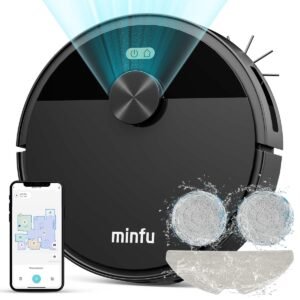


When choosing a robot vacuum for a private-label product range, suction power is not the only specification worth comparing. The mopping system can also influence the product’s cleaning experience, retail positioning and overall value.
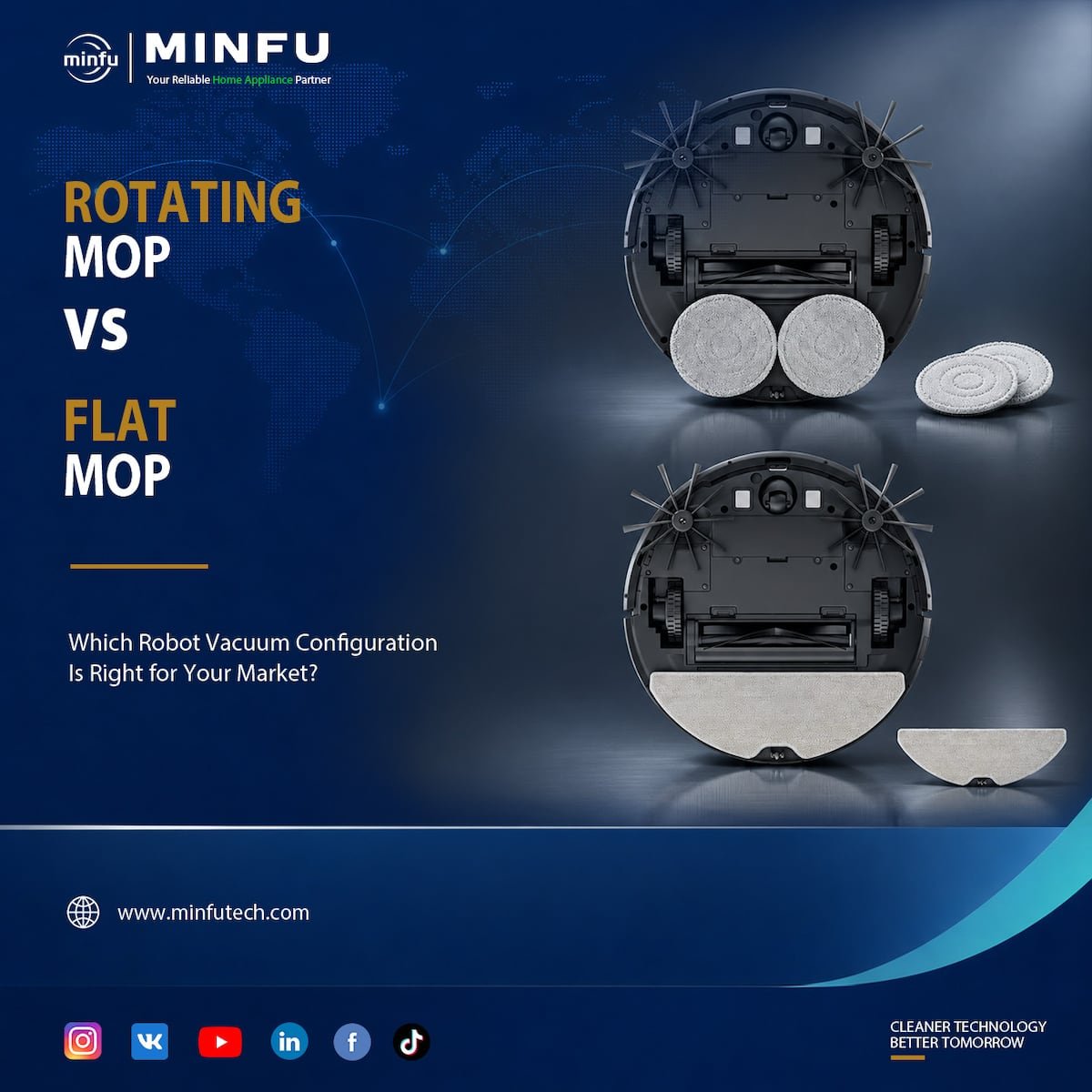
Two common approaches are rotating mop systems and flat mop systems. Both are designed to help maintain hard floors, but they use different cleaning movements and can create different expectations for end users.
For importers and cleaning appliance brands, the important question is not simply which system is better. It is which configuration offers the right balance of cleaning performance, maintenance, product cost and customer expectations in the target market.
Rotating mop robot vacuums use actively moving mop pads, while flat mop robot vacuums use a flat cleaning pad that moves across the floor with the robot. Each system has different characteristics, and the right choice should be based on actual cleaning tests and the intended product positioning.
Minfu’s MFL02 Rotating Mop Robot Vacuum supports both rotating mop and flat mop configurations, giving buyers an opportunity to evaluate different mopping solutions within the same product platform.
This guide explains the differences and what overseas buyers should consider before placing a wholesale or OEM order.
1. How Do Rotating Mop and Flat Mop Systems Actually Work?
The biggest difference between the two systems is how the mop contacts and moves across the floor.
Rotating Mop System
A rotating mop system uses motor-driven mop pads that rotate while the robot moves across the floor.
Instead of relying only on the robot’s forward movement to wipe the surface, the mop pads introduce additional rotational movement.
This creates a different cleaning action and can help loosen everyday surface dirt when the mop pressure, pad material and water delivery are properly matched.
For consumers, rotating mop pads also create a visible cleaning feature that is relatively easy to demonstrate in product videos and retail displays.
However, the actual cleaning result depends on more than rotation alone. Pad material, contact pressure, rotation speed, water delivery and floor conditions all matter.
Flat Mop System
A flat mop system uses a flat cleaning cloth or pad attached to the underside of the robot.
As the robot moves, the pad travels across the floor and wipes the surface.
Its cleaning action is primarily based on the contact between the mop material and the floor, combined with the robot’s movement and the available water supply.
Depending on the design, a flat mop system can offer a straightforward approach to routine floor maintenance.
Its performance still depends on the quality of the pad, water distribution, contact with the floor and cleaning path.
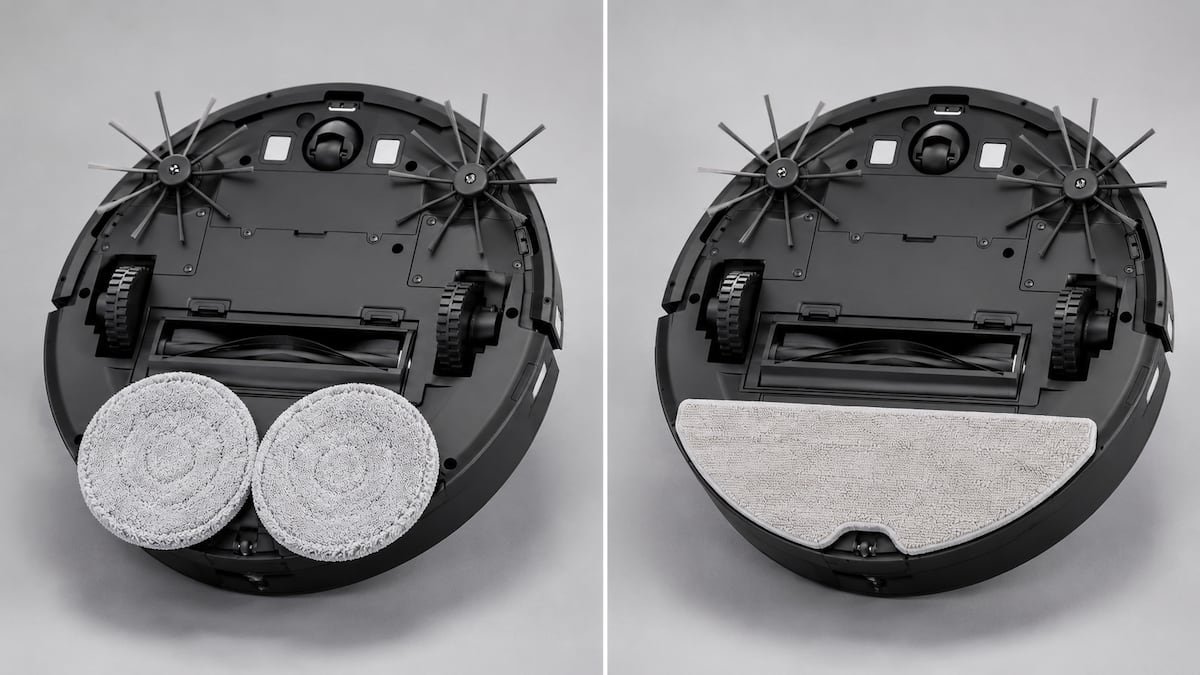
Understanding the Mechanical Difference
| Comparison | Rotating Mop System | Flat Mop System |
|---|---|---|
| Cleaning Movement | Motor-driven rotational movement | Pad moves with the robot |
| Floor Contact | Rotating mop-pad contact | Flat pad contact |
| Cleaning Action | Active rotational wiping | Surface wiping |
| Main Selling Point | More visible active mopping mechanism | Straightforward mopping arrangement |
| Maintenance | Requires care of rotating pads and their attachments | Requires care of the flat mop and holder |
| Evaluation Focus | Rotation, contact pressure and water delivery | Pad contact, water distribution and coverage |
The table describes typical system characteristics. The exact mechanical structure and performance depend on the selected product configuration.
For buyers, understanding this distinction is the first step toward choosing a suitable robot vacuum platform.
2. Does a Rotating Mop Robot Vacuum Clean Better?
This is probably the most important question for buyers comparing the two systems.
A rotating mop system introduces active movement at the cleaning surface. This can provide an advantage when dealing with certain everyday marks on hard floors.
However, it would be misleading to say that every rotating mop robot automatically cleans better than every flat mop robot.
Cleaning performance is influenced by several factors working together.
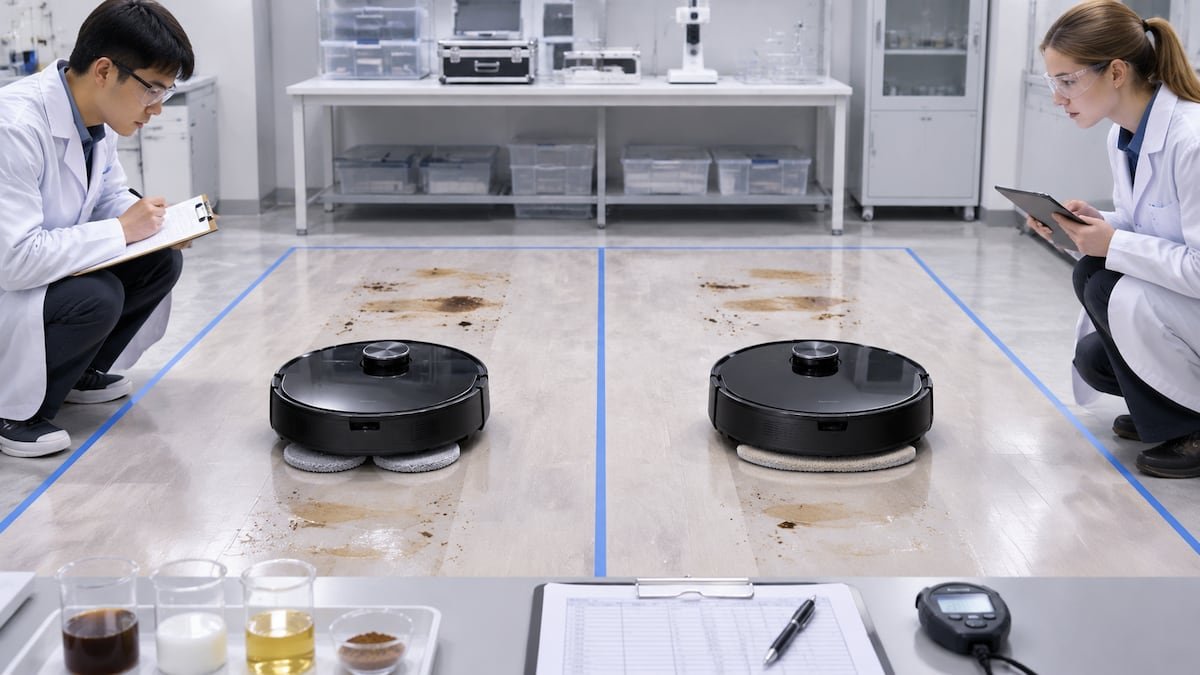
Mop Contact Pressure
The amount of contact between the mop pad and the floor affects how effectively the pad interacts with surface dirt.
A rotating mop system needs suitable contact with the floor to deliver consistent wiping performance.
If the pad does not maintain appropriate contact, rotation alone may not produce the expected result.
Mop Material
Different mop materials have different absorption, friction and dirt-retention characteristics.
A suitable material should collect dirt effectively while remaining durable enough for repeated use and washing.
For private-label brands, mop-pad quality should be evaluated alongside the robot itself.
Water Delivery
Water distribution also affects the cleaning result.
Too little water may reduce the effectiveness of wiping, while excessive water can leave unwanted moisture or streaks on certain surfaces.
A consistent and controllable water supply is therefore important for both configurations.
Cleaning Path
The robot’s movement determines how frequently each part of the floor is covered.
Even a good mop system can leave missed areas if the robot follows an inefficient cleaning path or fails to cover the intended area.
This is why navigation and mopping performance should be evaluated together.
A Practical Performance Comparison
| Cleaning Factor | What Buyers Should Test |
|---|---|
| Dust and Fine Debris | Whether the vacuuming system removes loose debris before mopping |
| Footprints | Whether the mop can remove light everyday marks |
| Dried Surface Marks | Cleaning results after controlled testing |
| Water Distribution | Whether moisture is delivered consistently |
| Floor Streaks | Whether visible residue remains after cleaning |
| Coverage | Whether the robot cleans the intended area consistently |
| Repeat Cleaning | Whether results remain stable over multiple cycles |
The best purchasing decision comes from comparing actual cleaning results, not assuming that one mop mechanism is automatically superior.
3. Which Mop System Is More Suitable for Different Customers?
Different customer groups may value different product characteristics.
A brand selling primarily through online retail may emphasize visible product features and cleaning demonstrations.
A distributor supplying price-sensitive markets may place more emphasis on product cost, maintenance and long-term ownership.
This means the same robot vacuum platform can be positioned differently depending on the intended market.
Customers Who Prioritize Active Mopping
Consumers who want a more visible mopping mechanism may find a rotating mop system attractive.
Its movement is easy to demonstrate, making it suitable for product videos and feature-focused retail presentations.
For these buyers, brands can emphasize the active mopping mechanism while providing realistic demonstrations of its cleaning performance.
Customers Who Prefer Straightforward Maintenance
Some consumers prioritize simple daily maintenance.
A flat mop arrangement may be worth considering when the brand wants to offer a straightforward surface-wiping proposition.
The actual ease of maintenance depends on the mop attachment, removal method and replacement-pad design.
Customers Looking for an Everyday Cleaning Robot
Many households do not need professional floor-cleaning equipment.
They want a robot that can handle routine dust collection and help maintain common household floors.
For this segment, the most important factors may include cleaning consistency, app operation, water control, maintenance and overall product price.
Both configurations can be evaluated for this type of product positioning.
Target Customer Comparison
| Customer Priority | Configuration Worth Evaluating | Main Consideration |
|---|---|---|
| Active mopping experience | Rotating Mop | Actual cleaning results and pad contact |
| Straightforward floor wiping | Flat Mop | Pad maintenance and water distribution |
| Feature-focused retail positioning | Rotating Mop | Demonstrable product differentiation |
| Cost-conscious product range | Flat Mop | Total product and maintenance cost |
| General household floor care | Either | Overall cleaning performance and usability |
These are product-positioning considerations rather than fixed rules. Retailer feedback and sample testing should determine the final choice.
4. Why Rotating Mop Technology Can Help Differentiate a Robot Vacuum Product Line
For cleaning appliance brands, product differentiation is a commercial issue.
A distributor may already have several robot vacuums with similar suction specifications, navigation functions and basic mopping capabilities.
Introducing another model with almost identical features may not create a compelling reason for retailers to list it.
A rotating mop configuration provides a different feature to demonstrate and communicate.
A More Distinctive Product Demonstration
A rotating mop mechanism is visually recognizable.
Retailers can show the movement of the mop pads and demonstrate how the robot operates on a hard floor.
This gives the sales team something more specific to explain than simply saying the product includes a mopping function.
An Additional Product Positioning Option
A brand with an existing flat-mop robot vacuum may consider adding a rotating-mop model to its range.
The objective would be to offer customers a different cleaning configuration rather than simply introducing another product with a different appearance.
More Opportunities for Product Content
Rotating mop technology can support several types of marketing material:
- Close-up demonstrations of the rotating mop mechanism.
- Comparisons of different mop configurations.
- Real household floor-cleaning demonstrations.
- Product maintenance and mop-pad replacement videos.
- Technical explanations of water delivery and mop contact.
For distributors selling through e-commerce platforms, these demonstrations can help customers understand the product before purchasing.
However, the product must deliver a satisfactory real-world experience. A visually interesting feature cannot compensate for poor cleaning performance.
5. What Should Buyers Check Before Selecting a Rotating Mop System?
For overseas buyers, a product sample should be evaluated before making a bulk purchasing decision.
The purpose is to confirm that the actual product configuration matches the intended retail positioning.
Here are the key areas worth testing.
1. Rotational Stability
Observe the mop pads during normal operation.
Check whether their movement remains stable and whether the pads maintain their intended position during cleaning.
2. Floor Contact
Check how the mop pads interact with different hard-floor surfaces.
The contact should be consistent enough to support the intended cleaning action.
3. Water Distribution
Observe whether the mopping system distributes moisture appropriately.
Look for excessive wetness, uneven water delivery or visible streaks.
4. Cleaning Results
Test the robot on representative floor surfaces using controlled amounts of common household dirt.
Compare the results under the same conditions.
5. Mop-Pad Durability
Inspect the pads after repeated cleaning and washing cycles.
Check for deformation, loose stitching, reduced attachment strength or changes in cleaning performance.
6. Maintenance Convenience
Evaluate how easily users can remove, clean, dry and reinstall the mop components.
A product that performs well but is difficult to maintain may create additional after-sales questions.
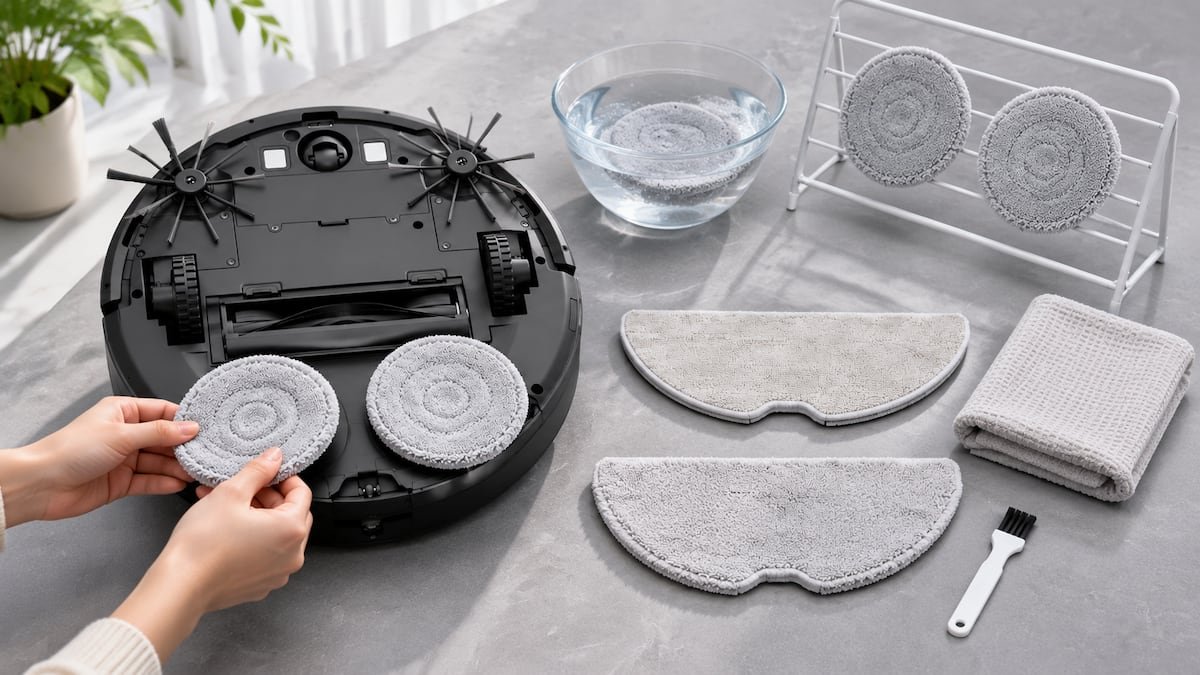
7. Combined Vacuuming and Mopping
Test the complete cleaning cycle rather than evaluating the mop mechanism in isolation.
The robot should be assessed as a combined cleaning system, including navigation, suction, water delivery and mop operation.
Sample Evaluation Checklist
| Inspection Item | Recommended Check |
|---|---|
| Mop Installation | Correct attachment and removal |
| Rotation | Stable movement during operation |
| Floor Contact | Consistent contact with test surfaces |
| Water Control | Appropriate and even moisture delivery |
| Cleaning Coverage | No obvious missed areas |
| Mop Durability | Condition after repeated use |
| Noise | Operating noise during mopping |
| Maintenance | Ease of cleaning and replacement |
| Combined Operation | Vacuuming and mopping together |
Buyers should record the results against agreed acceptance criteria.
For OEM orders, these criteria should be documented during sample approval so that the bulk production configuration can be checked against the approved sample.
6. What Should Importers Consider When Comparing the Total Cost?
A common sourcing mistake is to compare only the initial factory price.
The mop configuration can influence the complete product package and the ongoing costs associated with ownership.
Before choosing a rotating or flat mop configuration, buyers should consider several cost categories.
Product Configuration Cost
Different mop mechanisms may involve different components, assembly requirements and accessory arrangements.
Buyers should request quotations for the exact configuration they intend to purchase.
Replacement Mop Pads
Mop pads are consumable accessories.
The cost, availability and replacement frequency can affect the ownership experience.
A brand should understand whether replacement pads can be supplied consistently and whether they are available as individual accessories or in sets.
Packaging and Accessories
The final retail package may include different mop components, holders and replacement pads.
These items can affect packaging dimensions, product presentation and shipping costs.
After-Sales Support
Distributors should also consider how customers will obtain replacement mop pads and other maintenance components.
A good product sourcing decision includes a plan for supporting the product after the initial sale.
Total Cost Comparison
| Cost Category | Questions to Ask the Manufacturer |
|---|---|
| Factory Price | What is the quotation for each mop configuration? |
| Mop Accessories | Which pads and holders are included? |
| Replacement Parts | What are the replacement-pad costs? |
| Packaging | Does the configuration change the package size? |
| Assembly | Are there differences in production requirements? |
| After-Sales | What spare parts can be supplied? |
| MOQ | Does each configuration have a separate MOQ? |
The final comparison should consider the complete commercial package, not just the price of the robot itself.
7. How Does the Minfu MFL02 Support Different Mopping Requirements?
The Minfu MFL02 Rotating Mop Robot Vacuum is a product platform that supports both rotating mop and flat mop configurations.
This gives international buyers an opportunity to evaluate different mopping arrangements when planning their product ranges.
Rather than selecting a configuration based only on promotional claims, buyers can compare the available arrangements against their intended market requirements.
Evaluate the Rotating Mop Configuration
For brands interested in a more distinctive mopping proposition, the rotating configuration can be evaluated through sample testing.
Important considerations include mop movement, contact with the floor, water delivery and maintenance.
Evaluate the Flat Mop Configuration
For buyers considering a more straightforward mopping proposition, the flat mop arrangement provides another configuration to assess.
Its cleaning results, attachment method and maintenance requirements should be reviewed under the same test conditions.
Confirm the Final Product Specification
Before requesting a quotation, buyers should confirm:
- Which mop configuration will be supplied.
- Which mop components are included.
- Whether replacement pads are available.
- How water delivery is controlled.
- Which accessories are included in the retail package.
- Whether the selected configuration affects MOQ or production cost.
The exact configuration and commercial terms should be confirmed with the manufacturer before placing an order.
For more product information, visit the Minfu MFL02 Rotating Mop Robot Vacuum.
8. What Should Private-Label Brands Confirm Before Mass Production?
Selecting the right mop system is only one part of an OEM project.
International brands also need to confirm the product’s complete configuration and the requirements of their destination market.
For an MFL02 project, the following subjects should be discussed with the manufacturer.
| OEM Project Area | What Buyers Should Confirm |
|---|---|
| Mop Configuration | Rotating or flat mop |
| Product Branding | Logo placement and identification |
| Accessories | Mop pads, holders and included components |
| Packaging | Retail box and protective packaging |
| Instructions | Local-language user manual |
| Replacement Parts | Mop pads and other consumables |
| Product Approval | Final sample and agreed specifications |
| Quality Inspection | Acceptance criteria before shipment |
| Commercial Terms | MOQ, price and production lead time |
A well-managed sample approval process helps prevent differences between the product originally evaluated and the one eventually delivered in bulk.
MinfuTech supports OEM/ODM cooperation for international cleaning appliance brands, distributors and importers. Buyers can discuss the available customization scope through the Minfu Smart Cleaning Appliances OEM/ODM program.
9. Final Recommendation: Choose the Mop System That Matches Your Market
Rotating mop and flat mop robot vacuums serve related cleaning purposes, but they offer different approaches to floor maintenance.
A rotating mop configuration can provide a more distinctive active-mopping proposition and may appeal to customers who value visible mopping technology.
A flat mop configuration can be considered for brands that prefer a straightforward wiping arrangement and want to evaluate its overall cost and maintenance requirements.
Neither system should be selected solely because it sounds more advanced.
For importers and private-label brands, the best decision comes from comparing actual cleaning performance, product cost, customer expectations and long-term maintenance.
The Minfu MFL02 provides an opportunity to evaluate both mopping configurations within one product platform.
Before committing to a bulk order, test the configurations under the same conditions, confirm the final accessory package and select the version that best fits your target market.
Frequently Asked Questions
1. What is the main difference between a rotating mop and a flat mop robot vacuum?
A rotating mop robot vacuum uses motor-driven mop pads that rotate during cleaning. A flat mop robot vacuum uses a flat cleaning pad that moves across the floor with the robot. Their cleaning actions and maintenance requirements can differ.
2. Does a rotating mop robot vacuum clean better than a flat mop robot vacuum?
Not necessarily in every situation. Rotating mop systems introduce active rotational movement, but actual cleaning results also depend on pad material, contact pressure, water delivery, floor type and cleaning conditions. Buyers should compare real test results.
3. Is a rotating mop robot vacuum suitable for everyday household cleaning?
It can be suitable for routine hard-floor maintenance, provided that the product’s mopping performance, water control and maintenance requirements match the intended application.
4. Which mop system is easier to maintain?
Maintenance depends on the actual product design. Buyers should compare pad removal, washing, drying, attachment strength and replacement-part availability before selecting a configuration.
5. What should importers test before ordering a rotating mop robot vacuum?
Important checks include mop rotation stability, floor contact, water distribution, cleaning coverage, pad durability, operating noise and combined vacuuming and mopping performance.
6. Can a robot vacuum manufacturer offer different mop configurations for private-label brands?
Some OEM/ODM platforms support different mop configurations. Buyers should confirm which options are technically available, how they affect product cost and whether they require separate production arrangements.
7. Does the Minfu MFL02 support both rotating mop and flat mop configurations?
Yes. The MFL02 platform supports both configurations. Buyers should confirm the exact configuration and included accessories when requesting a sample or quotation.
8. Should brands choose the rotating mop configuration for a premium product range?
It can be considered as a differentiation feature, but the final product positioning should also account for cleaning results, product cost, durability, maintenance and customer demand.