


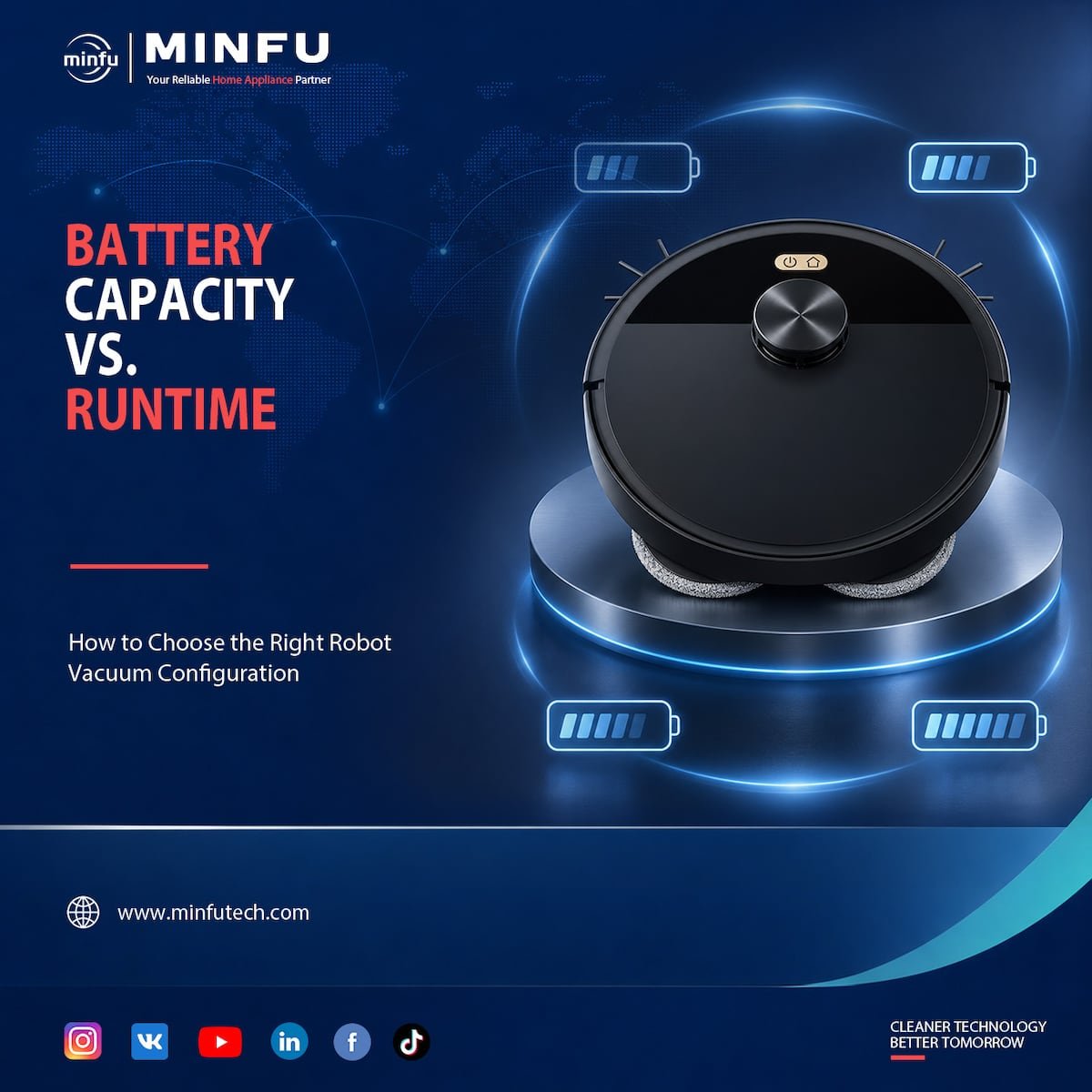
When selecting a robot vacuum for a retail or private-label product range, battery capacity is one of the specifications that deserves careful attention.
A larger battery may provide more energy for longer cleaning sessions, but it does not automatically guarantee better real-world performance. Suction settings, cleaning modes, floor conditions and the robot’s overall configuration can all influence how long it operates on a single charge.
For importers and distributors, the challenge is to select a battery configuration that matches the expectations of their target customers without unnecessarily increasing product costs.
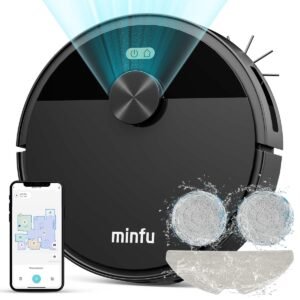
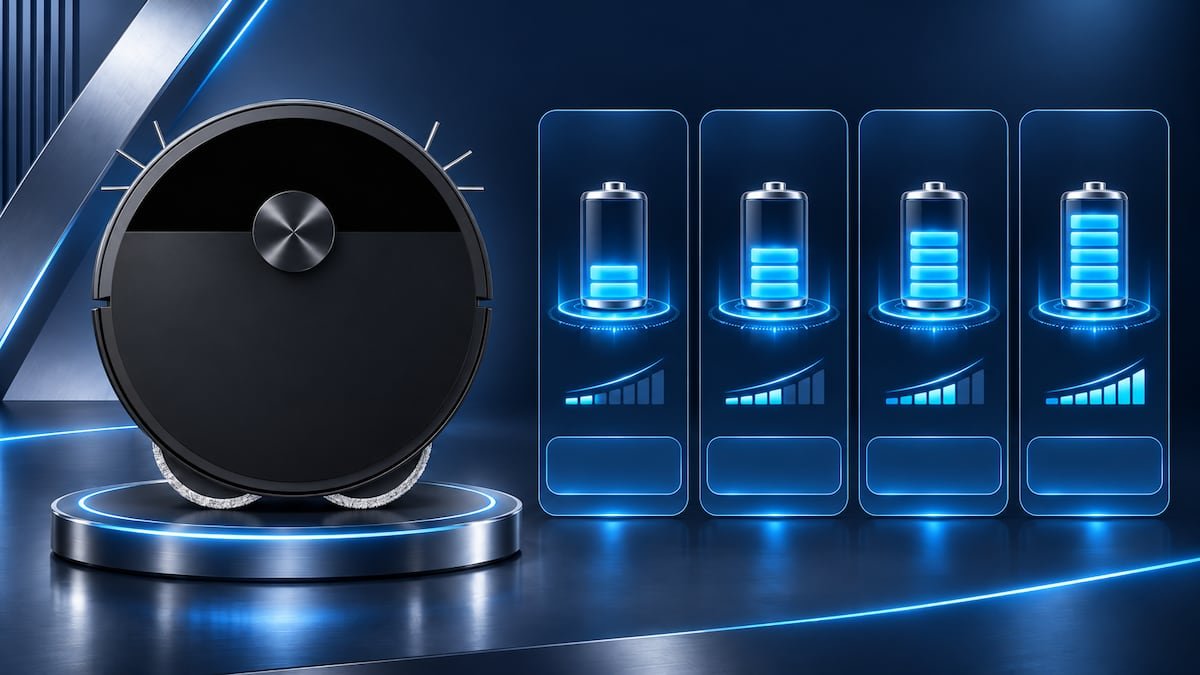
The Minfu MFL02 Rotating Mop Robot Vacuum offers four battery capacity options: 2,600mAh, 3,200mAh, 5,200mAh and 6,600mAh. Its listed working time ranges from 90 to 240 minutes per charge, depending on the selected configuration.
The best battery configuration is not necessarily the one with the highest capacity. It is the one that provides sufficient cleaning time for the intended application, matches the product’s positioning and delivers consistent performance under real operating conditions.
This guide explains how robot vacuum battery capacity relates to runtime and what overseas buyers should consider before choosing an MFL02 configuration.
1. Does a Larger Robot Vacuum Battery Always Mean Longer Runtime?
Battery capacity is commonly measured in milliamp-hours (mAh).
It indicates the amount of electrical charge a battery can store under its rated conditions. In general, a higher-capacity battery can supply energy for a longer period when other operating conditions are comparable.
However, battery capacity is only one part of the runtime equation.
A robot vacuum consumes energy through several operating systems, including:
- Suction motor.
- Main brush and side brush motors.
- Navigation and control electronics.
- Wheel drive motors.
- Mopping components.
- Wireless communication and other smart functions.
The energy consumption of these systems can change depending on how the robot is being used.
For example, operating at a higher suction setting may require more power than using a lower setting. Cleaning carpets, navigating complex rooms and running different cleaning functions can also influence energy consumption.
This means two robot vacuums with different battery capacities cannot be compared accurately by looking at their mAh ratings alone.
Battery Capacity vs. Runtime
| Specification | What It Tells Buyers |
|---|---|
| Battery Capacity (mAh) | Rated electrical charge capacity |
| Runtime (Minutes) | How long the robot operates per charge under specified conditions |
| Charging Time | How long the battery takes to recharge |
| Battery Cycle Life | How the battery retains performance through repeated charging cycles |
| Battery Protection | How the battery pack manages charging, discharging and protection |
These specifications describe different aspects of battery performance.
For product sourcing, buyers should request both the battery capacity and the tested operating time of the exact configuration they intend to purchase.
2. What Battery Options Are Available for the Minfu MFL02?
One of the useful features of the MFL02 platform is its selection of battery configurations.
Instead of offering only one battery capacity, the model provides a standard version and three optional capacity levels.
MFL02 Battery Configuration
| Battery Capacity | Availability | Purchasing Consideration |
|---|---|---|
| 2,600mAh | Standard | Standard product configuration |
| 3,200mAh | Optional | Alternative capacity for product positioning |
| 5,200mAh | Optional | Higher-capacity configuration |
| 6,600mAh | Optional | Highest listed capacity option |
The official product specification lists a working-time range of 90–240 minutes per charge, depending on configuration.
It does not assign a specific runtime to each individual battery capacity.
For this reason, buyers should confirm the actual runtime of the selected battery version through manufacturer testing rather than assuming that each additional mAh corresponds to a fixed number of minutes.
Why Offer Multiple Battery Capacities?
Different markets do not necessarily have the same expectations.
Some distributors prioritize an affordable entry-level robot vacuum.
Others want a higher-specification product for customers who expect longer cleaning sessions.
Offering several battery options gives brands more flexibility when planning their product ranges.
However, the final battery selection should also account for the selected suction configuration, operating modes, product cost and verified runtime.
3. How Should Buyers Choose a Battery Configuration for Different Markets?
A useful way to approach battery selection is to start with the intended customer rather than automatically choosing the largest available battery.
Consider the following market situations.
Entry-Level Robot Vacuum Range
For a price-conscious retail segment, the standard 2,600mAh configuration can be used as the initial product evaluation point.
Buyers should examine whether its verified runtime is sufficient for the typical cleaning requirements of their target customers.
This may be a suitable starting point when the primary objective is to develop a competitive product price.
Mainstream Household Product Range
For brands targeting a broader household audience, the 3,200mAh and 5,200mAh options are worth evaluating.
The final choice should be based on actual runtime testing, product cost and the intended retail price.
A slightly higher specification is only commercially valuable if it delivers a benefit that customers can understand.
Higher-Capacity Product Positioning
For brands targeting consumers who prioritize longer cleaning sessions, the 5,200mAh and 6,600mAh configurations deserve particular attention.
Buyers should evaluate whether the additional capacity provides enough practical benefit to justify the higher product cost.
The selected version should be tested under the actual suction and cleaning conditions intended for retail promotion.
Market-Based Selection Guide
| Product Positioning | Battery Options to Evaluate | Main Purchasing Priority |
|---|---|---|
| Entry-level retail | 2,600mAh | Competitive product cost |
| Mainstream household | 3,200mAh / 5,200mAh | Balance of runtime and cost |
| Higher-capacity positioning | 5,200mAh / 6,600mAh | Longer verified operating time |
| Premium product development | Compare multiple options | Performance and product differentiation |
These are suggested evaluation directions, not fixed market rules. The final battery should be selected according to tested performance and the target market’s expectations.
4. How Does Suction Power Affect Robot Vacuum Runtime?
Battery capacity should not be evaluated independently of suction power.
A robot vacuum running at a higher suction setting may consume more energy than the same model operating at a lower setting.
This is particularly relevant when buyers compare different product configurations.
The MFL02 offers the following suction options:
- 5,000Pa standard configuration.
- 10,000Pa optional configuration.
- 15,000Pa optional configuration.
- 20,000Pa optional configuration.
A higher suction specification can be an attractive selling point, especially for markets where customers pay close attention to cleaning performance.
However, buyers should also consider how the selected suction configuration affects operating time.
Why Suction and Battery Need to Be Evaluated Together
Imagine two product samples:
Sample A uses a lower suction setting.
Sample B uses a higher suction setting.
Even if both use the same battery capacity, their energy consumption may differ.
The resulting runtime may therefore be different.
This is why a manufacturer should not confirm a runtime figure based only on battery capacity.
For OEM projects, buyers should request runtime results under the actual suction settings that will be promoted in the final product specification.
Recommended Configuration Testing
| Test Configuration | What Buyers Should Record |
|---|---|
| Standard Suction | Runtime per charge |
| Higher Suction | Runtime per charge |
| Maximum Suction | Runtime per charge |
| Automatic Cleaning | Runtime under the selected automatic mode |
| Combined Cleaning | Runtime with the selected mopping configuration |
The exact test modes should follow the available MFL02 software and hardware configuration.
A clear relationship between suction performance and runtime makes it easier for brands to select the right product positioning.
5. Does Mopping Affect Robot Vacuum Battery Consumption?
Yes, the complete cleaning configuration should be considered when evaluating battery performance.
The MFL02 is designed for sweeping, vacuuming and mopping.
An important feature is that both rotating mop pads and the flat mop option are included as standard. Users can install either mopping system according to their preferences.
For battery testing, this means buyers should not rely exclusively on vacuum-only runtime results.
They should also evaluate the robot under the intended mopping conditions.
Test Both Mopping Arrangements
Rotating Mop Configuration
The MFL02’s dual spinning mop system introduces additional mechanical movement during cleaning.
Buyers should test the complete robot with this configuration installed and record the actual operating time.
Flat Mop Configuration
The flat mop system uses a different cleaning arrangement.
It should also be tested independently to establish its actual operating performance.
Why This Matters
Different cleaning arrangements may place different demands on the robot’s electrical systems.
The amount of water delivered, selected cleaning settings and floor conditions can also affect the overall operating cycle.
However, the difference should be measured rather than assumed.
Recommended Battery Test Matrix
| Test | Battery | Cleaning Configuration |
|---|---|---|
| Test A | Selected battery | Vacuum only |
| Test B | Same battery | Vacuum + rotating mop |
| Test C | Same battery | Vacuum + flat mop |
| Test D | Same battery | Higher suction + selected mop |
For meaningful comparisons, use the same floor area, battery condition and test procedure.
This helps buyers understand how the complete MFL02 configuration performs rather than relying on isolated battery specifications.
6. How Large Is the Area a Robot Vacuum Can Clean on One Charge?
Runtime is important, but consumers usually care about something more practical:
How much of their home can the robot clean before it needs to recharge?
There is no single universal answer because cleaning area depends on several factors.
Floor Layout
An open-plan room may allow the robot to follow a relatively straightforward cleaning route.
A home with multiple rooms, narrow passages and many furniture obstacles may require more movement and navigation adjustments.
Floor Type
Different surfaces can create different operating demands.
Carpets, hard floors and mixed-floor environments should be evaluated separately when determining the intended runtime.
Cleaning Settings
Higher suction settings and different cleaning modes can change energy consumption.
The selected mopping arrangement should also be included in the test conditions.
Cleaning Coverage
A robot that follows a more complex route may take longer to complete the same floor area.
For this reason, buyers should measure both runtime and actual cleaning coverage.
What Should Buyers Measure?
| Evaluation Item | Why It Matters |
|---|---|
| Floor Area | Defines the test environment |
| Floor Type | Helps compare operating conditions |
| Furniture Layout | Influences cleaning routes |
| Suction Setting | Affects energy consumption |
| Mop Configuration | Defines the complete cleaning setup |
| Cleaning Duration | Records actual operating time |
| Coverage Result | Shows how much of the intended area was cleaned |
A useful product specification should explain the conditions under which its runtime was measured.
This makes the information more meaningful to both retailers and end users.
7. Can Automatic Recharge and Resume Solve Long Cleaning Requirements?
A longer runtime is useful, but it is not the only way to improve the practical cleaning experience.
The MFL02 supports automatic recharging and resume cleaning.
When the battery becomes low, the robot can return to its charging base, recharge and resume the unfinished cleaning task.
This feature is particularly relevant when considering larger homes or more complex cleaning areas.
Single-Charge Runtime vs. Complete Cleaning Task
These are two different measurements.
Single-Charge Runtime
The amount of time the robot operates before returning for charging.
Complete Cleaning Task
The overall process of completing the intended cleaning area, potentially including a return to the charging base and a later restart.
Automatic recharge and resume can help the robot complete a larger cleaning task across multiple operating sessions.
However, it does not increase the actual runtime available from one fully charged battery.
Buyers should therefore distinguish between the two when comparing product specifications.
For a retail product listing, reporting a verified single-charge runtime is clearer than describing an extended cleaning task as uninterrupted operation.
8. What Should Importers Test Before Selecting a Battery Version?
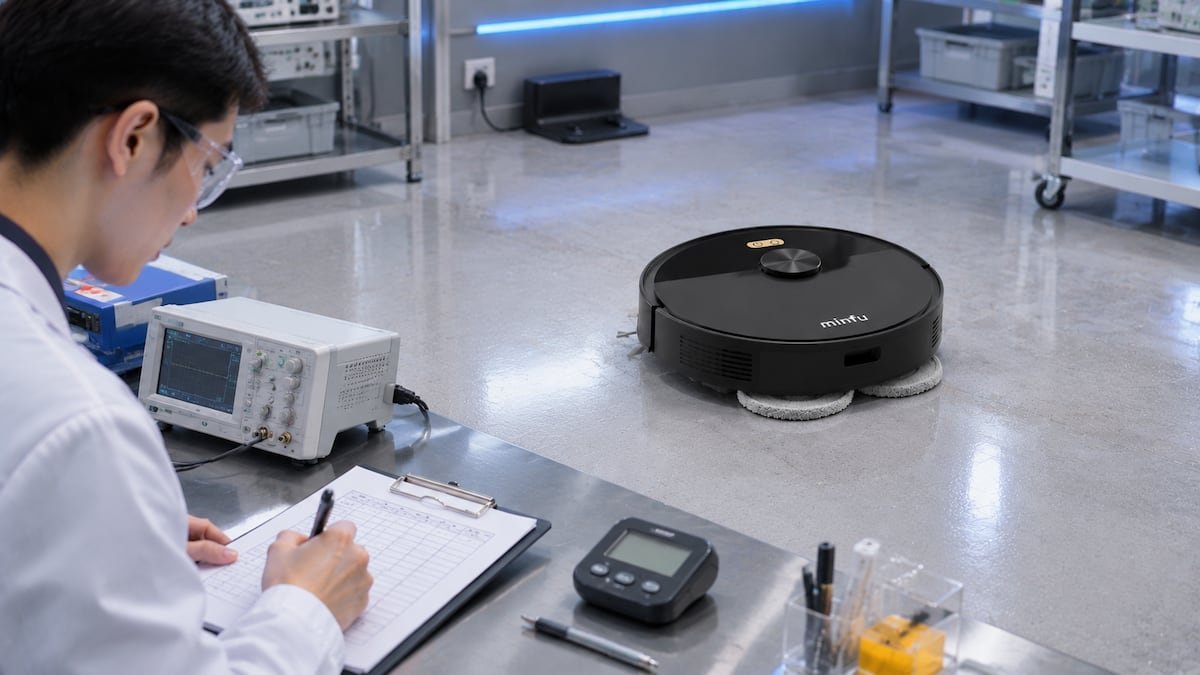
Before approving a battery configuration for mass production, buyers should request a sample and evaluate it under consistent conditions.
The objective is to establish whether the selected battery provides the expected operating performance.
Step 1: Confirm the Battery Specification
Record the exact battery capacity and approved battery configuration.
Do not rely only on the model name or a general product brochure.
Step 2: Fully Charge the Sample
Use the supplied charging base and follow the manufacturer’s charging instructions.
Begin testing only after the battery reaches its specified full-charge condition.
Step 3: Select the Operating Mode
Choose the suction setting and cleaning mode that will be used for the test.
Keep these settings consistent when comparing different battery options.
Step 4: Standardize the Test Environment
Use the same floor material, room layout, cleaning route and mop configuration.
This reduces differences caused by the environment.
Step 5: Record Runtime and Coverage
Record the actual operating time and the area cleaned.
Do not use runtime alone to determine whether the robot completed its intended cleaning task.
Step 6: Repeat the Test
A single test is not sufficient to establish consistent performance.
Repeat the procedure under the same conditions and compare the results.
Sample Battery Evaluation Checklist
| Inspection Item | What to Confirm |
|---|---|
| Battery Capacity | Matches the approved specification |
| Full-Charge Condition | Correctly charged before testing |
| Operating Mode | Clearly documented |
| Runtime | Measured under repeatable conditions |
| Cleaning Coverage | Actual area completed |
| Charging Operation | Charging functions normally |
| Auto-Recharge | Robot returns to the charging base |
| Resume Cleaning | Unfinished task resumes as intended |
| Battery Consistency | Repeated tests produce acceptable results |
For OEM orders, the approved battery version and test conditions should be documented as part of the sample approval process.
9. What Should Brands Consider When Choosing a Higher-Capacity Battery?
A higher-capacity battery can help create a stronger product proposition, but it should also be evaluated commercially.
Before choosing the largest available option, buyers should discuss the following points with the manufacturer.
Product Cost
Request separate quotations for the available battery configurations.
This helps determine whether the additional runtime justifies the change in factory price.
Product Weight and Structure
Ask whether the selected battery option changes the product’s weight, internal arrangement or other mechanical requirements.
These details should be confirmed rather than assumed.
Charging Requirements
Confirm the charging time and charging compatibility of the selected version.
The MFL02 product page currently lists automatic recharging but does not publish a separate charging-time figure for each battery option.
This information should be obtained from the manufacturer before being used in retail specifications.
Battery Quality and Consistency
The battery pack is an important component that influences the product’s long-term reliability.
Buyers should confirm the approved battery specification, protection arrangements and production inspection requirements.
Regional Compliance
Battery-related documentation and shipping requirements should be checked for the destination market.
For private-label projects, confirm the applicable battery test reports and transport documentation with the manufacturer.
Commercial Evaluation
| Purchasing Factor | Question for the Manufacturer |
|---|---|
| Battery Price | What is the price difference between options? |
| Runtime | What is the tested runtime of each version? |
| Charging Time | How long does each version take to recharge? |
| Weight | Does the battery change affect product weight? |
| Compatibility | Which suction configurations are supported? |
| Quality Control | How is battery consistency checked? |
| Documentation | What battery-related reports are available? |
| MOQ | Are there separate requirements for different configurations? |
The best choice is the battery configuration that delivers a clear customer benefit while remaining commercially viable.
10. How Minfu Helps Brands Develop the Right MFL02 Battery Configuration
Shenzhen Minfutech Industrial Co., Ltd. provides OEM/ODM cleaning appliance solutions for international brands, importers, distributors and wholesalers.
The MFL02 offers four listed battery capacities, allowing buyers to evaluate different product configurations for their target markets.
Its main product features include:
- 2,600mAh standard battery.
- 3,200mAh, 5,200mAh and 6,600mAh optional batteries.
- 90–240 minutes listed working time per charge, depending on configuration.
- 5,000Pa standard suction with optional higher suction configurations.
- LDS LiDAR navigation with SLAM mapping.
- Both rotating and flat mop systems included as standard.
- Automatic recharging and resume cleaning.
For an OEM/ODM project, buyers can discuss the intended battery configuration, suction requirements, product positioning and packaging specifications with Minfu.
The final battery and suction combinations should be confirmed for technical compatibility and tested before mass production.
For more information, visit the Minfu MFL02 Rotating Mop Robot Vacuum.
Frequently Asked Questions
1. Does a higher mAh battery always provide longer robot vacuum runtime?
Not necessarily. A higher-capacity battery can store more electrical charge, but actual runtime also depends on suction power, cleaning modes, floor conditions and overall energy consumption.
2. What battery capacities are available for the Minfu MFL02?
The MFL02 offers a 2,600mAh standard battery and optional 3,200mAh, 5,200mAh and 6,600mAh configurations.
3. How long can the MFL02 operate on one charge?
The official product specification lists 90–240 minutes per charge, depending on the selected configuration and operating conditions. Buyers should confirm the tested runtime of their specific version.
4. Which MFL02 battery is best for large homes?
The 5,200mAh and 6,600mAh options are worth evaluating when longer operating sessions are important. However, the final choice should be based on actual runtime tests, cleaning settings and product cost.
5. Does suction power affect robot vacuum battery life?
Yes. Higher suction settings generally require more energy, which can reduce operating time under otherwise comparable conditions. Buyers should evaluate battery and suction configurations together.
6. Does mopping affect robot vacuum runtime?
The complete mopping configuration should be included in runtime testing because the robot operates additional cleaning components. The actual difference between vacuum-only and combined cleaning should be measured.
7. What is the difference between battery runtime and battery lifespan?
Runtime refers to how long a robot vacuum operates on a single charge. Battery lifespan refers to how the battery retains its capacity and performance through repeated charging and use over time.
8. Can a robot vacuum continue cleaning after recharging?
The MFL02 supports automatic recharging and resume cleaning. It can return to its charging base when the battery is low and resume an unfinished cleaning task after recharging.
9. What should importers check before ordering a higher-capacity robot vacuum battery?
Importers should confirm the actual battery specification, tested runtime, charging time, compatibility, product cost, battery documentation and quality inspection requirements.
10. Does Minfu offer OEM/ODM robot vacuum battery options?
Yes. The MFL02 has several listed battery configurations. Buyers can discuss the available options and confirm the suitable configuration for their OEM/ODM project.
Choose the Right Battery for the Right Market
Battery capacity is an important part of robot vacuum product positioning, but it should never be treated as the only indicator of performance.
A successful product configuration balances runtime, suction performance, cleaning requirements and overall purchasing cost.
With four battery capacity options, the Minfu MFL02 gives international brands more flexibility when developing robot vacuum products for different market segments.
Rather than choosing the largest battery by default, evaluate the actual runtime, confirm the complete product configuration and select the version that delivers the right value to your customers.
Explore the MFL02 product specifications or contact Minfu to discuss battery configurations and private-label manufacturing requirements.